
White House Prioritizes Drone Security and Local Law Enforcement
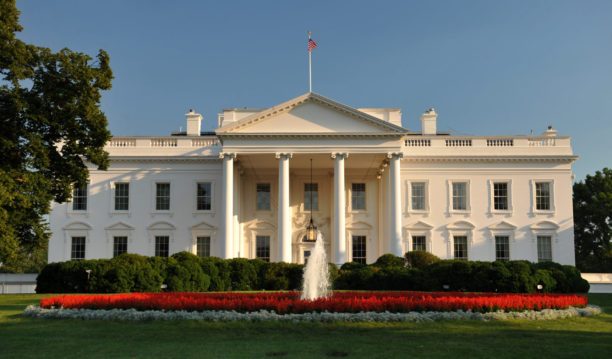
Sebastian Gorka, an official at the National Security Council, is advocating for accelerated action, broader training programs, and a more significant involvement of local law enforcement in drone security.
The White House has designated drone and counter-drone security as a primary national priority, focusing on enhancing state and local capabilities while speeding up the development of American drone technology. This was the central message delivered by Dr. Sebastian Gorka, who serves as Deputy Assistant to the President and Senior Director for Counterterrorism at the National Security Council, during his address at the November 9 Drone Security and SLTT Grant Forum. The event took place at MGM National Harbor and was co-organized by DRONERESPONDERS and the Commercial Drone Alliance, convening senior government officials, public safety leaders, and industry representatives.
During a conversation with Lisa Ellman, CEO of the Commercial Drone Alliance, Gorka stated that the administration prioritized drone security from the outset. He highlighted that drones were among the first topics discussed in the initial National Security Council meeting of President Trump’s second term, specifically citing concerns regarding unidentified drone activity near Bedminster, New Jersey.
Gorka established a clear link between the administration’s focus on border security and the necessity of safeguarding U.S. airspace. He argued that national sovereignty encompasses not only land borders but also the airspace above them. Just as the government must identify who and what crosses its terrestrial borders, it must also maintain awareness of aerial traffic overhead.
Gorka framed drone detection, identification, and counter-UAS capabilities as critical components of national security rather than merely emerging technological concerns. He emphasized that the White House regards these capabilities as an urgent priority, following what he described as years of inadequate attention to the issue.
Local Law Enforcement Is Essential to Drone Security
Gorka stressed that federal agencies cannot effectively manage drone threats without the active participation of state, local, tribal, and territorial (SLTT) law enforcement.
"The feds aren’t going to solve this problem," he said.
He cited the FIFA World Cup, America’s 250th anniversary celebrations, and the 2028 Los Angeles Olympics as key events requiring coordinated airspace security. Gorka noted that local officers, rather than federal agents, are typically the first responders to encounter drone threats at sporting events or other public gatherings.
He encouraged law enforcement agencies to seek federal training opportunities, noting that the government is tripling its training capacity at the National Counter-UAS Training Center. This expansion supports federal efforts to implement new counter-UAS authorities for eligible SLTT agencies, which remain subject to specific federal training, certification, and operational requirements.
A New Approach to Drone Threats
Gorka also highlighted the need for a shift in perspective among law enforcement and the public regarding drone threats. He pointed out that police officers are already trained and experienced in assessing threats to human life and determining when a response is warranted. He argued that the presence of a drone should not fundamentally alter this existing assessment process.
While mitigating counter-UAS threats requires specific legal authority and training, Gorka’s argument was that a drone posing an immediate threat to life should be recognized and treated as a serious public safety hazard, similar to a ground-based threat.
He also stressed the importance of electronic conspicuity, or the ability to identify and understand aircraft in U.S. airspace. As drones become increasingly common in military, commercial, and public safety operations, authorities will require better tools to distinguish legitimate activities from potential threats.
Urgency for Government and Industry
Gorka linked the administration’s counter-drone initiatives to its broader objective of strengthening American leadership in unmanned aviation.
"The future of aerospace is unmanned," he said.
He pointed to the expanding role of drones in military operations, logistics, law enforcement, and commercial delivery, describing unmanned aviation as a significant technological shift.
For law enforcement, his message was clear: pursue training and prepare for an expanded role in airspace security.
For industry, Gorka emphasized the need to increase production and deployment capacity to meet rising demand. He described drone and counter-drone technology as both a national security necessity and an economic opportunity.
Gorka stated that the White House intends to collaborate directly with government agencies and industry to address implementation obstacles. His remarks underscored the administration’s commitment to rapid progress, characterized by federal coordination, trained local agencies, and an industry capable of delivering technology at scale.