
Hawaiian Electric Deploys Cyberhawk Drones for Wildfire Prevention Inspections
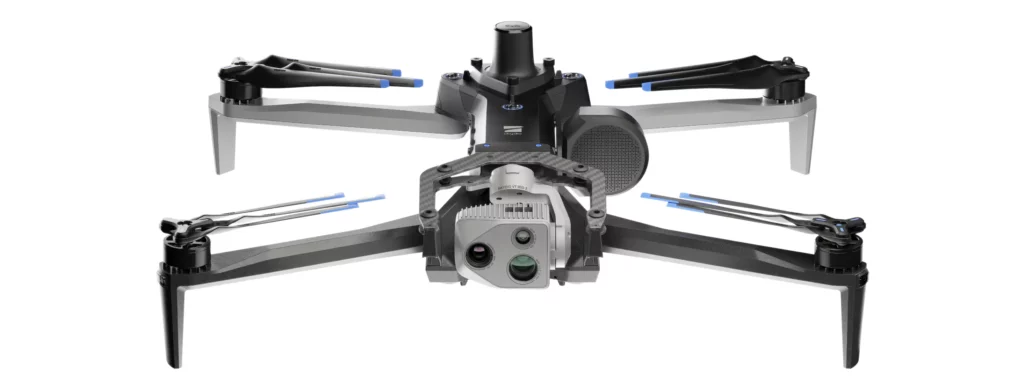
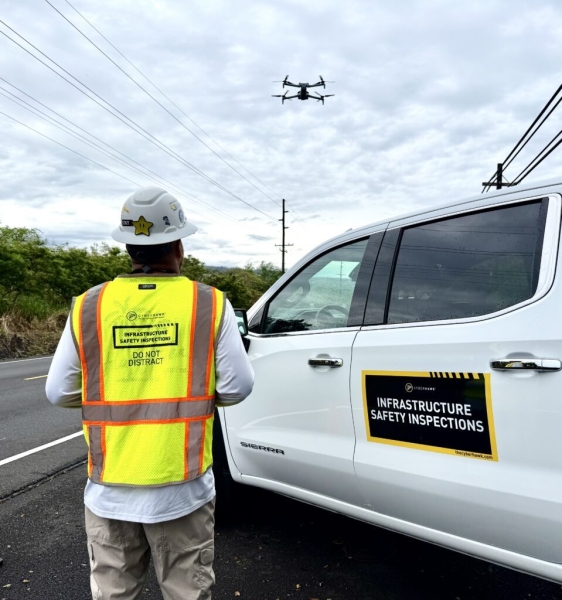
Inspections using drones across Oahu, Maui County, and Hawaii Island are designed to locate damaged electrical equipment and lower the likelihood of wildfires.
by DRONELIFE Features Editor Jim Magil
Unusual atmospheric conditions have heightened the danger of dangerous wildfires throughout the island chain, prompting Hawaiian Electric to utilize drone inspections to identify issues along its extensive transmission lines before they can cause fires.
Hawaiian Electric announced last month that it hired UK-based Cyberhawk to perform aerial inspections of its electrical infrastructure in wildfire-prone zones on Oahu, Maui County, and Hawaii Island. The utility stated that these aerial inspections will allow for faster identification of problems, helping to prevent or reduce wildfire risks.
"We are using drones to capture high-resolution imagery of all of their electrical assets across the islands making sure that there’s not any critical failures or defects that could potentially cause a wildfire," Anna Dillé, vice president of North American operations at Cyberhawk, stated in an interview.
Under its agreement with Hawaiian Electric, Cyberhawk is utilizing Skydio X10 drones fitted with a VT300Z sensor package, which is built for long-range inspections. "That provides us a 48-megapixel resolution, so inspectors can really see anything going wrong on the structures. That specific sensor allows for a lossless zoom of up to 16 times, so we can get in quite close, quite detailed, and get the best data and imagery that we can," Dillé said.
This fire-prevention contract arrives during a period of increased wildfire risk across the islands. On November 7, as drier air moved into the state, Hawaiian Electric issued a Public Safety Power Shutoff (PSPS) notice covering the leeward side of Oahu. The company had previously placed Hawaii Island and Maui County under a PSPS watch.
A PSPS signals a period of heightened monitoring for areas with the highest wildfire risk, indicating that the company may need to cut power to reduce the chance of a fire starting.
Dillé noted that the Hawaiian Electric contract is just one of Cyberhawk's recent utility inspection agreements in its nearly 15-year history. Founded in the UK and operating as a subsidiary of Ondas, the company began its U.S. operations in 2021.
"So, it’s pretty new for us on the U.S. side of things. But we’ve had great success over here," she added. Cyberhawk conducts over 400,000 inspections annually of electric utility assets, including transmission and distribution lines and substations.
Through its UAV inspections, the company can identify potential issues such as damaged or worn insulators and collar keys, alerting the utility customer so repairs can be made before further damage occurs.
"The infrastructure is aging, so we are finding defects. For those customers that we’ve been working for over the course of years, we’re starting to see a decrease in their defects because we’re able to spot those quickly and they’re able to maintain those assets quite quickly," Dillé said.
"I know that a lot of the utilities, at least those on the mainland, have issues with some of their conductors. The lines that are running between the towers can get frayed so there’s an active pursuit of getting that imagery as well."
Dillé explained a typical inspection scenario for electric utility assets. Each day, crews receive a daily work pack that outlines the assets they are assigned to inspect. Cyberhawk provides each pilot with a drone to fly along the designated inspection route.
"And through that application, they’re able to report back if they were able to successfully capture the data for that structure," she said. The collected data is then analyzed to determine the workflow for the following day.
International market reach
Cyberhawk is among the world's largest drone-focused infrastructure asset service providers. Chris Fleming, the company's CEO, co-founded the firm in 2008 after working as a rope access-trained inspector on North Sea oil platforms. The company was established to use drones for safe industrial inspections, eliminating the need for humans to work in hazardous environments.
Cyberhawk currently operates in more than 40 countries and aims to continue expanding its presence in the international drone service market. "We’re really looking into how we can branch into the European market a little bit more and start to offer these services at a wider level," Dillé said.
One market segment where the company continues to operate is the oil and gas industry.
"We do a lot of flare inspections offshore and a lot of 3D modeling work for oil rigs," Dillé said. "It’s very beneficial for those companies to have a digital twin of their assets so that they can see what’s going on the rig at any point in time."
Additionally, Cyberhawk flies its drones along pipeline rights-of-way to inspect for excavations or other anomalies that could affect the pipeline.
Under its contract with Hawaiian Electric on Hawaii Island, also known as the Big Island, Cyberhawk will conduct drone inspections alongside the company's own staff. All personnel involved in the inspection project must drive vehicles marked with Hawaiian Electric or Hawaiian Electric Contractor branding. If on foot, the drone operator must wear a Cyberhawk-branded hard hat and vest.
Inspections started in mid-October and are scheduled to continue through December in parts of Downtown Hilo, North Hilo, Lower Puna, North Kona, North Kohala, and Saddle Road. In populated areas, since the inspections focus on poles and power lines, inspection personnel are not allowed to enter homes or businesses, though there may be instances where the operator must enter private property to access a utility pole.