
U.S. Army Opens Drone EW Testing to Industry
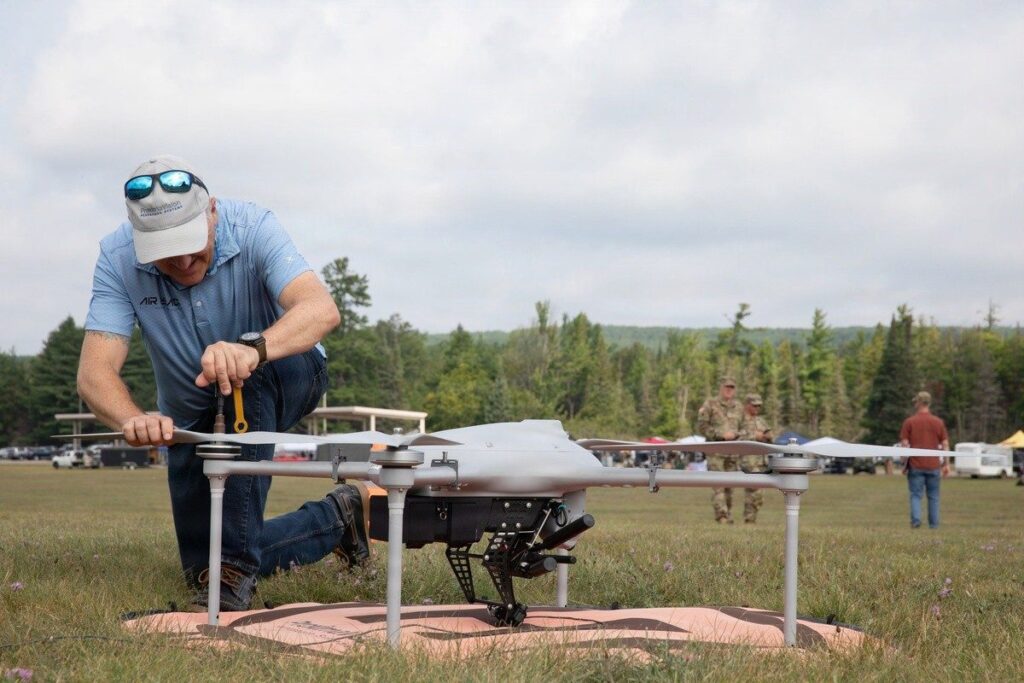
Drone manufacturers can now access realistic GPS jamming and communications interference during new Army testing events, with three sessions set for 2027.
The U.S. Army is widening the scope for commercial drone firms to evaluate their technology under authentic electronic warfare conditions. This program enables developers to see how their systems hold up when GPS signals drop or communications encounter interference.
During a November 2 announcement, the Army detailed three testing events slated for 2027. These sessions will assist companies that are creating drones, counter-drone systems, long-range fires, and low-cost interceptors.
These events differ from standard military procurement programs because they lack competitive evaluations or supplier selections. Companies can pinpoint weaknesses, refine their systems, and conduct further tests.
Testing Drones in Contested Environments
Launched in August 2026, the Army’s Permissive Test Range Initiative includes these testing events. The program seeks to provide private companies with easier access to military testing facilities and specialized environments.
The Army Test and Evaluation Command (ATEC) heads this initiative. It collaborated with the Army’s Threat Systems Management Office to design the electronic warfare events.
The testing targets conditions where electronic signals are denied, degraded, intermittent, or limited. Such conditions mirror the challenges drones face in modern conflicts, such as the war in Ukraine.
"By opening our premier test facilities and providing access to realistic threat environments, we are directly enabling industry to refine their systems against the challenges of the modern battlefield," said Maj. Gen. Pat Gaydon, commanding general of ATEC.
In September 2026, the Army conducted its first event at Camp Grayling, Michigan, with four drone companies taking part.
The Army reported that the companies appreciated the chance to find technical weaknesses and make improvements in a noncompetitive setting.
This method lets developers test, spot issues, make adjustments, and return for more testing without going through a government selection process.
Three Testing Events Scheduled for 2027
The Army has revealed three additional events:
February 1–5: Dugway Proving Ground, Utah
June 14–18: West Cibola Range, Yuma Proving Ground, Arizona
September 20–24: Camp Shelby, Mississippi
The February event will broaden testing to include long-range fires and low-cost interceptors, going beyond drones and counter-drone systems. Companies will get chances to test these additional capabilities.
These capabilities were absent from the initial Camp Grayling event.
Lowering Barriers for Drone Developers
This initiative is part of a wider Army push to make military testing facilities more accessible to commercial technology companies.
Under the August program, companies do not require an existing government contract or a prior federal relationship to ask for testing opportunities.
Smaller drone manufacturers and technology developers who lack access to large testing areas or specialized electronic warfare equipment could benefit from this.
It also provides companies with a chance to enhance their products before seeking military contracts.
Participation, however, does not ensure a future contract or a preferred testing date. Range availability is still subject to capacity limits.
Companies interested in participating can submit requests through the U.S. Army Test Range Portal. The Army offers a dedicated contact to assist applicants in navigating the scheduling process.
The initiative underscores the rising importance of electronic warfare resilience as military drone programs grow. Reliable navigation and communications are becoming increasingly vital for unmanned systems operating in contested environments.