
Vector Secures SOCOM Contract and Blue List Status for Defense Drone Portfolio
Recent developments highlight the company’s progress in military drone programs, manufacturing, and secure supply chains.
Utah-based drone manufacturer Vector has announced two developments that strengthen its position in the U.S. defense drone market. The company has earned a Phase III selection in the U.S. Special Operations Command (USSOCOM) Modular Kinetic Drone (MKLD) program. Its Hammer foldable quadcopter has also received designation on the Defense Contract Management Agency’s (DCMA) Blue List.
The announcements follow Vector’s recent performance in the Department of War‘s Drone Dominance Program, where the company says it secured orders for 5,000 systems.
Together, these developments reflect Vector’s growing involvement in military drone procurement and the broader effort to expand domestic production of unmanned systems.
SOCOM Selection Builds on Drone Dominance Results
Vector’s Phase III selection in the MKLD program advances its work on modular, expendable drone systems for special operations forces.
The program focuses on providing small tactical units with adaptable precision-strike capabilities. Vector’s solution combines unmanned platforms with modular payloads that operators can configure for different missions.
The system incorporates Vector’s High-Voltage Electronic Safe & Arm Device (HV-ESAD), designed to improve the safety and reliability of kinetic payloads. The technology supports integration across the company’s unmanned platforms.
The selection follows Vector’s participation in the Department of War‘s Drone Dominance Program. According to the company, Vector was named a top performer in the Close-Quarters Battle segment of the Gauntlet II evaluation. Vector says the results led to orders for 5,000 systems and its HV-ESAD technology.
Vector also reports an existing multi-year relationship with USSOCOM, providing unmanned systems, integration services, and operational support.
“Special Operations Forces operate at the leading edge of the fight and require systems that can keep pace with rapidly changing operational demands,” said Andy Yakulis, Co-Founder and CEO of Vector. “Our relationship with SOCOM reflects a shared focus on speed, adaptability and delivering meaningful capability to the people who use it. We’ll continue working closely with our nation’s elite special operators to turn their requirements and lessons learned into systems that give them an advantage in the field.”
Hammer Quadcopter Receives DCMA Blue List Designation
In a separate announcement, Vector said its Hammer foldable quadcopter has earned designation on the DCMA Blue List, which identifies unmanned systems that have met applicable defense cybersecurity and supply-chain requirements.
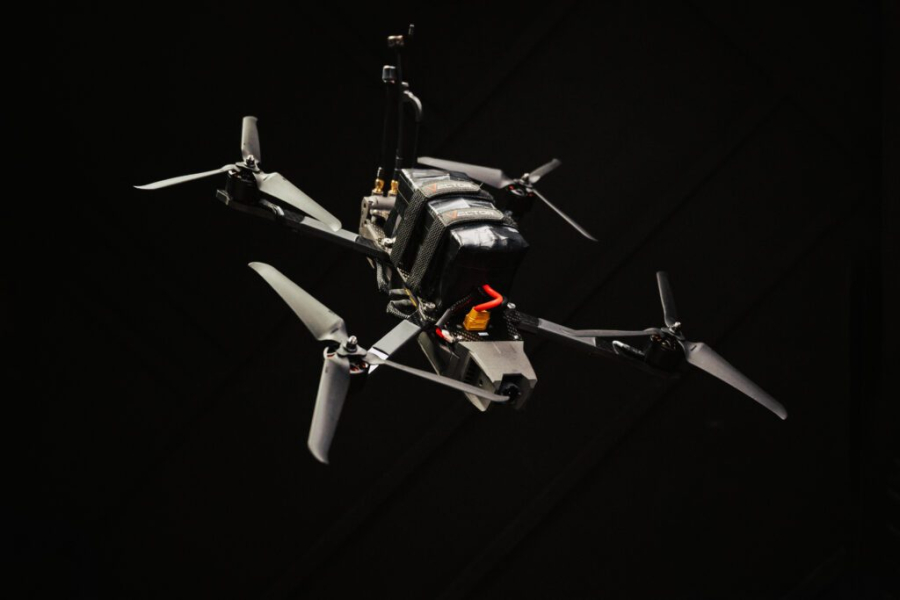
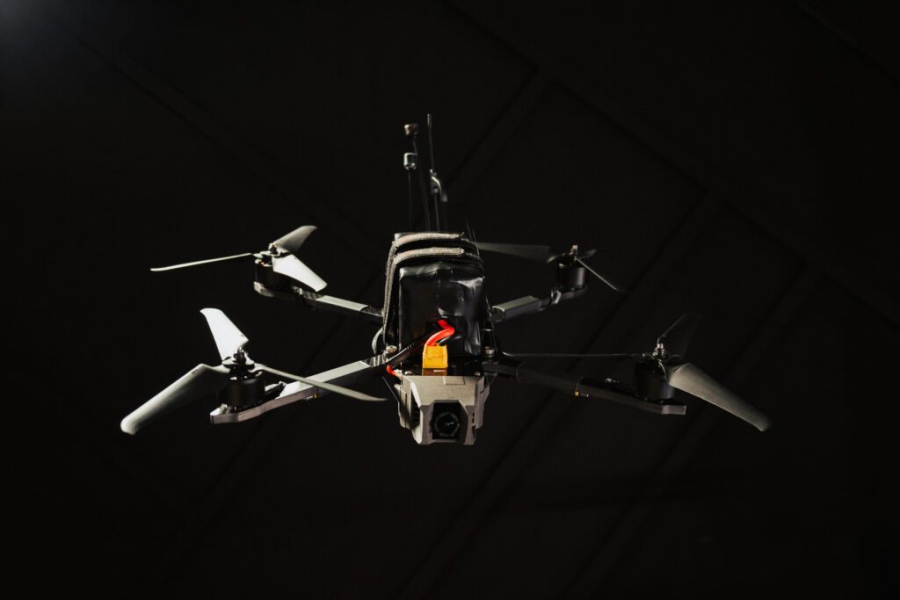
Hammer is a compact, modular aircraft designed for reconnaissance and precision-strike missions. According to Vector, it can reach speeds of up to 97 miles per hour and has an operational range of up to 25 kilometers.
The platform features interchangeable sensors, a fiber optic connector port, a universal payload interface, and an integrated Picatinny rail. These features support different configurations for intelligence, surveillance, reconnaissance, electronic warfare, and kinetic missions.
Vector says Hammer has undergone cybersecurity testing, including evaluations of its resilience in contested electromagnetic environments.
“Blue List designation for the Hammer is another important validation of our approach to building trusted, mission-ready systems for the Department of War,” said Andy Yakulis, CEO and Co-Founder of Vector. “Supply chain security is a battlefield capability. If you cannot trust what’s inside your system, you cannot trust the system. We built Hammer to eliminate that uncertainty, pairing warfighter-driven design with a trusted American supply chain.”
The designation follows earlier assessments of Vector’s Longbow vertical takeoff and landing (VTOL) platform. According to the company, Longbow previously received DCMA Blue and Green List designations following independent assessments by DarkWolf Solutions and vetting through the Association for Uncrewed Vehicle Systems International (AUVSI).
Growing Role in Domestic Defense Drone Manufacturing
Vector was founded by former special operations personnel and defense technology experts. The company focuses on small unmanned aircraft systems, tactical integration, training, and manufacturing.
Its recent announcements highlight several priorities in U.S. military drone procurement: domestic production capacity, secure supply chains, modular systems, and the ability to adapt technology to changing operational requirements.
The combination of program selections and security qualifications may also help Vector compete for additional defense business. However, a program selection or Blue List designation does not, by itself, establish the scale of future production or procurement.
For Vector, the next measure of progress will be its ability to translate these developments into sustained production and delivery of operational systems.
Ongoing Litigation with Red Cat Holdings
Vector and co-founder George Matus are also defendants in an ongoing federal lawsuit filed by Red Cat Holdings and its subsidiary Teal Drones in August 2025. Matus founded Teal before selling the company to Red Cat in 2021. He subsequently served as Teal’s CEO and Red Cat’s chief technology officer before leaving in November 2024.
The lawsuit alleges that Matus violated contractual obligations and improperly used confidential information and trade secrets in connection with Vector’s development. The allegations are disputed.
In a September 28, 2026 ruling, a federal judge denied Vector’s motion to dismiss and allowed several claims against Matus to proceed, while dismissing others. The court had previously denied Red Cat’s request for a preliminary injunction.
The litigation remains unresolved. The court’s decision on the motions to dismiss does not establish that either defendant committed wrongdoing.