
Automated BVLOS Drone Surveys Take on Major Infrastructure Project in Australia
Drone-in-a-box technology supports construction monitoring and improves site safety on the HumeLink West transmission project.
Skyports Drone Services is using automated beyond visual line of sight (BVLOS) drone operations to monitor construction on Australia’s HumeLink West electricity transmission project. The deployment allows teams to collect aerial survey data without sending drone pilots to the site.
A permanently installed DJI Dock 2 at the Maragle substation construction site in New South Wales conducts automated surveys every two weeks. Skyports operates the system from its Remote Operations Centre in Lane Cove, Sydney, more than 350 kilometers away.
HumeLink West is part of Transgrid’s larger HumeLink project, which aims to strengthen Australia’s electricity network and support renewable energy. According to Skyports, HumeLink West includes approximately 140 kilometers of new 500kV double-circuit transmission lines and two substations.
BVLOS Operations Expand Survey Coverage
According to Skyports, the remotely operated drone can survey up to five times more area in a single day than traditional on-site drone surveys.
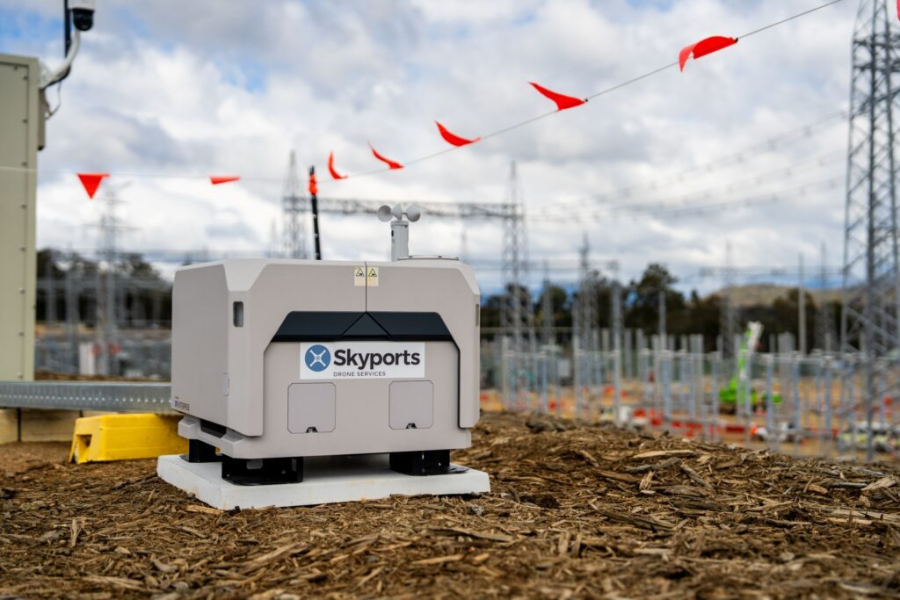
BVLOS authorization allows missions extending approximately 8 to 10 kilometers, compared with the 0.5 to 1 kilometer range Skyports cites for conventional visual line of sight operations.
Remote flights also reduce the need for personnel to enter difficult terrain or active construction areas.
The deployment follows a 12-month extended visual line of sight (EVLOS) surveying program. During that phase, Skyports used LiDAR-equipped drones to map terrain and monitor vegetation clearing along the transmission corridor.
Regulatory Approval Supports Remote Operations
Skyports conducts the flights under its Broad Area BVLOS Drone Approval from Australia’s Civil Aviation Safety Authority (CASA).
According to the company, this authorization allows it to self-authorize qualifying BVLOS missions in eligible remote and sparsely populated areas, reducing deployment times.
Skyports says it is among a small number of Australian operators holding this authorization. HumeLink West is also the first CIMIC Group project in Australia authorized for fully remote BVLOS drone operations, according to the company.
Skyports expects its global drone-in-a-box network to reach 25 systems by the end of 2026 and more than double in 2027.
“HumeLink West demonstrates how advanced drone operations are transforming the way major Australian infrastructure projects are delivered. As one of only a small number of operators in Australia authorised to conduct these types of BVLOS drone operations, we’re providing customers with a more intelligent, safer and cost effective way of monitoring the construction of some of the country’s most important infrastructure projects,” said Alex Brown, CEO of Skyports Drone Services.
Turning Drone Surveys into Construction Data
Skyports processes the survey data through DroneDeploy, a reality capture platform that creates 2D and 3D site models.
These models allow construction teams to compare site conditions over time, monitor progress, and identify issues that may require attention.
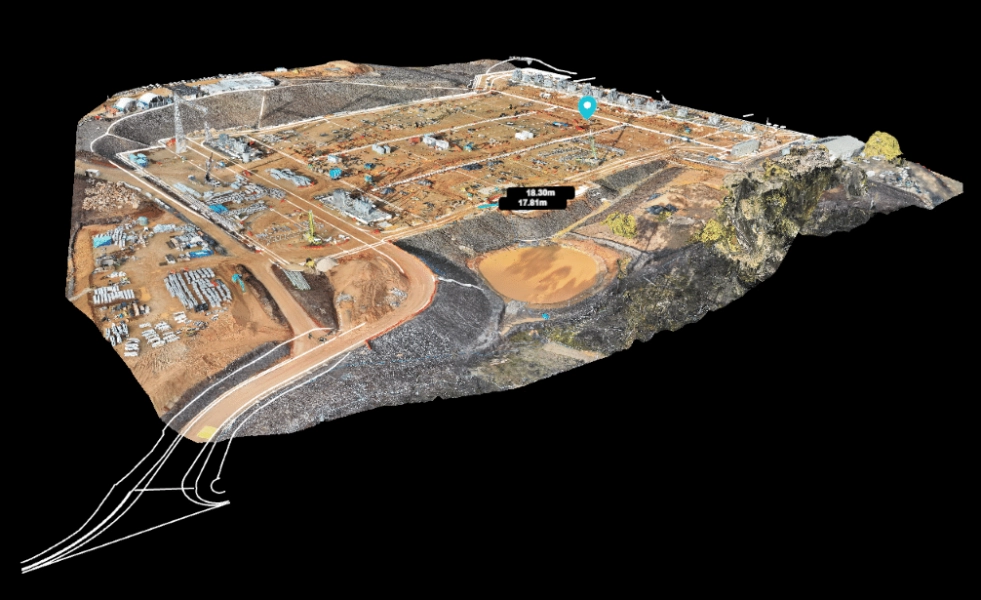
“On a project of this scale, you need reliable, up-to-date information that helps you make decisions with confidence. Skyports’ remote drone surveys are giving our construction teams a clear, consistent picture of what’s happening across the site, allowing us to track progress more effectively, respond to issues sooner and keep work moving. Just as importantly, being able to capture that data remotely means fewer people are working in active construction areas, helping improve safety” said Tim Burns, Project Director of HumeLink West.
The HumeLink West deployment demonstrates how automated BVLOS operations can make routine infrastructure surveys more efficient. It also offers an example of how regulatory approvals are supporting wider commercial use of remotely operated drone systems.