
Follow-Up Survey at Browse Island Nature Reserve
Parks and Wildlife Service staff have conducted a follow-up survey at Browse Island Nature Reserve and reported no signs of surviving mice, according to the Department of Biodiversity, Conservation and Attractions (DBCA).
The results from the April 2026 survey indicate that no mice were detected during the three-day assessment, which is part of a drone mouse eradication project being implemented at the reserve.
The Browse Island project, which was first reported by Dronelife in March 2026, is located 180 km off the Kimberley coast and spans 17 hectares. In October 2025, bait was distributed across the island using drones to address the issue of invasive Asian house mice.
A World-First Drone Mouse Eradication Project
The DBCA notes that drone baiting technology has primarily been used for rat species, making the Browse Island project the first attempt to eradicate a mouse species from an island using drones. The agency determined that aerial baiting was the most effective method for achieving an even distribution of bait across the densely vegetated area.
This initiative is being carried out in collaboration with researchers from Monash University and drone specialists from Envico Technologies in New Zealand. Initial funding was provided by Shell Australia, facilitated by the Monash University research team. Envico has extensive experience in aerial conservation baiting efforts globally.
Return Survey Findings
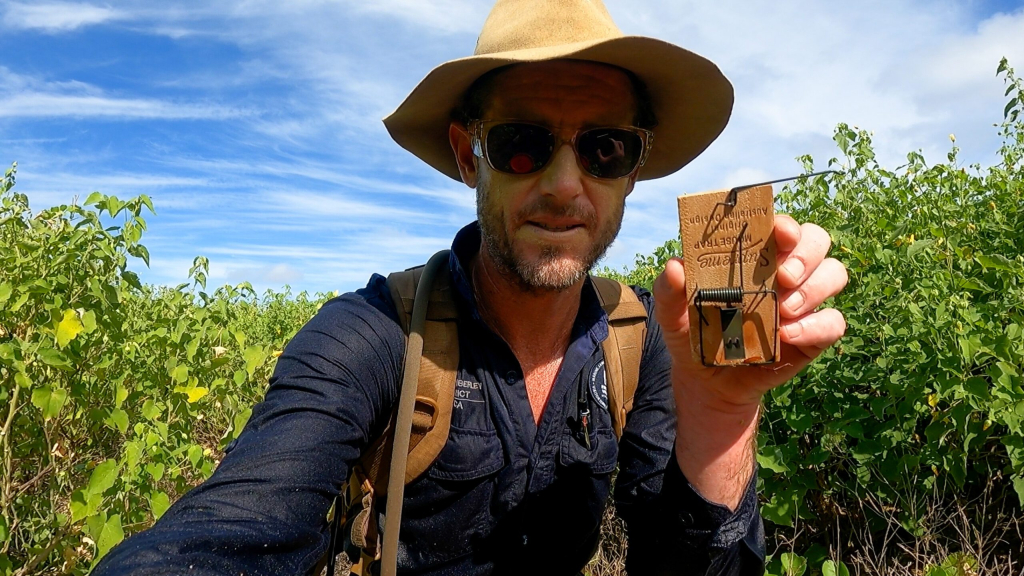
During the April survey, scientists and land managers utilized hundreds of traps, motion-sensor cameras, and thermal scanners to search for any remaining mice and to evaluate seabird recolonization.
Dr. Donal Smith from Monash University stated that the primary goal was to determine whether any mice remained on the island and to assess the success of the eradication efforts. He noted that six months could be sufficient time for any surviving mice to reach detectable populations.
Bruce Greatwich, District Coordinator Conservation with the Parks and Wildlife Service, confirmed that no mice were found during the survey. He expressed optimism, stating, “All signs are indicating that we’ve been successful with our mice eradication project, which is absolutely brilliant to see.” He emphasized the potential long-term benefits of this management action.
Next Steps
Greatwich indicated that the team plans to return in six months for another assessment, noting that formal success cannot be declared until at least 12 months have elapsed. “We’ll see what that next survey brings. But everything’s certainly going in the right direction,” he remarked.
The DBCA reported that the April team had to conclude their monitoring early due to adverse weather conditions. Another visit is scheduled for late 2026, during which the department hopes to confirm the eradication of mice on Browse Island.
Further information and video content related to the project are available from the DBCA.