
 Photo credit: Colorado Springs PD
Check out the Best Deals on Amazon for DJI Drones today!
Two juveniles tried to break into cars, allegedly pointed a gun at a security camera, then ran into a wooded creek bed at midnight thinking the dark would cover them. The drone disagreed.
What Went Down on Saturday Night
Just before midnight on Saturday, a resident near Airport Road and Highway 24 in Colorado Springs called police after spotting two males trying to break into cars on Kitfield View. The caller also reported the suspects had pointed what appeared to be a gun at their home security camera, as KKTV reported.
 Photo credit: Colorado Springs PD
Officers arrived and both suspects immediately bolted toward a densely wooded creek bed near Sand Creek. Classic move. Dense vegetation, low light, uneven terrain. The kind of environment where a foot pursuit gets complicated fast and officers get hurt.
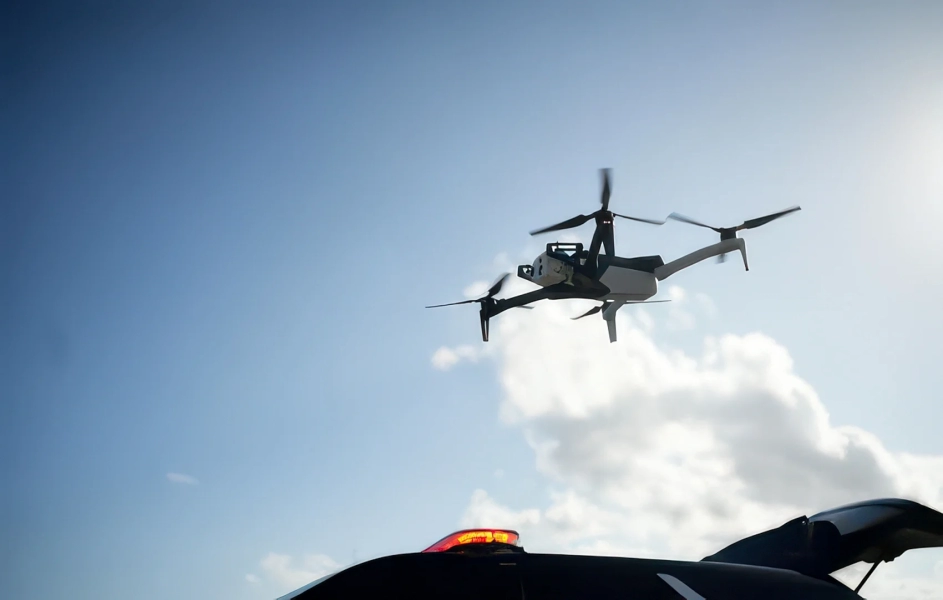
Colorado Springs PD set up containment around the area and launched a drone instead of sending officers into the dark after them.
The Skydio X10 found them almost immediately. The aircraft tracked both suspects as they ran through Sand Creek, hopped fences, and tried every evasive move available to two people who did not realize they were being watched from above the entire time.
One suspect was observed on the drone feed tossing a black backpack into the brush, the kind of detail a ground officer chasing on foot would never catch in the dark.
Both suspects were contacted and arrested. Officers recovered the backpack. Inside was a handgun that had been reported stolen out of a vehicle two days earlier. The weapon the resident believed had been pointed at their security camera.
Because of their ages, neither suspect has been publicly identified. Both face felony charges.
The Drone That Made the Arrest
Colorado Springs PD operates the Skydio X10, and this call is a textbook example of why departments invest in DFR capability.
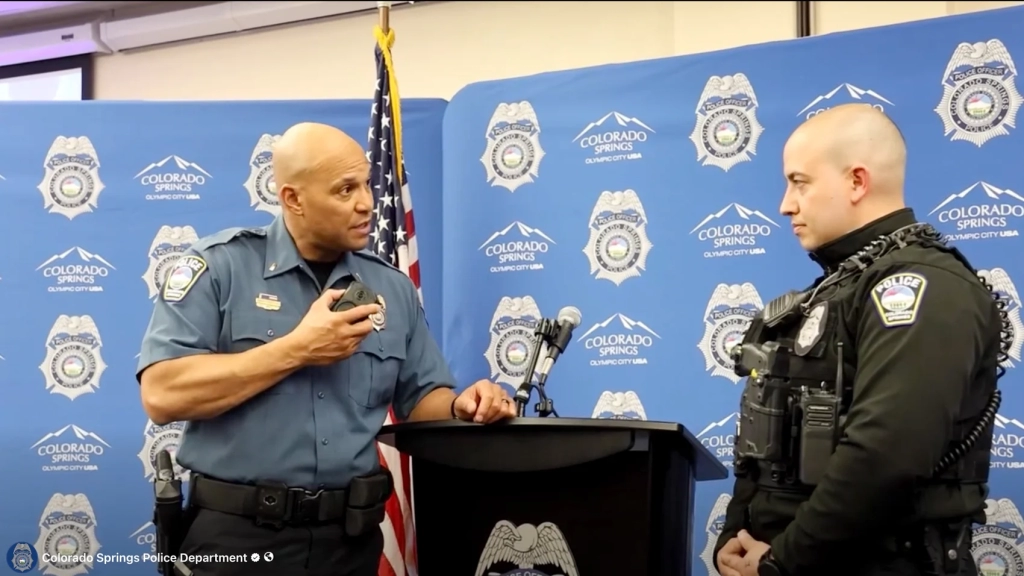 Photo credit: Colorado Springs PD
The X10 weighs 3.1 pounds and carries a multi-sensor payload: a 50-megapixel wide camera, a 48-megapixel 3x telephoto, and a 640×512 FLIR Boson thermal sensor. It navigates autonomously using six 4K obstacle avoidance cameras covering the full sphere around the aircraft. It flies for 41 minutes. It reaches 40 mph.
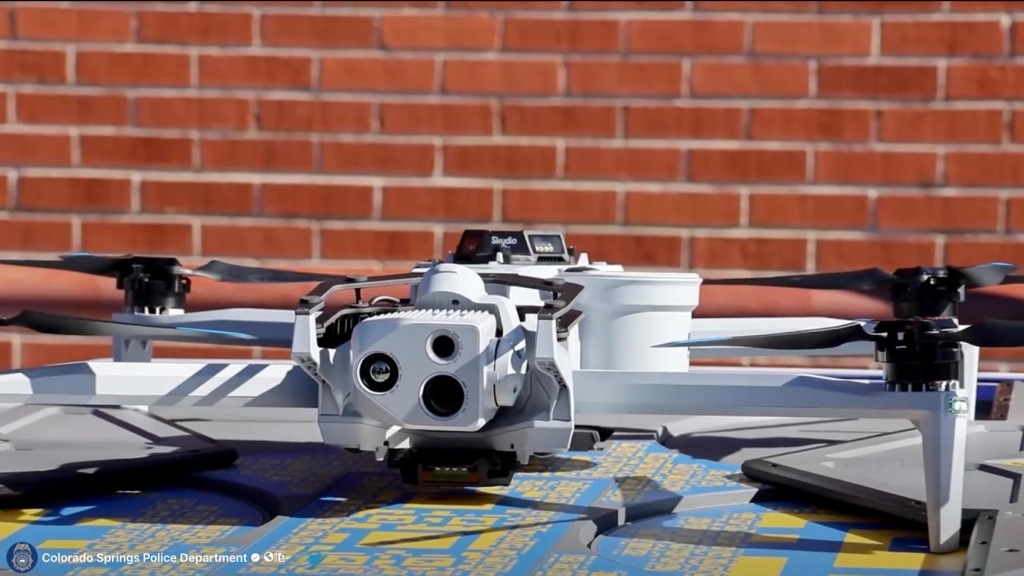 Photo credit: Colorado Springs PD
In zero-light environments like a wooded creek bed at midnight, the thermal sensor makes darkness irrelevant. Human body heat shows up clearly against cold vegetation, which is why the suspects’ evasive route through Sand Creek accomplished exactly nothing.
The Real-Time Crime Center integration is the operational piece that ties it together. The X10’s feed goes directly to the RTCC, where analysts track movement and relay position to ground units holding containment.
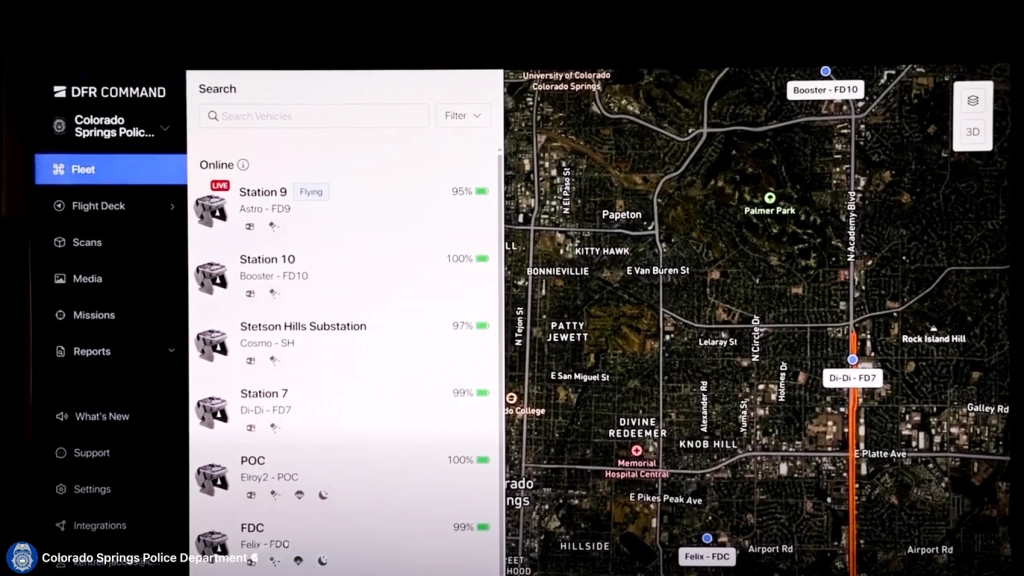 Photo credit: Colorado Springs PD
Officers do not need to enter the creek bed. They wait at the perimeter while the drone does the searching, and move in only when the aircraft has eyes on the suspect and a clean arrest position identified.
The backpack toss is worth noting specifically. A suspect discarding evidence mid-chase is something that almost always goes unwitnessed in a traditional foot pursuit. From 200 feet above, at night, the X10 captured it cleanly.
That single observation turned a trespassing and attempted burglary call into a felony weapons charge and recovered a stolen firearm that was back on the street two days after it was taken.
DroneXL’s Take
Here’s what I actually think: the Creek Bed Move is as old as foot pursuits themselves. Dense cover, low light, uneven ground. It works against officers on foot. It has never worked against a thermal drone, and suspects are still trying it anyway.
The education curve on what drones can and cannot see is going to take a while to reach everybody. Thermal sensors do not care about darkness, foliage, or creek beds. They care about heat. Two teenagers running through cold water and vegetation at midnight are the warmest things in that camera’s field of view. They might as well have been wearing reflective vests.
No sugarcoating this: the outcome here was also the safest possible version of this situation for everyone involved. Two juveniles with a stolen gun, running through dark terrain at midnight, contained without a foot pursuit, without a K9 track through the brush, without officers navigating a creek bed in the dark.
Nobody got hurt. The gun came off the street. The arrests were clean.
That is what DFR programs are built for, and Colorado Springs got exactly the result the technology promises.
Photo credit: Colorado Springs PD