
Harris Aerial Carves Out Niche in U.S. Heavy-Lift Drone Manufacturing
Small drone manufacturer finds its market niche
In business, sometimes getting in on the ground floor of an emerging trend is the key to success – even for a company whose business is manufacturing flying vehicles.
For Ben Harris, founder and CEO of Casselberry, Florida-based Harris Aerial, getting in on the ground floor meant launching a company dedicated to the manufacture of heavy-lift drones at a time when the market was dominated by small UAVs designed for drone-based photography and videography.
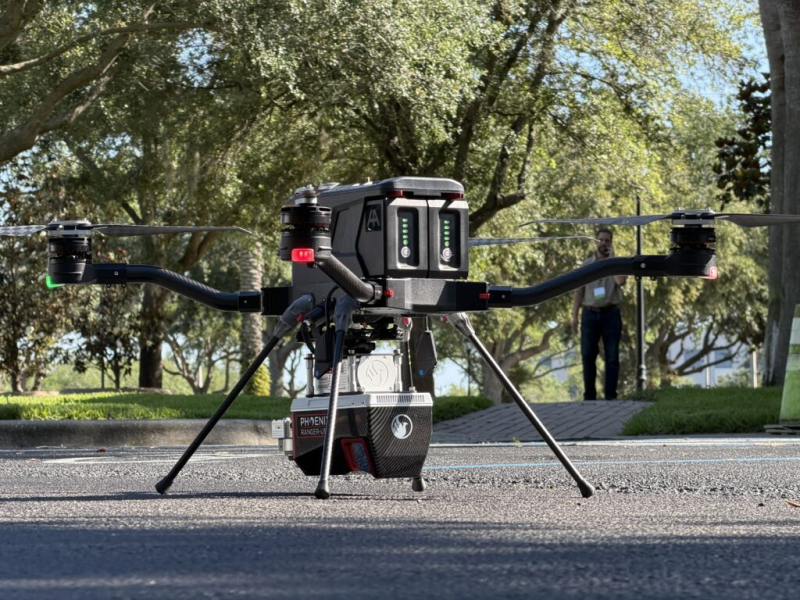
“I actually started the company in my grad school college apartment in 2014,” Harris said in an interview. “This was around the same time as the DJI Phantom 1 was being released. This was when drones were coming on the stage as devices that could be used to take pretty pictures and videos.”
Harris, looking to launch a drone manufacturing business, knew that to be successful his company would have to find its own niche in the rapidly growing UAV market.
“Back then we focused on the heavy-lift sector because there were none,” he said. “We focused on the heavy-lift market and drones with large frames.” For example, Harris Aerial’s H6, the flagship of its fleet, has a maximum payload of 8 kilograms (about 18 pounds).
Back at the company’s start, the University of Central Florida graduate student had no formal training in designing and building drones. “I’m 100% self-taught,” Harris said. “That’s not hard to say anymore, with all the AIs of the world, but back then there was no AI and there was pretty much no information on how to build drones on YouTube or anywhere on the internet.”
Using open-source Arduino circuit boards and open-source autopilot software, Harris and his coworkers began building drones from scratch.
“At first, we started prototyping with Chinese-made airframes and then we saw all the pitfalls and things that we didn’t like about the airframes coming from China and we started designing our own CAD software and then eventually we started manufacturing our own airframes locally here in Orlando,” he said.
With no venture capital financing for seed money, and relying on financial help from family and friends, Harris and his team “boot-strapped” the company into existence.
From those beginnings, Harris Aerial has evolved into one the country’s top producers of American-made heavy-lift drones. “We’re a full-service drone [Original Equipment Manufacturing] company from design to manufacturing, training and consulting.”
In-house production process
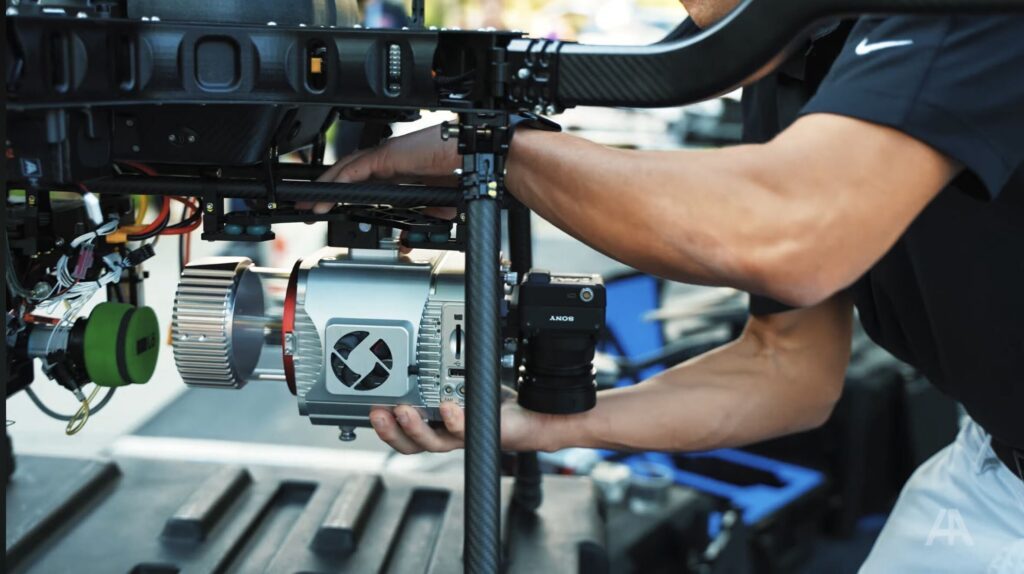
In its manufacturing processes, Harris Aviation is able to produce many of its own parts and equipment by the use of 3D printing and CNC milling, an automated manufacturing process that uses computer-controlled rotating cutting tools to remove material from a solid block of material to create a precise part.
“We do a lot of 3D printing for prototyping. We have our own CNC mills in-house and we do all the milling of all of our aluminum, brass and stainless-copper parts in-house,” Harris said. In addition, the precision manufacturing processes include cutting the molds and plates used to press and cure carbon fiber into specific parts.
“This in-house production capability allows us as a company to rapidly create prototypes and get new things out and tested and validated without having to wait on some bottleneck from a third-party fabricator.”
Sticking to business plan
Harris Aviation’s business plan calls for the company to stick to its manufacturing roots, and not branch out into becoming a drone service provider.
“The real reason for that is not because we don’t want to, it’s just because we’re a manufacturer at our core, and we don’t want to step on our clients’ toes and take work that rightfully belongs to those who buy our equipment to use it for those kinds of service contracts,” Harris said. “So, we just always decided against it and to just sell hardware and support the hardware that we sell.”
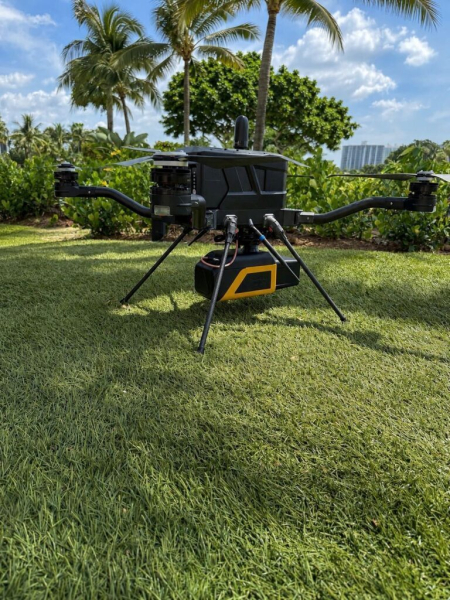
As a small-scale manufacturer, Harris Aerial is able to specialize the construction of its drones to meet the needs of individual customers.
“We have base models. But we support a whole range of different sensor integrations. So if a client has a specific use case for a specific sensor that they’re developing – as with research laboratories and clients like that – we will do a lot of custom sensor development, and we offer custom engineering services to help them integrate whatever sensor or whatever payload they have onto our platform,” Harris said.
Recently, the company added the H4C, a mid-size platform to its drone product lineup. The new aerial vehicle, which Harris Aerial plans to begin manufacturing in the first quarter of 2027, combines a compact footprint with the heavy-lift capability that the company’s other aircraft are known for.
The new model will exceed the capabilities of similarly sized competitor drone models in lifting capability and flight duration, Harris said. “I think its payload capability of four kilograms is unmatched right now in the U.S. market. Its flight time, when you compare it to the Freefly Astro is almost triple.”
Harris said he anticipates that the company will be able to produce and sell more H4Cs, compared with its larger cousins in the company’s portfolio. “That’s going to be a higher-volume product due to its larger market appeal with its size and form factor,” he said.
As drone customers in both the commercial and defense sectors increasingly turn toward the purchase of U.S.-made drones rather than their foreign-produced counterparts, Harris said American drone manufacturers such as Harris Aerial stand to benefit from the changing market dynamic.
“NDAA-compliance is something that is continuing to evolve and get more strict and being American-based is really important in the U.S. drone market,” he said. This is especially true for manufacturing companies marketing to Defense Department customers and other federal agencies.
“If you’re trying to sell to that market, which we are, you have to be a U.S.-based company, otherwise you just don’t do business with them,” he said.