
FCC Reports $6 Billion in U.S. Drone Manufacturing Investment as Conditional Approvals Expand
Recent approvals underscore the increasing link between national security constraints, homegrown manufacturing, and entry into the American drone market.
Since December 2025, the Federal Communications Commission (FCC) has recorded $6 billion in investment for drone manufacturing within the United States, supporting 5,700 jobs. The commission states that its national security safeguards on foreign-made equipment are driving domestic production.
During an announcement in November 20, the FCC pointed to new conditional approvals that permit certain foreign-made items to enter the U.S. market despite being listed on its Covered List.
New Conditional Approvals Include FlyingBasket Drone
On November 18, the FCC revealed five conditional approvals spanning drones, wireless routers, and advanced robotic devices.
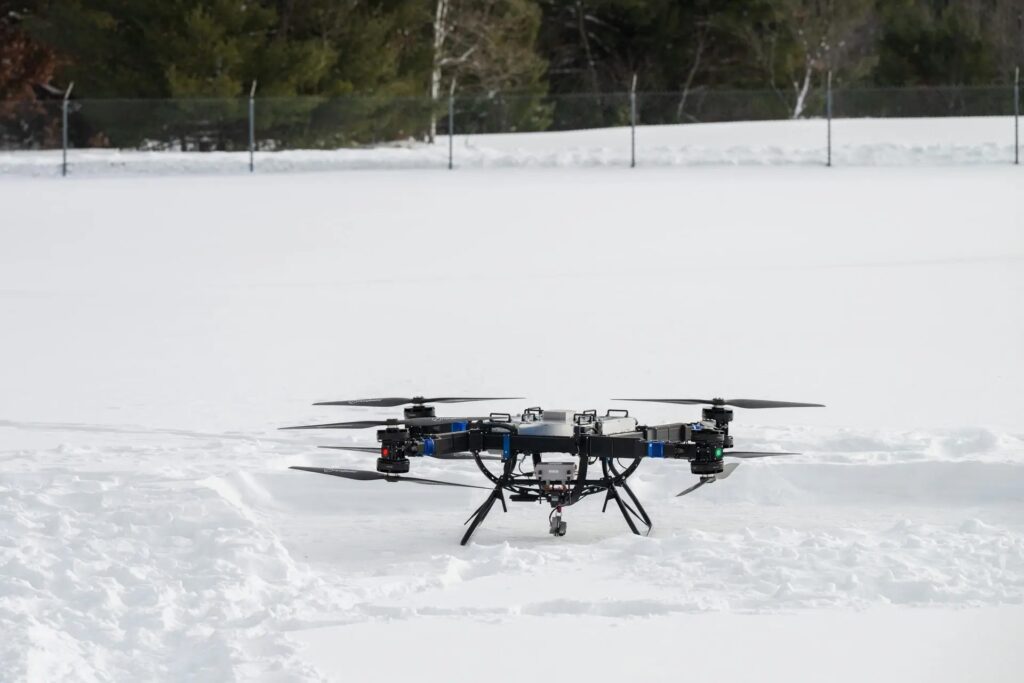
Among the latest approvals is the FB3 uncrewed aircraft system from Italian maker FlyingBasket. Other approvals cover routers from EnGenius and Zyxel, along with robotic platforms from SYNCROBOTIC and BLUEPATH Robotics.
The FCC notes that 71 companies have now secured conditional approvals across four equipment categories, with 23 of those firms manufacturing drones or essential drone parts.
Drone manufacturers that previously received approval include Percepto, Voliro, Manna, Dronus, Flock Safety, and ABZ Innovation.
How the Conditional Approval Process Works
In December 2025, the FCC broadened its Covered List to encompass foreign-made drones and critical components after an interagency body in the Executive Branch made a national security determination.
These restrictions typically bar newly covered equipment from obtaining FCC authorization. Items that already hold valid authorizations may continue to be used, imported, marketed, and sold under existing regulations.
Manufacturers can apply for exemptions by providing details on ownership, cybersecurity measures, and plans for U.S. production. The Department of War (DoW) and the Department of Homeland Security (DHS) evaluate these applications to decide if specific products qualify.
Approvals are contingent on adhering to domestic manufacturing pledges and undergoing continuous product scrutiny. The FCC’s November 18 notice confirms that drone approvals without set expiration dates remain valid indefinitely, provided companies satisfy these conditions.
The agency also reports that the average time to process applications has decreased from 40 days to 24 days over the last three months.
FCC Points to Manufacturing Investment and Jobs
According to the FCC, actions taken regarding the Covered List have generated approximately 9,100 new jobs across impacted industries.
Companies granted conditional approvals have also pledged an additional $4.4 billion in U.S. investment and 4,700 jobs.
For the drone sector, the agency cites $6 billion in manufacturing investment linked to 5,700 jobs since December 2025. The announcement does not break down these figures by company, and the totals encompass both reported economic activity and future commitments.
FCC Chairman Brendan Carr highlighted the policy’s goals for national security and economic growth.
"The FCC’s Covered List has proven to be an essential tool in our national security toolkit, protecting America’s networks and communications infrastructure from dangerous products. In addition to guarding against these threats, the Covered List has also generated a surge in investment in American manufacturing. Working with our national security agency partners, the Conditional Approval process has exempted trusted producers."
These figures demonstrate the FCC’s increasing focus on domestic production as a component of its equipment authorization policies.
Broader Questions About the FCC’s Role
The expansion of the Covered List occurs amidst discussions regarding the FCC’s regulatory priorities and its function in promoting domestic manufacturing policy.
After the Commission’s open meeting in November 19, Commissioner Anna Gomez expressed concerns about transparency in the Covered List process and questioned the use of national security authority to obtain manufacturing commitments.
Carr has stressed the security and economic advantages of this approach, framing domestic investment as a significant outcome of the restrictions.
For the drone industry, the policy presents both opportunities and new obligations. Foreign manufacturers can still pursue access to the U.S. market, but approvals may hinge on security reviews and pledges to produce domestically.
The complete list of approved equipment and further details on the conditional approval process can be found on the FCC Covered List website.


