
Congressional Report Links Commercial Drone Manufacturing to U.S. National Security
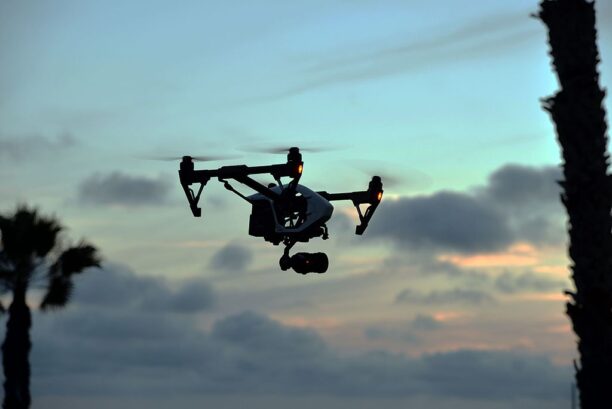
A House committee has pointed to DJI, drone batteries, and China’s industrial strategy while examining the challenges facing U.S. manufacturing.
A new congressional report identifies commercial drone manufacturing as a critical component of U.S. national security, emphasizing the link between civilian technology, industrial capacity, and military readiness.
The report, titled Rigging the Game: How China Undermined Western Manufacturing and Helped Hollow Out American Industry, was produced by the House Select Committee on the Strategic Competition Between the United States and the Chinese Communist Party.
It examines how China’s industrial policies have enabled domestic companies to capture market share in strategically vital sectors. The committee argues that government subsidies, state-directed investment, and coordinated purchasing policies have bolstered China’s manufacturing base while posing challenges to American competitors.
Commercial Drone Production and National Security
While the report primarily addresses aerospace, semiconductors, biomanufacturing, and machine tools, it specifically cites commercial drones as an example of technology with dual civilian and military applications.
"For example, the drone company making commercial quadcopters is a national security asset, whether the government intended that or not," the report states.
The committee also underscores the significance of manufacturing capacity for the components that support drone production.
"The battery gigafactory that manufactures EV cells is just one retooling away from making batteries for military drones and munitions," the report states.
These examples reinforce the committee’s broader argument that national security relies not just on advanced technology but also on the capacity to manufacture equipment at scale.
DJI and China’s Industrial Strategy
The report explicitly names DJI as an example of China’s standing in the global drone industry.
"It is no coincidence that the commercial dominance of its ‘national champion’ drone company Da-Jiang Innovations (DJI) has grown in parallel with the Chinese military’s drone swarm capabilities," the committee states.
This assessment is framed within China’s military-civil fusion strategy, which aims to enhance military capabilities through advancements in commercial technology and manufacturing.
Implications for U.S. Drone Manufacturing, Drone Users
These findings provide context for ongoing U.S. efforts to expand domestic drone production and reduce reliance on foreign supply chains.
Federal restrictions on DJI have also created hurdles for American drone operators. Small businesses and public safety agencies have depended heavily on DJI aircraft due to their affordability and capabilities. As access to new DJI products becomes more restricted, these operators face potentially substantial costs when replacing or expanding their fleets with U.S.-manufactured alternatives, which are often more expensive. While restrictions on new equipment authorizations do not ban the continued operation of previously purchased drones, they can complicate long-term fleet planning.
The report highlights the importance of building a competitive domestic industry with access to batteries, semiconductors, manufacturing equipment, and other components.
For the drone industry, the central issue goes beyond where aircraft are assembled. It includes whether American manufacturers can access the supply chains necessary to produce drones at scale and at prices that commercial and public safety operators can afford.


