
Federal Pact Streamlines Counter-Drone Safety Reviews
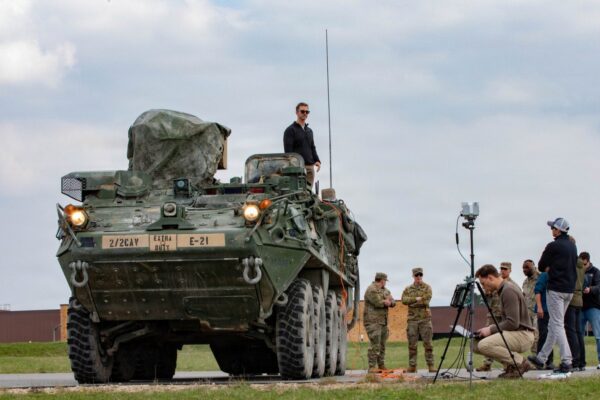
A new interagency pact creates a unified safety review mechanism, which may accelerate the rollout of counter-UAS systems that have already undergone evaluation.
On November 9, five federal departments unveiled a new agreement designed to hasten the assessment and deployment of counter-drone technology while ensuring the safety of civilian aviation.
The initiative involves the Departments of Transportation, War, Homeland Security, Energy, and Justice, with leadership provided by the White House Task Force to Restore American Airspace Sovereignty.
The Federal Aviation Administration (FAA) states that the memorandum of understanding sets up a standardized procedure for assessing counter-unmanned aircraft systems (C-UAS) prior to their deployment by federal agencies.
A Common Process for Counter-Drone Technology
Under the terms of the agreement, participating agencies will collaborate with the FAA and the Federal Communications Commission (FCC) during the development and testing phases of counter-drone systems.
Agencies will exchange technical specifications, testing results, and operational data. The FAA will evaluate potential hazards to other aircraft and suggest protective measures or airspace limitations as needed.
"The safety of our National Airspace System is the Federal Aviation Administration’s top priority," said FAA Administrator Bryan Bedford. "This agreement builds on the work already underway with our federal partners and establishes a consistent process to ensure counter-drone technologies can be used without compromising aviation safety."
This approach may also expedite the review process for systems that have been evaluated previously.
According to Reuters, FAA official Liam McKenna noted that the agency has authorized over 1,000 counter-drone coordination requests involving the Pentagon and the Department of Homeland Security. Reviews for some previously evaluated systems might be completed in as few as 24 hours.
Previous Deployments Highlight Safety Challenges
This agreement comes after various federal initiatives aimed at enhancing counter-drone capabilities along the southern border of the United States.
In April, the FAA and the Pentagon finalized an agreement regulating the use of high-energy laser counter-drone technology. Earlier incidents, however, had illustrated the dangers of deploying such systems without adequate coordination.
In February, the FAA temporarily suspended flights at El Paso International Airport after a laser counter-drone system was used without a completed FAA safety review. A later incident involving a military laser system and a Customs and Border Protection drone resulted in broader flight restrictions near Fort Hancock, Texas, according to Reuters.
Implications for Counter-UAS Deployment
The agreement creates a unified federal framework for evaluating counter-drone systems. It does not allocate new funding, broaden existing legal authorities, or remove aviation safety requirements.
For manufacturers, standardized testing and review procedures could clarify the requirements for federal deployments and minimize delays.
The announcement coincides with preparations by state, local, tribal, and territorial (SLTT) agencies to expand their counter-drone capabilities using new federal authorities and grant funding. The FY2027 Counter-UAS Grant Program allocates $250 million to assist eligible jurisdictions in safeguarding public events and critical infrastructure.
While the agreement primarily targets federal agencies, the resulting testing procedures and safety standards may also shape future deployments by SLTT entities.
The agreement does not set a timeline for new deployments or specify which systems have been approved under the new process.