
Army Launches Drone Manufacturing Rodeo to Test U.S. Production Capacity
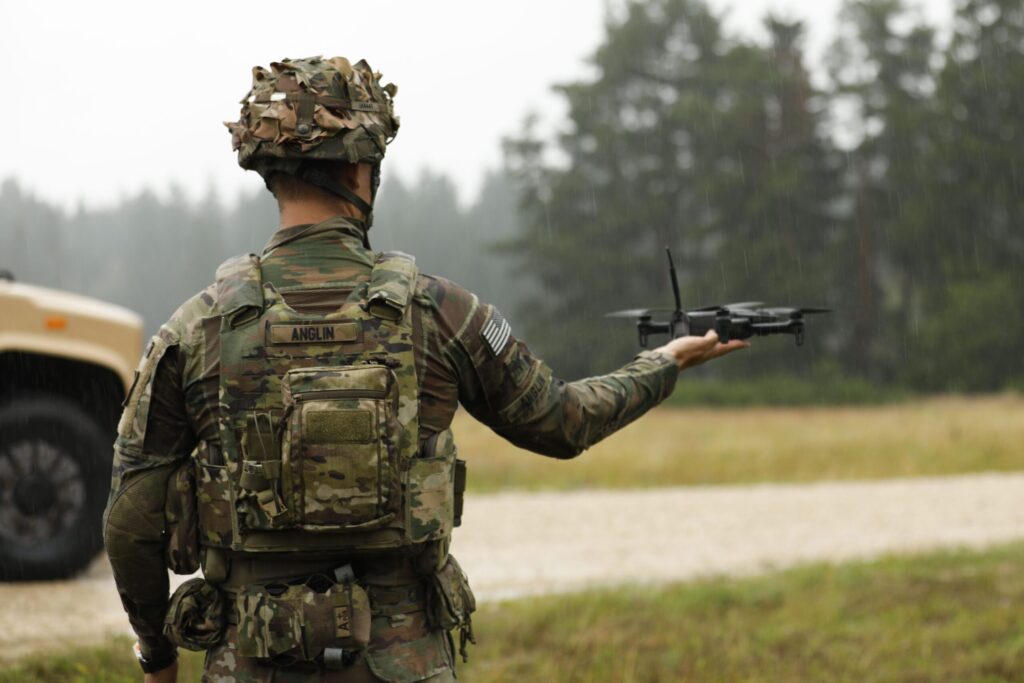
The New Manufacturing Rodeo aims to secure affordable military drones and establish a production model that merges commercial innovation with the capabilities of Army manufacturing facilities.
The U.S. Army is initiating a competition to determine if American manufacturers can produce large quantities of affordable military drones while sustaining reliable supply chains.
A November 13 solicitation from the Army Contracting Command detailed plans for a small uncrewed aircraft systems (sUAS) Manufacturing Rodeo. This initiative will unite commercial drone manufacturers with the Army’s existing industrial infrastructure.
The project concentrates on small first-person-view (FPV) one-way attack drones and loitering strike systems. It seeks to tackle a mounting challenge for the U.S. military: the need to produce inexpensive drones rapidly enough to satisfy battlefield requirements.
Moving From Small Production Runs to Mass Manufacturing
According to the Army, conventional defense manufacturing has prioritized relatively small quantities of costly, specialized systems. This method creates difficulties when military forces require large volumes of drones that might be lost or expended during combat.
The solicitation highlights several flaws in current manufacturing systems, such as restricted production flexibility, reliance on foreign components, and supply chains prone to disruption.
The Army suggests an alternative strategy. Instead of depending solely on individual commercial factories, it aims to merge the manufacturing capacity of government facilities with the design and development expertise of private companies.
This model would utilize the Army’s Organic Industrial Base, comprising government-operated depots and manufacturing facilities, in conjunction with commercial defense manufacturers.
Production Targets and Battlefield Testing
The solicitation requires an initial production phase involving 400 flight-ready drones and 20 ground control stations. The aircraft will be Group 1 FPV one-way attack systems, capped at a maximum unit price of $3,000.
The Army will provide specific components, including batteries, motors, frames, and other designated equipment.
Participating systems are expected to function in difficult battlefield conditions, including areas with electronic interference and limited satellite navigation.
The drones will compete in a specific category during the Army’s Drone Dominance Gauntlet III event, scheduled for March 2027. Active-duty soldiers will assess the systems against obstacles, targets, and electronic warfare challenges.
Successful participants may qualify for follow-on production options covering up to 10,000 aircraft.
Subsequent production efforts might occur at Army depot facilities, utilizing shared manufacturing lines operated in cooperation with commercial partners.
Testing the Supply Chain
The competition will assess factors beyond drone performance.
The Army intends to test whether manufacturers can sustain production during supply chain disruptions, including simulated shortages of raw materials and interruptions from component suppliers.
Companies must submit detailed information regarding their supply chains and explain how they would mitigate potential shortages.
The Army also plans to test whether production lines can rapidly increase output by adding shifts and expanding manufacturing activities.
The broader Manufacturing Rodeo was announced in October as an initiative to identify weaknesses in the nation’s defense industrial capacity.
During that announcement, Acting Secretary of the Army Adam Telle stated:
"The U.S. Army is going to do something we’ve never done before: early next year we will conduct what I’m calling a Manufacturing Rodeo—a race between our industrial base partners that strains our organic industrial base, stresses the supply chain, pressures manufacturing processes, and shows us exactly where it breaks."
A New Approach to Domestic Drone Production
The Manufacturing Rodeo signifies a wider shift in U.S. military drone procurement. The Army is emphasizing affordable systems, faster production rates, and the capacity to replace equipment at scale.
For commercial drone manufacturers, the initiative presents a potential opportunity to engage in military production without the need to independently construct large manufacturing facilities.
The Army scheduled a virtual industry briefing for November 16. The solicitation lists November 20 as the overall response deadline, though attached instructions set an earlier deadline for initial solution briefs.
The results may help determine whether shared government and commercial production lines provide a practical method for expanding U.S. drone manufacturing capacity.