
Wichita Police Want Two Robotic Dogs For SWAT And Bomb Squad, And The $650,000 Price Tag Is Going To City Council
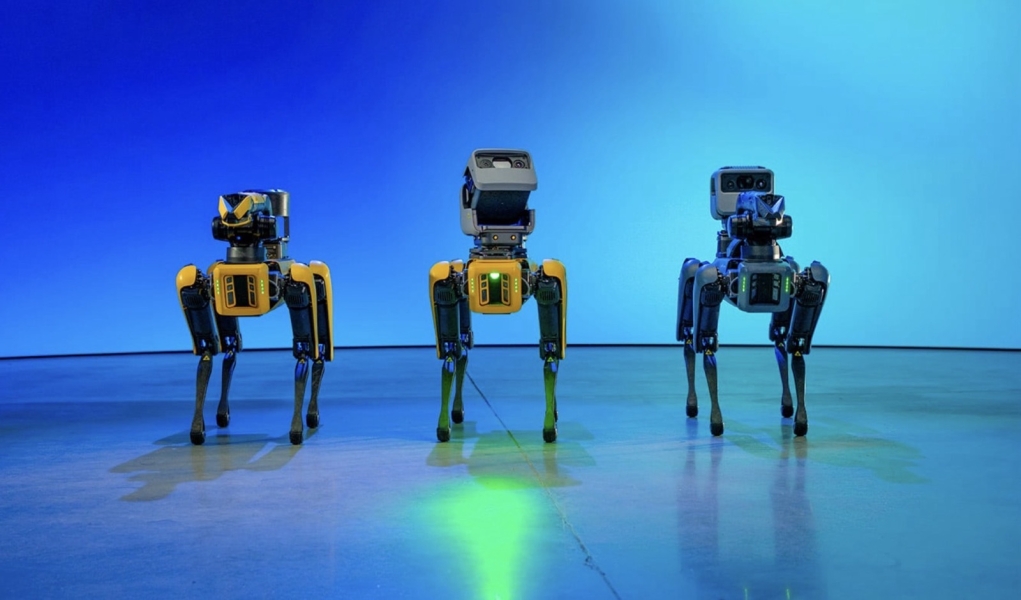 Photo credit: Boston Dynamics
Check out the Best Deals on Amazon for DJI Drones today!
The ask is direct: $650,000, two robotic dogs, two high-risk units. The Wichita Police Department brought the request to the Wichita City Council on March 3, 2026, with one quadruped robot earmarked for the SWAT team and a second for the bomb squad. What separates these from the robots WPD already operates is mobility, specifically stair-climbing and door-handling, capabilities its current flat-surface systems lack entirely.
- The Request: Wichita Police sought City Council approval for two robotic dogs at a combined cost of $650,000, one per specialized unit.
- The Gap They Fill: Current WPD robots are limited to flat or near-flat surfaces. The proposed systems can climb stairs, open doors, and cross broken terrain.
- Almost Certainly Boston Dynamics Spot: WPD has not named a manufacturer, but the described capabilities and the $325,000-per-unit price point match a police-spec Boston Dynamics Spot with arm attachment, thermal imaging, and 360-degree cameras.
- The Safety Case: Police Captain Aaron Moses says the robots let officers manage high-risk incidents from a safer distance, with a direct goal of reducing risk to officers and the public.
- The Source: Reporting by Michael Stavola for The Wichita Eagle (paywalled; search “Wichita Police robotic dogs” on kansas.com), published March 7, 2026.
The Specs and Price Point Both Point to Boston Dynamics Spot
Wichita Police have not publicly named a manufacturer, but the operational profile Capt. Moses described maps directly onto one platform: Boston Dynamics Spot, equipped with the Spot Arm and a law enforcement sensor package. Door-opening, stair-climbing, uneven terrain traversal — those are Spot’s signature capabilities, and no other quadruped platform has comparable adoption in U.S. SWAT and bomb squad deployments.
The price supports the identification. A base Spot unit runs roughly $75,000 to $100,000. A police-spec configuration adds the robotic arm, thermal imaging, 360-degree cameras, and the training and support packages that high-risk units require. Two fully outfitted units at $650,000 combined, approximately $325,000 each, lands exactly where that build-out costs in current law enforcement contracts.
The real-world proof of concept is already on record. In March 2024, Massachusetts State Police deployed a Spot during a barricaded-suspect standoff in Barnstable. The robot cleared the main floors, located an armed suspect carrying a rifle in the basement, and was shot three times before officers moved in. We covered that incident in detail. Boston Dynamics later said it was “a great example of how mobile robots like Spot can be used to save lives.” The robot took the bullets so a trooper didn’t have to.
That is the operational logic Wichita is buying into. Stairs and doors aren’t edge cases in a barricade situation. They’re usually the first obstacle between officers and a dangerous subject.
De-escalation Outcomes Drive the Safety Case
Capt. Moses was specific about what “safer distance” means in practice: better de-escalation outcomes. His full statement reads that the robots’ “advanced mobility and functionality allow officers to manage critical incidents from a safer distance, improving the ability to de-escalate situations and increasing the likelihood that incidents conclude safely and peacefully for everyone involved.”
That framing mirrors what we’re seeing across drone and robotic deployments nationwide. In January, Tulsa deputies used an Autel EVO II to talk a man with a gun into surrendering, no shots fired, no physical confrontation. Put technology between a human officer and a dangerous subject, and outcomes improve. The mechanism there was aerial, not a walking robot, but the principle holds.
Kansas law enforcement has been in this territory before. In June 2024, a man in Minneapolis, Kansas fired at officers and a police drone during a confrontation, a case that showed both the value of remote systems and the real danger these units face in the field.
The $650,000 Price Tag in Context
The department did not break out per-unit cost publicly, and Capt. Moses acknowledged he didn’t provide a comparison figure against existing robot costs. At roughly $325,000 per unit, the figure is consistent with what fully configured Spot platforms have commanded in comparable law enforcement contracts once the arm, sensors, and training are included.
Aerial drones are a different category entirely, but the contrast is still useful for scale. Georgetown, Kentucky approved more than $300,000 over five years for a BRINC Lemur 2 drone program. Savannah Police paid roughly $54,000 per unit for aerial drones. Ground robots with full quadruped mobility cost significantly more than UAVs. The mechanical requirements for legs that handle stairs, load-bearing doors, and rough terrain demand it. The bomb squad application alone may justify the spend. Sending a robot into a structure with a suspected IED is a direct substitution for a human technician.
Robotic Ground Systems Are Becoming Standard Law Enforcement Tools
Wichita’s request isn’t unusual for 2026. Across the country, police departments are adding aerial drones alongside ground robots to extend officer reach in exactly the situations most likely to turn deadly. Warren, Michigan launched a Drone as First Responder program this week covering both police and fire. Ohio law enforcement has been running dedicated tactical drone training programs specifically designed for high-risk scenarios. The direction is consistent: departments are building layered remote systems, not replacing human officers but putting technology in the gap between officers and lethal risk.
Quadruped robots fill the piece that aerial drones cannot. A drone can hover outside a window. It can’t walk down a hallway and check a closet. That’s where the robotic dogs earn their cost.
DroneXL’s Take
The Wichita request is straightforward on the merits. If a robotic dog can enter a structure with a barricaded suspect or a suspected explosive device instead of a human officer, the math isn’t complicated. The Barnstable incident in 2024 is still the clearest proof of concept: the robot took three bullets and the trooper went home. No technology at any price replaces that outcome.
What I’d watch for is the City Council debate. These votes rarely fail on safety grounds. They fail on cost optics and on community concerns about surveillance and militarization. Wichita has a specific use-case argument here, SWAT and bomb squad rather than general patrol, which is the strongest possible framing for this kind of spending. Departments that lead with patrol use tend to face much harder community pushback.
My prediction: the Council approves this by June 2026, possibly with a use-policy requirement attached. The narrow framing keeps it passable. If the department later tries to expand deployment to standard patrol operations, that’s when the harder conversation begins, and it should.
Editorial Note: AI tools were used to assist with research and archive retrieval for this article. All reporting, analysis, and editorial perspectives are by Haye Kesteloo.