
The State Of Ag Drones In The U.S. Is Dying Quickly
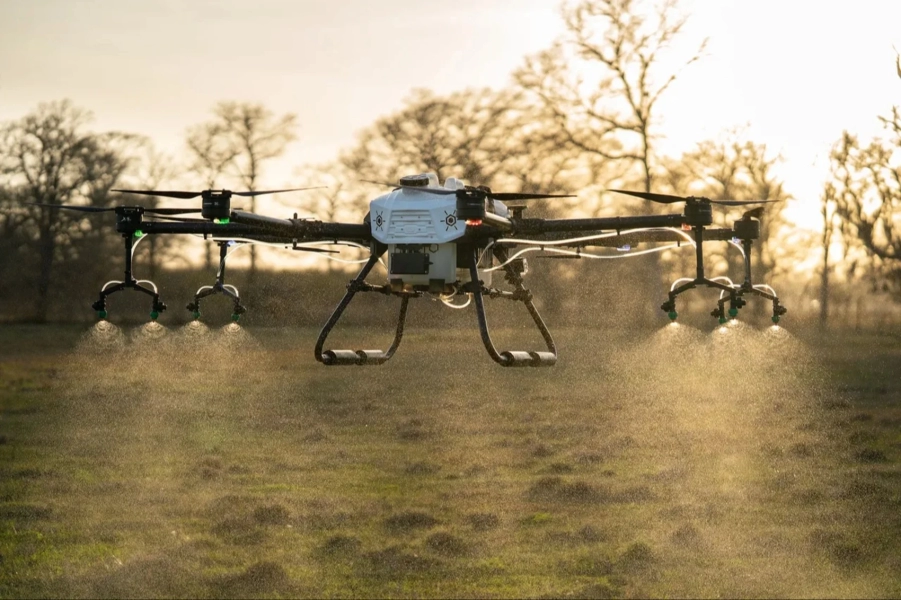 Hylio Ag Drones Are Used for Crop Spraying/Management among other purposes. | Photo Credits: Hylio
Check out the Best Deals on Amazon for DJI Drones today!
If you or someone you know works in agriculture, there’s a possibility they have seen a large “Ag drone” being used on a nearby farm as a replacement for traditional crop-spraying planes.
The entire drone industry has been running on one unspoken truth for years: DJI builds the most capable, most proven Ag drones platform on the planet, (the DJI Agras lineup) and the U.S. is still playing catch-up with China in terms of manufacturing and scalability.
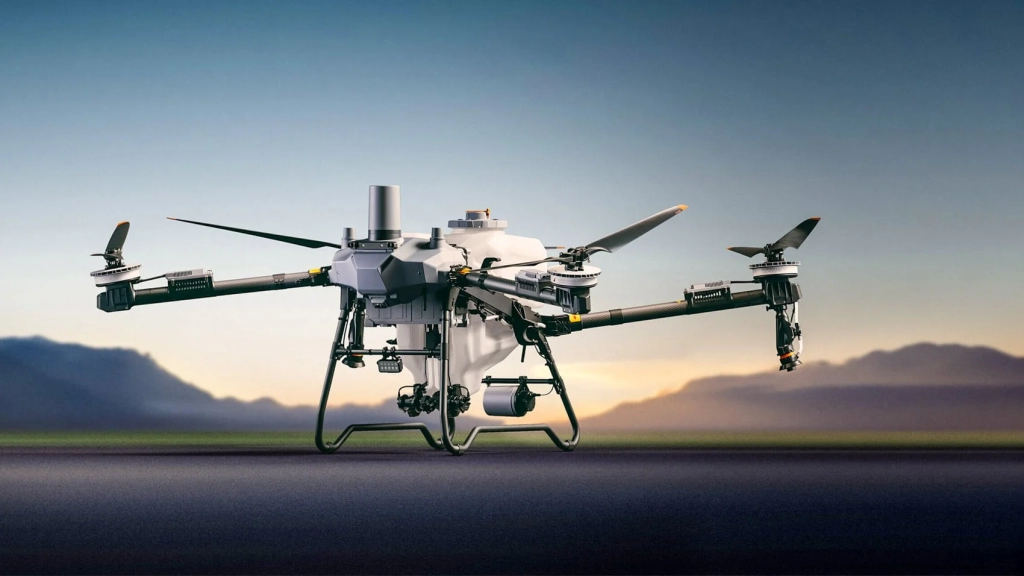 DJI Ag drones include the newest iterations of the Agras lineup | Photo Credits: DJI
Let’s Set the Record Straight on What the FCC Said
The FCC has made it abundantly clear that any additions to the Covered List do not automatically prohibit the import, sale, or use of device models it has already authorized. The policy is forward-looking in that sense. However, it also gave itself the ability to retroactively pull
So if you already own an authorized DJI Ag drone, this is not the end.
Sadly, the same FCC document also makes it glaringly obvious that new models are blocked from getting authorization, which prevents those new devices from entering the U.S. market through normal channels. That being said, there are many online vendors through certain large online retailers
For agriculture and farming operations, that is the difference between an expensive piece of equipment that is legal to operate, and one that is a safe investment.
Even if your current aircraft stays flyable for a few years, its successor might not exist in the U.S. market at all. Same with customer support, replacement parts, firmware updates, and potentially some of the ecosystem that keeps these platforms running smoothly.
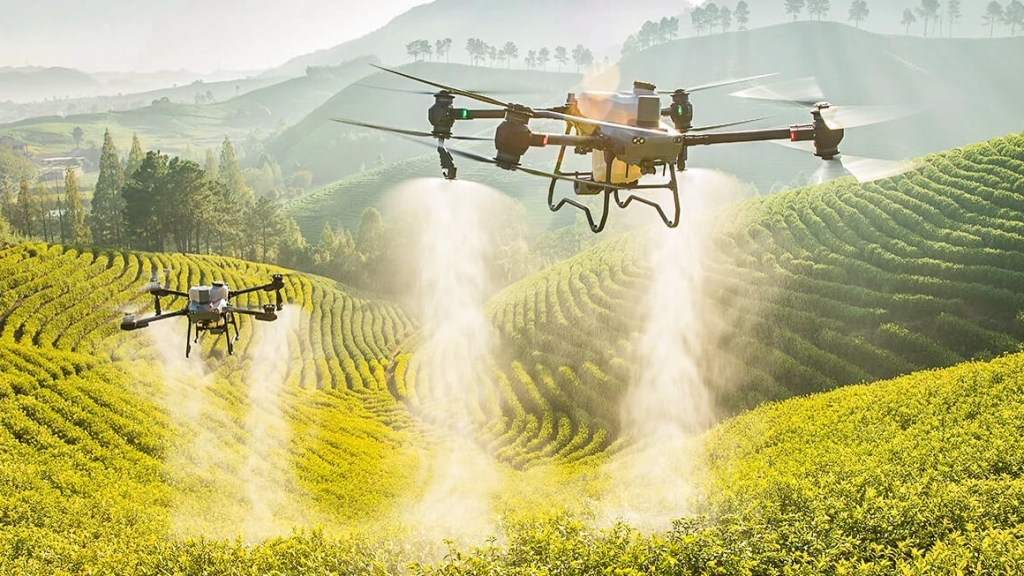 DJI Agras Ag Drones In-Flight | Photo Credits: DJI
Why Ag Drone Operators Are Nervous Anyway
Agriculture drone work is not like hobby flying. You’re usually juggling:
- FAA compliance (often including Part 137 for spraying pesticides, herbicides, etc.)
- State pesticide rules and label compliance
- Insurance requirements that change the second you start spraying
- Clients who want consistency and predictability
- A seasonal window where downtime is not an option
Operators are making ROI decisions on expensive aircraft and batteries, but that’s more difficult now than ever, as the environment’s become a lot more unstable in the past few months.
DJI Is Fighting Back
DJI isn’t taking this quietly. The company has filed suit challenging the FCC action, arguing the process was flawed and raising due process issues.
Whether DJI wins or loses is besides the point – they’re attempting to make a statement that they’ve done everything on their end. The U.S. government needs to hold up its end of the deal if we want to maintain full transparency.
It pushes operators of these expensive ag drones into a “keep it flying it until we can’t” mentality. It makes dealers cautious, and the hesitation to upgrade equipment can spell disaster later down the line. It makes insurers ask more questions, and it makes clients wonder if your equipment will still be serviceable next season.
The uncomfortable truth: the U.S. Ag Drone Scene Still Revolves Around DJI
There are U.S. ag drone companies doing real work, and there are U.S. programs trying to build a domestic supply chain that can stand on its own.
If you look at what actually shows up on farms day-to-day, DJI’s Agras line has been the workhorse for a lot of operators for one simple reason: it works.
It’s not just airframes. It’s the whole DJI ecosystem: batteries, charging workflow, spreading and spraying systems, stability, flight planning, and an ecosystem that has matured through years and years of R&D.
That’s why this FCC shift hits agriculture drones harder than it hits a lot of other categories. This isn’t a market with ten equivalent options sitting on the shelf.
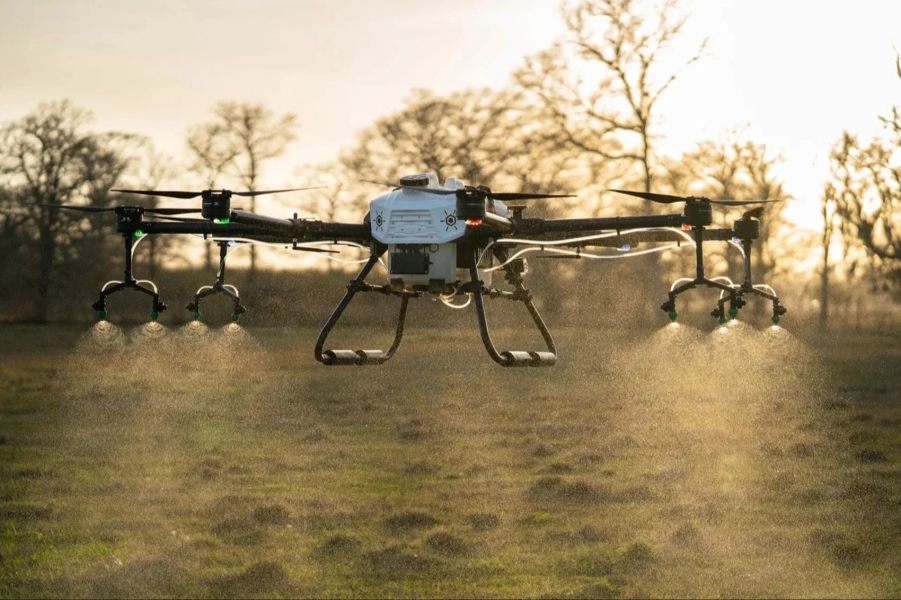 Hylio Ag Drones Are Used for Crop Spraying/Management among other purposes. | Photo Credits: Hylio
So what replaces DJI for agriculture drones in the U.S.?
Currently, the replacement options in the U.S. market are slim. Because DJI drones account for 96% of detected U.S. drone platforms, any one-to-one competitors would cost at least three time the price of their DJI counterparts.
U.S.-based manufacturers are pushing hard, and some have strong niches, but scaling manufacturing, service networks, training pipelines, and parts distribution across the U.S. is not a quick flip of a switch.
Most alternatives still contain foreign-made components. That is exactly why the recent announcement from KULR and Hylio matters a lot: they are talking openly about designing, prototyping, qualifying, and domestically manufacturing NDAA-compliant battery systems in Texas for U.S.-built agricultural drones.
Hylio makes Ag drones like the DJI Agras lineup that are capable of precision crop care/spraying.
Made in USA + NDAA-compliance focused (spraying)
These are the names that actually fit what operators want: spray capability, U.S.-based manufacturing story, and compliance messaging.
- Hylio ATLAS (30 / 50 gal) (spray, seed, fertilize)
- Hylio ARES (13 / 20 gal)
- Hylio PEGASUS (2.5 / 4 gal)
- Hylio PHOTON (scout drone) (not a sprayer, but part of the ecosystem)
In late 2024, Skydio ran into battery shortage issues as they encountered supply chain sanctions from China. In fact, China produces 99 percent of the entire globe’s drone battery supply.
The industry is also trying to fix the adoption problem from the ground up. Agri Spray Drones and WinField United signed a co-marketing agreement centered on training, research, demos, and operator support for ag drones.
So, if DJI continues getting boxed out, the U.S. market doesn’t just “lose the best.” It rebuilds around compliance, supply chain, and current support capabilities. Most of that will be painful and slow.
What Operators Can Do Right Now
Audit your fleet: document exactly what models you have, what radios and components are in play, and what your replacement timeline looks like.
Overbuy the consumables you know you will need: batteries, pumps, nozzles, hoses, arms, landing gear, whatever tends to fail in your operation.
Build a contingency plan: if you had to add a non-DJI platform next season, who conducts training, who services it, and what does that do to your pricing?
Keep receipts and documentation: especially around lawful purchase and equipment authorization status, because that is the line the FCC keeps pointing back to.
DroneXL’s Take
This is what happens when policy hits reality.
You can argue about national security all day, and the government is going to do what it’s going to do. However, ag drones are not tools that are being used for surveys, and you won’t use them to film a wedding. They’re tools for labor. They’re timing, crop health, and the only alternative to a pilot trying to cover acres before the wind shifts.
DJI didn’t dominate the ag spray drone world because of marketing. DJI dominated because the platform matured, the support ecosystem grew, and operators trusted it enough to fly expensive aircraft low and heavy, all day long.
Now we’re in a spot where U.S. agriculture drone operators are being told, indirectly, to transition away from the best tool they’ve used so far, while the domestic replacement pipeline is still ramping.
In agriculture, when investment stops, capability shrinks. The farms still need coverage. The weeds don’t care about your policy timeline.
If the goal is “American drone dominance,” the policy side needs to match the pace of the field side. Otherwise, we’re going to keep watching a slow-motion squeeze where rural operators pay more, get less, and take on more risk just to keep doing the same job.