
Portland, Maine Police Department Gets Council Approval For Axon-Skydio Drone After Earlier Rejection
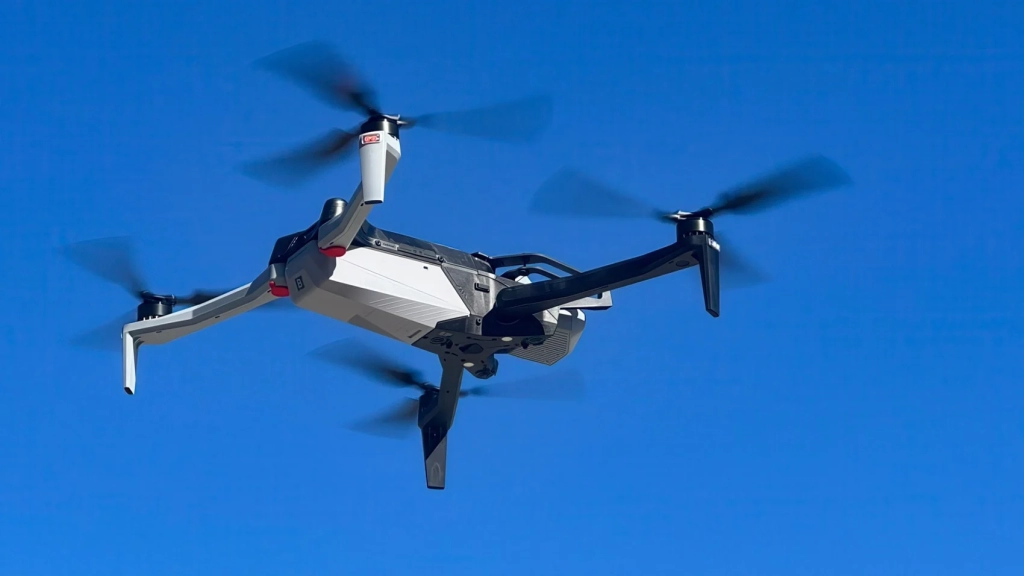 Photo credit: Skydio
Check out the Best Deals on Amazon for DJI Drones today!
When Portland police have needed a drone in the past, they borrowed one. That changes now. The Portland City Council voted Monday night to approve a $45,316 purchase for the Portland Police Department’s first dedicated drone — a Skydio aircraft supplied through Axon, as identified in the department’s original city proposal — reversing a 4-3 rejection from November 2025 after weeks of public pushback over data privacy and surveillance concerns.
- The Development: Portland, Maine’s City Council approved a $45,316 Axon-supplied Skydio drone for the Portland Police Department, overturning its own November 2025 rejection of the same proposal.
- Intended Use: Search and rescue operations, crash scene reconstruction, and high-risk incident response — not criminal surveillance without a warrant.
- The Legal Frame: Maine’s drone statute, 25 M.R.S.A. §4501, requires warrants for criminal investigations, bans weaponized drones, and explicitly prohibits surveillance of citizens exercising free speech and assembly rights.
- The Controversy: Axon’s active contract with the Department of Homeland Security and cloud-based data storage raised concerns among residents and at least one councilor about potential federal data access.
- The Source: WMTW has full coverage of Monday night’s vote.
Portland’s Council Reverses Its November 2025 Rejection
The Portland City Council approved the $45,316 drone purchase Monday, clearing the legal requirement under Maine’s UAV statute that no police department may acquire a drone without formal governing body approval. The vote ends a standoff that began when the council rejected the identical proposal 4-3 in November 2025, following a contentious public comment session. WMTW did not report the specific vote tally for Monday’s approval. DroneXL reported on the March 2 revote ahead of Monday’s outcome.
The department has wanted its own aircraft since at least mid-2025. As we covered when the original proposal came before the council in September 2025, the $45,316 total includes hardware, software, training, and servicing, funded entirely from federal asset forfeiture funds already appropriated. Portland police have been borrowing drones from neighboring agencies in the meantime — a workaround that works until it doesn’t.
Data Privacy Concerns Dominated the Debate
Residents and one councilor raised pointed questions about what happens to footage once it enters Axon’s cloud infrastructure. Axon holds an active contract with the Department of Homeland Security, which gave some community members reason to worry that data collected locally could reach federal hands.
According to WMTW, Portland resident Al Cleveland put it plainly at the meeting: “All of us are at risk for our data, our surveillance, to be used by federal agents, and we have no control over that.”
Councilor April Fournier pressed the practical question: “If it’s uploaded to cloud technology, how can we guarantee that that information isn’t pulled or used in other ways?”
Police Chief Mark Dubois answered directly. “The data is controlled by Portland PD or the City of Portland,” Dubois said. “It goes into the cloud, but it’s secure. They don’t sell it, they don’t transfer it to anyone.” Dubois also stated the department has no working relationship with U.S. Immigration and Customs Enforcement.
Monday’s approval came with a hard restriction written into the council order: the drone cannot be used to surveil citizens exercising free speech or assembly rights. That prohibition already exists in Maine law under 25 M.R.S.A. §4501, but the council’s explicit inclusion of it in the approval order signals how much of the local debate centered on protest surveillance.
Maine Law Sets One of the Strictest Frameworks for Police Drone Operations in the Country
Maine’s UAV statute imposes requirements that go well beyond what most states demand. Before a department flies a single mission, it must have written policies covering officer training, authorization chains, prosecutorial approval for criminal-investigative deployments, restrictions on facial recognition and thermal imaging, data destruction schedules, flight tracking logs, and regular public reporting.
Portland would join at least 22 other Maine law enforcement agencies already operating under those same rules, including the Maine State Police, the Cumberland County Sheriff’s Office, and the Windham Police Department. The fact that those 22 agencies operate drones in the same legal environment Portland’s program would enter is something the privacy debate in Portland’s council chambers hasn’t always acknowledged.
Council approval doesn’t put the drone in the air immediately. The department still needs to build out a written policy framework meeting state minimums before operations begin — a process that takes time and remains subject to public review.
Axon-Skydio Is Becoming the Standard Police Drone Platform
Portland’s drone is a Skydio aircraft supplied through Axon’s public safety ecosystem — the same platform combination appearing in police programs across the country. Orlando’s City Council approved a $6.83 million Drone as First Responder program built on Axon’s Skydio platform in February. Sterling Heights, Michigan funded an Axon-Skydio DFR program entirely with federal forfeiture money, the same funding source Portland is using. Skydio’s DFR Command platform has now handled 10 million calls for service nationwide.
For Portland, the scale is modest — one aircraft, one department, primary use cases in search and rescue and scene documentation. But the platform is identical to what cities spending millions more are deploying. Kansas City just launched an eight-nest DFR system on the opposite end of the budget spectrum from Portland’s single-drone purchase.
DroneXL’s Take
I’ve been following this one since September 2025, when the proposal first cleared committee and headed for what turned out to be a failed full council vote. What’s notable about Monday’s outcome isn’t that Portland finally got here — it’s how long a $45,000 purchase under one of the strictest drone statutes in the country took to clear a local council.
The data-goes-to-DHS concern is real in the abstract. Axon’s federal contracts are public knowledge. But the specific fear — that Portland PD footage will end up in federal hands — runs up against a simpler practical point: the department was already flying borrowed drones from neighboring agencies with no council-approved use framework, no formal local policy, and no local reporting requirements attached. If data sovereignty was the real concern, borrowed aircraft was the worse option all along.
Chief Dubois’s answers on data control were clear. Whether they’re auditable is the follow-up question the council should be asking now that approval is in hand. Maine’s statute mandates reporting — someone needs to actually read those reports when they come in.
My prediction: Portland flies its first operational mission by Q3 2026, most likely a missing-person search that generates enough positive local coverage to quiet the opposition for a while. The harder conversation about audit mechanisms and annual reporting review won’t happen unless a councilor specifically requests it.
Editorial Note: AI tools were used to assist with research and archive retrieval for this article. All reporting, analysis, and editorial perspectives are by Haye Kesteloo.