
Europe’s Largest Civilian Drone Factory Opens in Hungary as U.S. Policy Shifts Market
ABZ Innovation opened a new factory in just 90 days. Its plans now extend beyond Europe as U.S. policy reshapes the market for agricultural and industrial drones.
When ABZ Innovation began planning a larger drone factory in Hungary, the company was responding to a commercial problem. Demand was growing, the United States had become its largest market by volume, and its existing production site could no longer support its ambitions.
Then U.S. policy changed.
In December 2025, the Federal Communications Commission added foreign-produced drones and critical drone components to its Covered List. The decision generally blocked new FCC equipment authorizations for affected products unless a federal security review produced an exception. That created an immediate challenge for non-U.S. manufacturers that wanted to introduce new drone models in the American market.
ABZ was better prepared than many. The company had already begun developing a plan to move production for the U.S. market to the United States.
“Our goals already met the requirements of the FCC,” CEO and co-founder Károly Ludvigh said during an interview at the company’s new facility in Szentendre, near Budapest. “We started with the desire to onshore our manufacturing for the U.S. market.”
When the FCC action required ABZ to document that strategy, Ludvigh said, the company did not need to invent one.
“When the FCC Covered List came out, we just had to write down our plan as it already existed,” he said.
That planning helped ABZ secure conditional approval for its L50 agricultural spraying drone. The FCC announced the approval in June 2026 following a review by the Department of War. The approval exempts the specified system from the Covered List under defined conditions.
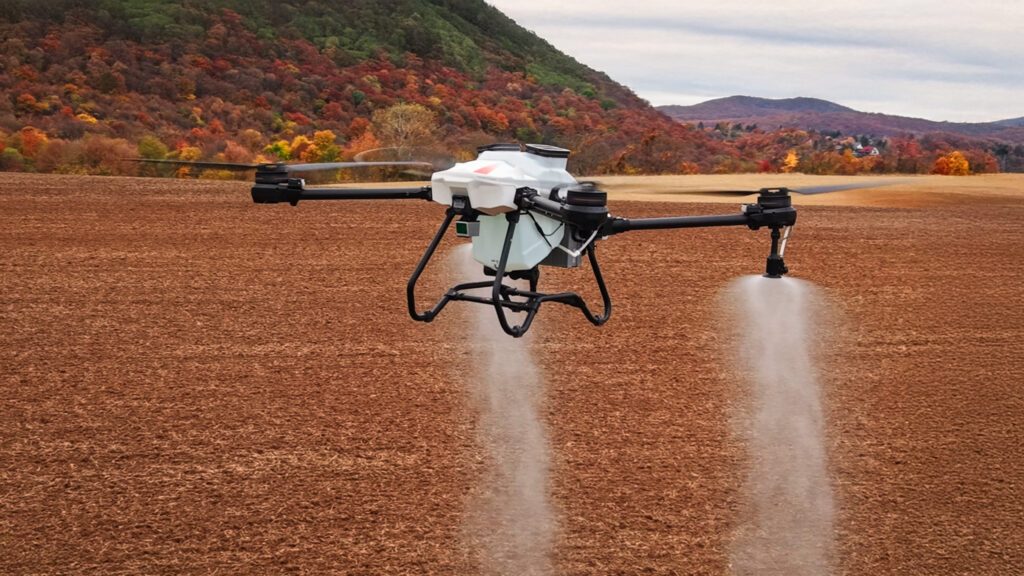
ABZ L50 Drone
The result placed ABZ in a small group of manufacturers with a named pathway into the U.S. market. Based on FCC public notices issued through September 2026, ABZ’s L50 and Ceres Air’s agricultural platforms are the agricultural spraying systems specifically identified as receiving conditional approval. XAG, another major agricultural drone manufacturer, received a temporary deferral of an FCC grantee-code restriction while the agency considered broader questions, rather than the same form of product-specific conditional approval.
For ABZ, that distinction carries added weight because of what the FCC may do next.
Agricultural Technology Meets a New Policy Test
In July, the FCC proposed restrictions on the continued importation and marketing of certain foreign-produced drones already covered by the agency’s rules. The proposal uses the term “military-grade,” but its listed capabilities reach far beyond defense systems.
Among the categories under consideration are drones equipped with thermal imaging or LiDAR, systems designed for docking stations, drones capable of coordinated operations, aircraft weighing 55 pounds or more, and drones designed to dispense what federal aviation rules define as an “economic poison.” That last category can include agricultural aircraft used to apply pesticides.
ABZ’s products sit directly at the intersection of those definitions. Its L-Series drones spray crops, while the company has also integrated LiDAR technology into agricultural systems for terrain following and obstacle awareness.
The FCC proposal is not yet a final rule. Its eventual scope, exceptions and implementation remain subject to the regulatory process. However, it illustrates how quickly market access can change for drone manufacturers, even when their products support routine civilian work.
It also strengthens the business case for the strategy ABZ had already adopted: manufacture in allied countries, move more of the supply chain closer to customers, and eventually build U.S.-market aircraft in the United States.
For Ludvigh, the goal is larger than finding a way around a regulatory barrier.
“We truly believe that there should be a closer alliance between the U.S. and the EU,” he said. “Alone, it’s very hard to face China. But by putting together what we can each contribute, we can create great technology and get back our abilities to manufacture hardware.”
A Factory Built in 90 Days
ABZ’s new Szentendre facility offers a practical example of that approach. The company built the factory in approximately 90 days and transferred production into it in two days.
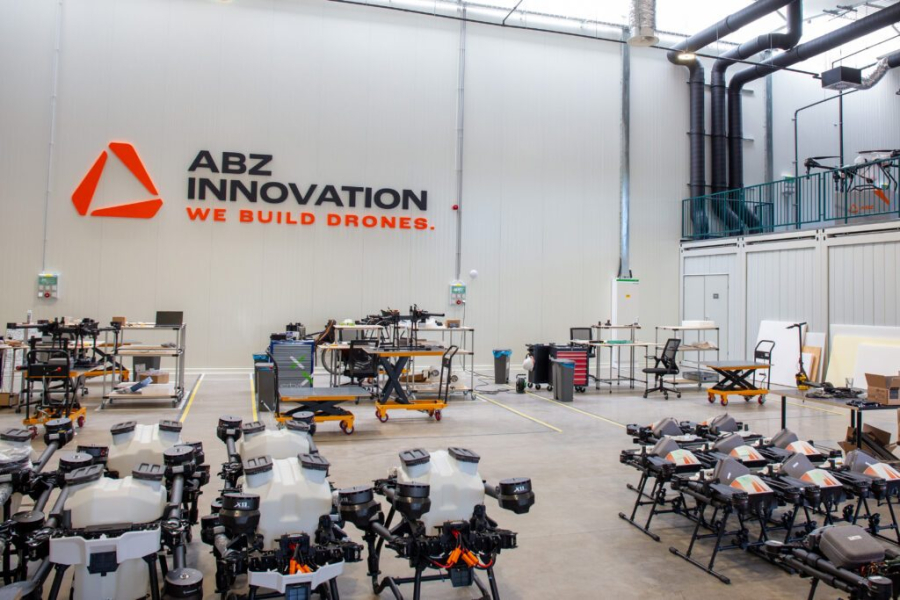
Ludvigh described those two days as among the most enjoyable in the company’s history. Employees worked across their usual roles to move equipment, organize production and get the new facility running. The experience reflected a company culture built around quick decisions and shared responsibility.
The construction team later told ABZ that the schedule worked because it rarely had to wait for an executive decision.
“We make decisions very quickly,” Ludvigh said. “If it turns out that we need to pivot, we will. But we get started in the direction that we want to go in.”
That approach matters in a young industry where product categories, regulations and customer needs continue to shift. Ludvigh argues that trying to prepare for every possibility can slow a company until the opportunity has passed.
The completed factory is about four times larger than ABZ’s former production site. The company is targeting a threefold increase in production during 2026, followed by another doubling in 2027.
The site will support all four ABZ product families: L-Series spraying drones, S-Series seed and granule spreading systems, C-Series high-pressure cleaning drones, and M-Series cargo and multifunction platforms. ABZ says its aircraft now operate in more than 40 countries across six continents.
The expansion follows a €7 million investment round completed in January. Vsquared Ventures led the round, with participation from Hungary’s Day One Capital and U.S.-based Assembly Ventures. The funding supports manufacturing growth, product development and international expansion.
Building on Hungary’s Industrial Base
Hungary offers ABZ more than a lower-cost location within Europe. The country has a deep manufacturing base shaped in part by decades of supplying the German automotive industry.
That history created a network of component manufacturers, machine shops and technical specialists. As European automakers face a difficult market, Ludvigh sees an opportunity to redirect some of that knowledge and capacity toward drones and robotics.
“We are in a very good position and a very good location,” he said. “We have amazing talent. We can create good products, fast.”
The company still relies on some Chinese components. Its battery cells come from China, although ABZ builds the battery packs in Hungary. Its current propulsion system also includes Chinese sourcing. The company has begun discussions with other suppliers and is working toward a more diverse supply chain.
Ludvigh does not portray that transition as simple or complete. Two years ago, he said, replacing key parts of the existing supply chain appeared nearly impossible. Today, he believes a viable path is emerging.
His argument is not that every component must be redesigned from the ground up. In some cases, allied manufacturers already have the engineering expertise and equipment they need. What is missing is production volume, coordination and a market strong enough to support the investment.
“You don’t need to invent everything,” he said. “There are very simple tools to make production cheaper without bringing in AI robots.”
Competing on More Than Country of Origin
ABZ entered the U.S. market through a relationship with Drone Nerds. In 2024, the distributor invited the company to demonstrate its technology. According to Ludvigh, ABZ was the seventh manufacturer evaluated; the previous six demonstrations had encountered problems.
That opening led to a contract within months and gave ABZ a clearer view of the market gap. Chinese manufacturers offered advanced products at aggressive prices, but growing policy and supply-chain concerns created demand for alternatives.
ABZ concluded that a European company could fill part of that space. However, Ludvigh does not believe Western manufacturers can succeed solely because policymakers restrict their competitors.
“We need to work together to provide products that are good for the market – and not just because everyone else is banned,” he said. “We need to get competitive, and for that we need to put our heads together.”
That principle shapes the company’s hiring as well as its manufacturing strategy. ABZ’s early team consisted largely of generalists who could identify problems and solve them without waiting for a detailed playbook.
“I never cared about diplomas,” Ludvigh said. “I wanted people who had the skill set to evaluate and solve problems.”
As the company grows, it is adding specialists in product development, enterprise systems, manufacturing quality and other disciplines. The generalists created the foundation; the specialists are now helping ABZ turn an agile startup into a larger industrial company.
The Next Factory
The Szentendre opening represents a substantial expansion, but it is not the final step. ABZ intends to establish production in the United States for products sold into the American market.
The company has not announced a site or opening date. Its conditional approval should therefore be understood as a bridge, not the completion of its U.S. manufacturing plan.
That distinction is important. The FCC’s December action and its later “military-grade” proposal show how regulatory definitions can reshape access to the world’s largest commercial drone market. Agricultural spraying and LiDAR-equipped aircraft may perform clearly civilian missions, but their capabilities can still place them within a national security review.
ABZ’s response is to build closer to its customers while strengthening production among allied countries. The Hungarian factory demonstrates that the company can move quickly. Its planned U.S. facility will test whether that same agility can support a manufacturing footprint across two continents.
For Ludvigh, allied manufacturing must ultimately deliver more than compliance. It must produce drones that customers choose for their performance, serviceability and price.
That may be the most important lesson from the new factory. ABZ built the facility in 90 days, moved production in two, and kept its longer-term U.S. plan moving through a sudden regulatory shift. In an industry where policy, technology and supply chains are changing at the same time, speed has become more than a startup trait. It is part of the manufacturing strategy.