
Gilroy Greenlights Drone As First Responder Pilot
 Photo credit: Brinc
Check out the Best Deals on Amazon for DJI Drones today!
The Gilroy City Council just approved its first Drone as First Responder program. The city gets the whole first year for free, as KSBW reported.
That’s not a minor detail. That’s the kind of low-stakes entry point that gets hesitant councils off the fence.
From “After Officers” to “Before Officers”
Gilroy’s existing drone program has a built-in limitation: drones can only respond after officers are already en route. That’s useful. It’s just not DFR.
This new program flips the script. The moment a priority call comes in, the drone launches. It’s eyes on scene before any human responder arrives, streaming live video, assessing the situation, and helping dispatchers decide how many officers to send.
That distinction matters more than it sounds. Sending the right number of officers to the right kind of situation is exactly where DFR earns its keep.
The BRINC Responder: Built for This Mission
Gilroy evaluated several platforms before choosing the BRINC/Motorola Takeoff Program. Paladin, Axon/Skydio, and Flock Safety/Aerodome were all in the running. BRINC won on the merits of a low-risk pilot structure.
The aircraft behind the program is the BRINC Responder, the first drone purpose-built for 911 response. It launches from its docking station in under five seconds and can reach a call location in less than 70 seconds. It carries a full HD camera with 42x zoom, a thermal sensor for low-light and no-light situations, and a delivery payload for life-saving gear including Narcan, AEDs, and EpiPens.
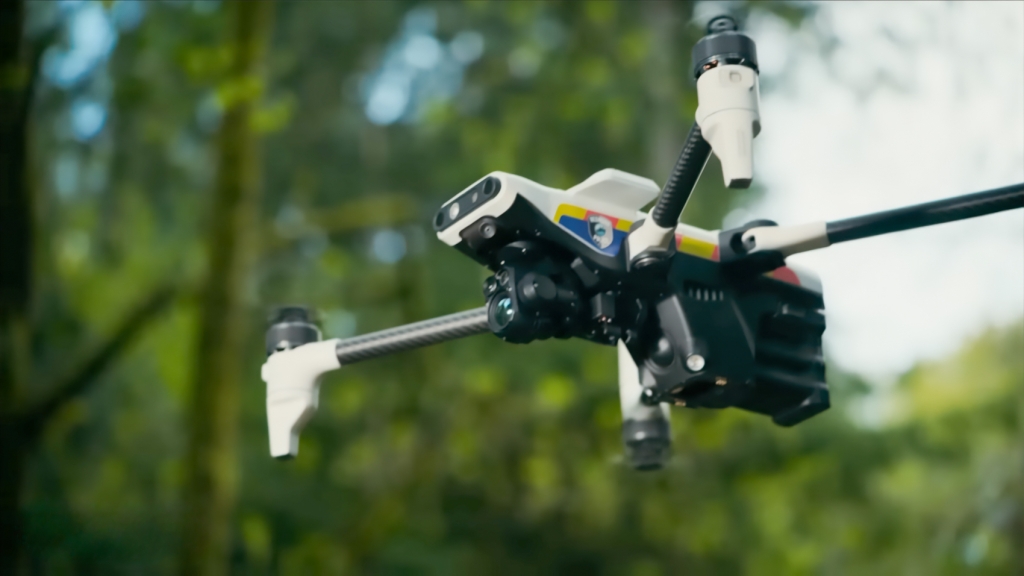 Photo credit: Brinc
Flight time tops out at 42 minutes, with a full recharge cycle of just 40 minutes. After a call ends, the drone autonomously returns to the nearest available station and starts charging on its own.
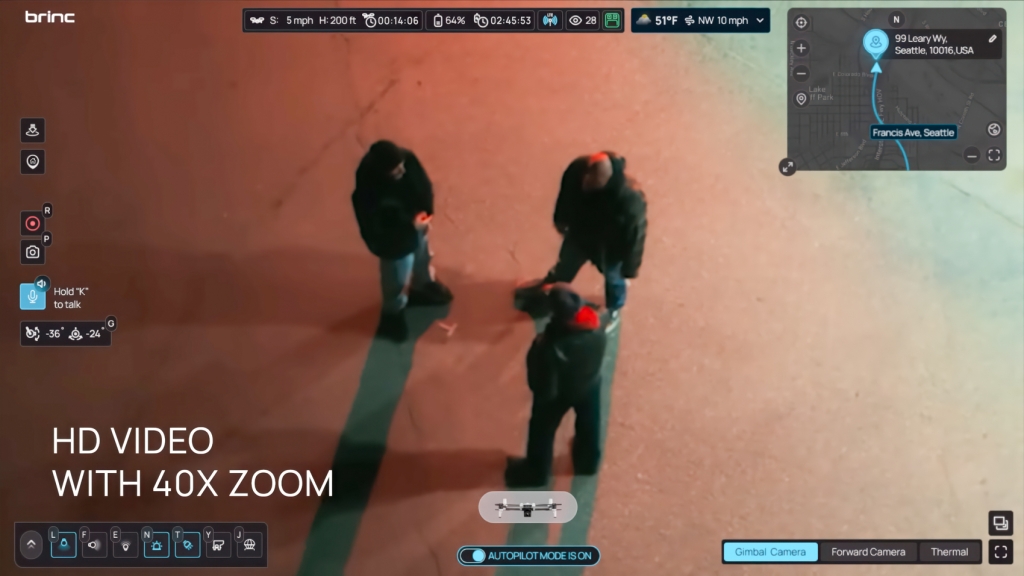 Photo credit: Brinc
The Motorola side of this partnership is no afterthought. Motorola’s systems already power more than 60 percent of North America’s 911 command centers. Integration with BRINC’s LiveOps platform means dispatchers can launch a drone with a single click, directly from the same CAD screen they’re already using. One button. The drone goes up.
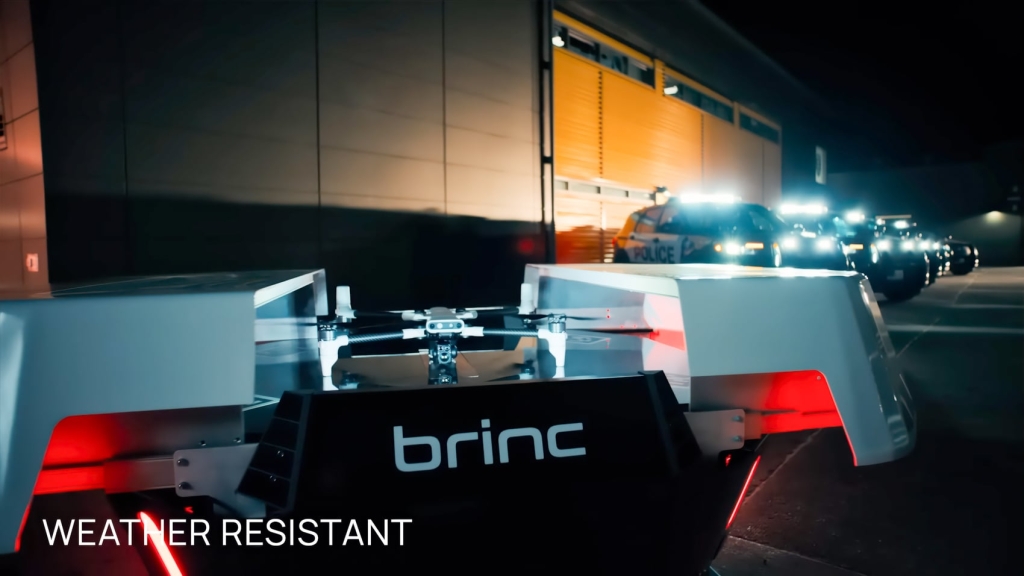 Photo credit: Brinc
BRINC drones are currently deployed across more than 700 public safety agencies in all 50 states. The Responder is American-made and NDAA compliant, a critical checkbox for public agencies dealing with procurement scrutiny.
Transparency Built Into the Program
Gilroy Police will publish periodic reports on deployments, outcomes, and policy compliance. They’re also launching a public-facing webpage and FAQ so residents understand how and when the drone gets used.
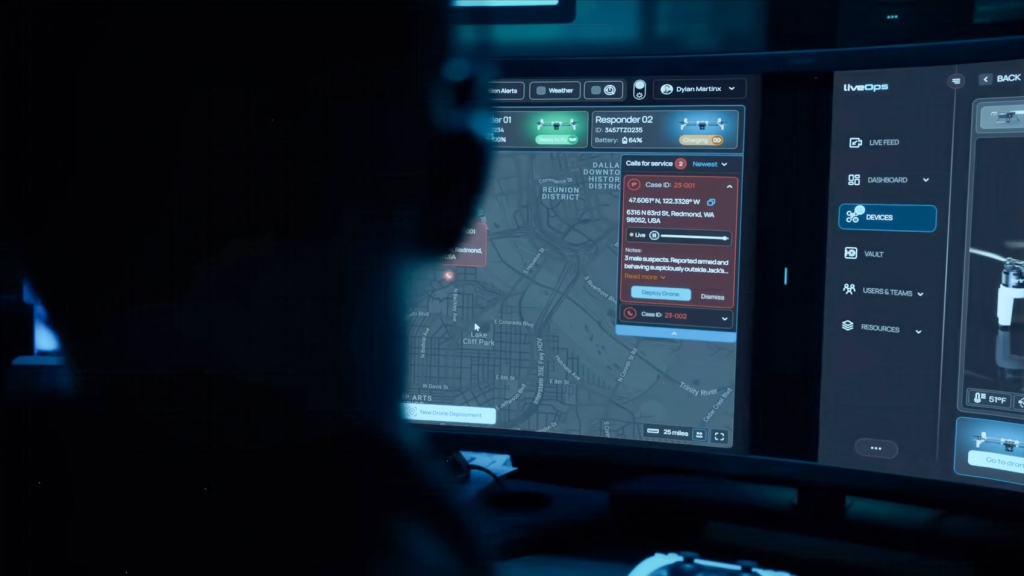 Photo credit: Brinc
That’s smart. DFR programs live or die on community trust. The technology isn’t the hard part. The politics is.
After year one, staff will evaluate performance and return to the council with a budget recommendation. The free first year isn’t charity. It’s BRINC and Motorola betting on their own product, knowing that agencies that try DFR rarely go back.
DroneXL’s Take
Here’s what I actually think: Gilroy made a genuinely smart call here.
Not because DFR is new. It isn’t. But because they picked a platform with real integration depth and accepted a no-cost pilot instead of either overcommitting or doing nothing. That’s sound judgment from a local government, and it doesn’t happen enough.
Let’s be straight: the free first year is also a business play. BRINC and Motorola know that once a department sees a drone arrive on scene before the first cruiser does, the conversation about budget shifts permanently. They’re not being generous. They’re being confident.
The part that doesn’t make the headline is the downstream impact. When a DFR drone can resolve roughly one in four calls without dispatching a unit at all, that’s not just efficiency. That’s officers staying safe, staying available, and staying focused on the calls that actually need them.
Gilroy has roughly 60,000 residents and sits at the southern tip of Silicon Valley. If this program delivers, it won’t stay quiet for long.
Photo credit: Brinc