
FAA Research: DJI Accounts For 96% Of Detected US Drone Platforms. The FCC Banned DJI In December.
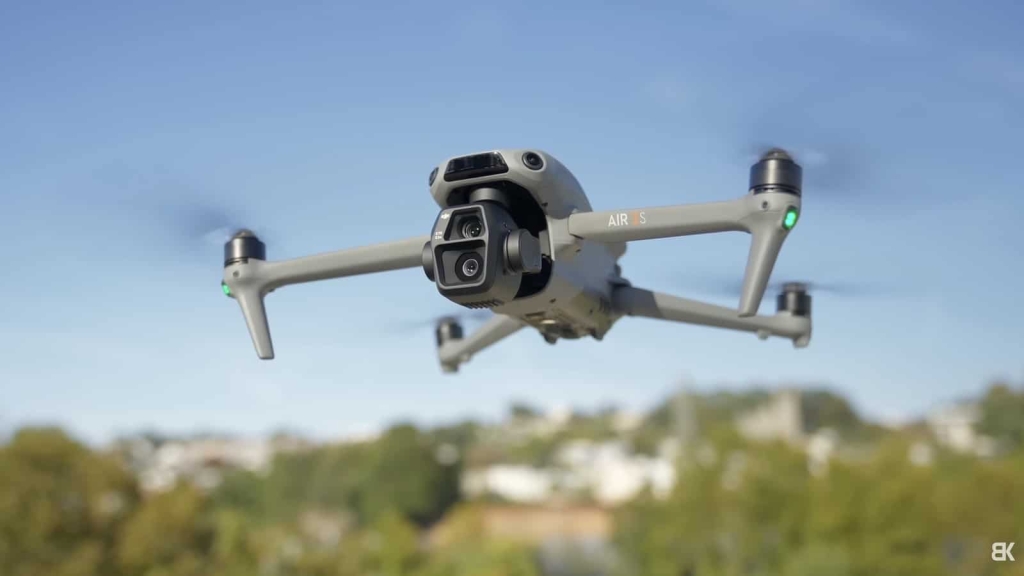 Photo credit: Billy Kyle
Check out the Best Deals on Amazon for DJI Drones today!
New FAA-funded research puts a hard number on what every drone pilot already knows: DJI is the US drone market. Not most of it. Nearly all of it.
The ASSURE A83 2025 Annual Report, produced by researchers at Embry-Riddle Aeronautical University, Kansas State University, NIAR, and Wichita State University for the FAA’s Center of Excellence, analyzed Remote ID telemetry data collected through November 2025. The finding: DJI-manufactured platforms make up more than 96% of detected drone platforms in US airspace. Skydio, the company that lobbied hardest for DJI restrictions, accounted for slightly more than 1%. Every other manufacturer combined made up less than 2.4%.
An important caveat: these numbers reflect what Remote ID sensors picked up at 64 monitoring locations, not every drone flight nationwide. Drones without Remote ID, homebuilt aircraft, and many FPV rigs don’t broadcast and won’t show up in this data. That said, the A83 study is the most comprehensive picture of real-world US drone activity that exists, and DJI’s dominance in the data is consistent with its estimated 76-90% market share by sales volume.
The timing matters. On December 22, 2025, the FCC banned all foreign-made drones from receiving new equipment authorizations. The FAA’s own research partners have now quantified how dominant the platform is that the FCC blocked.
The A83 report reveals what pilots actually fly
The ASSURE A83 project is the follow-on to the earlier A50 study that was published in March 2025. It uses the same network of 166 Remote ID sensors deployed across 64 locations and draws on Remote ID broadcasts, air traffic data, UAS registrations, and geographic information.
The model breakdown tells the story. The DJI Mini 4 Pro alone accounts for 19% of all detected platforms. The DJI Air 3 is at 13%. The Mavic 3 Pro holds 8%, and the Air 2S and Air 3S each sit at 7%. More than 93.7% of the top 22 detected platforms weigh 3 pounds or less.
The Mavic 3 (non-Pro) is showing waning usage, with activity roughly halved since the previous reporting period. That’s a product lifecycle issue, not a market signal. Pilots are upgrading to the Mavic 3 Pro and Air 3. Larger platforms like the Matrice 30T are growing but still make up a small portion of total detections. Specialized heavy-lift models like the Matrice 400, Agras T50, T25, and FlyCart 30 appear in the data but remain a tiny fraction of overall flights.
Most US drone flights are slow, low, and close to the pilot
Nearly half of all flight telemetry (49.3%) shows drones that are stationary. Hovering. Another 26.9% were moving below 15 mph. Only 7.8% exceeded 30 mph. Just 0.1% topped 50 mph. These are people hovering over real estate listings, inspecting rooftops, and filming family events.
Operator distances confirm the same pattern. About 58.2% of flights stayed within 0.1 nautical miles of the pilot. Over 92.6% remained within 0.5 NM, well inside visual line-of-sight range. Only 5.3% of operations occurred above 500 feet AGL, where routine manned aircraft fly.
Ground risk is generally low. Nearly 45.4% of flights occurred in areas with zero population density, and less than 10% took place in moderate-density environments. Only about 8.5% of operations happened in the highest population density category.
The researchers flagged one concern worth noting: while slow speeds reduce collision damage potential, stationary and slow-moving drones are harder for manned aircraft pilots to spot. Peripheral movement is how pilots detect collision threats. A hovering drone at 300 feet provides none of that visual cue.
Compliance gaps and heliport blind spots persist
The report identifies real issues the FAA needs to address. Among flights occurring within UAS Facility Map coverage, 58% were conducted above the applicable grid altitude limits. That is a compliance problem that calls for better enforcement, better education, or both.
Heliport proximity stands out. While 70% of datapoints were nearest to airports, nearly 30% were closest to heliport facilities. Flights were typically conducted at shorter distances from heliports than from airports. The researchers point out that heliports often don’t appear on standard aeronautical charts or common UAS planning tools. I’ve been testing drone apps for years and can confirm: heliport data is incomplete in every major flight planning app I’ve used. This gap has been known for a long time and still hasn’t been fixed.
LAANC usage continues to grow. The FAA processed 688,716 individual authorizations from January through November 2025, a 9.2% increase over the same period in 2024. Part 107 requests made up 72.8% of that total, with recreational (Part 44809) requests at 27.1%.
FAA registration numbers as of November 2025
The report includes the latest FAA registration data: 453,635 commercial UAS registrations, 371,334 recreational flyer registrations, 12,544 paper registrations (typically for drones above 55 lbs), 481,760 certificated remote pilots, and 1,226,168 TRUST certificates issued. Those recreational registration numbers are almost certainly understated. We’ve reported on this gap before. Many hobby pilots either don’t know they need to register or simply don’t bother.
DroneXL’s Take
This report dropped while DJI’s lawsuit against the FCC is working its way through the courts. The timing is coincidental, but the data is relevant.
The FCC banned the platform responsible for 96% of detected US drone operations without conducting the security audit that Congress required. Skydio, the company the FCC’s “American drone dominance” policy is supposed to benefit, accounts for 1% of detected platforms. One percent. And that comparison actually flatters Skydio, because the 96% figure is dominated by consumer models like the Mini 4 Pro and Air 3 that Skydio doesn’t even make. In the enterprise segment where Skydio competes, DJI’s Matrice line is growing.
When FCC Chairman Brendan Carr stood at CES showing off a dozen American drones, I pointed out that DJI’s market share means hundreds of thousands of drones are operating professionally across the country. This A83 data confirms it. You can’t replace 96% of an industry’s detected fleet with products that show up in 1% of operations.
I want to be fair about what this data does and doesn’t prove regarding the security debate. The concern about DJI was never that individual flights are dangerous. It was about data routing, potential remote access, and intelligence value of aggregated geospatial information. Flight altitude and speed don’t address those claims. But the sheer scale of DJI’s dominance does raise a different question: if 96% of your drone ecosystem depends on one foreign manufacturer, banning that manufacturer without a ready domestic alternative isn’t a security strategy. It’s disruption without a plan.
A white paper published today by the Oregon Department of Aviation surveyed 25 state transportation departments and found 467 drone airframes grounded or restricted, with national exposure estimated between $50 million and $2 billion. Wisconsin lost 100% of its fleet. Colorado lost 90%. That’s the ground truth behind the 96% number in this ASSURE report. We’ve also seen it with agriculture, where farmers still have no viable DJI replacement months after the ban.
The compliance data also deserves attention. If 58% of flights within UAS Facility Map areas are above altitude limits, that’s a real safety problem. DJI’s geofencing system used to prevent exactly these kinds of incursions. Now it’s gone. Remote ID adoption is still incomplete. And the FAA still hasn’t figured out heliport data. These are fixable problems that got overshadowed by the DJI ban drama.
My prediction: this A83 data shows up in DJI’s legal filings within 60 days. If I were DJI’s legal team, I’d cite the 96% figure, the 1% Skydio number, and the FAA registration data to argue that the FCC action will cause concrete, quantifiable harm to the entire US drone ecosystem. Whether the court cares is another question. But the evidence-free ban now has FAA-funded evidence showing what it actually disrupted.
The full ASSURE A83 2025 Annual Report is available here (PDF).
Editorial Note: AI tools were used to assist with research and archive retrieval for this article. All reporting, analysis, and editorial perspectives are by Haye Kesteloo.