
Drones Fly Over Texas A&M’s Mock Disaster City In Mass Casualty Drill
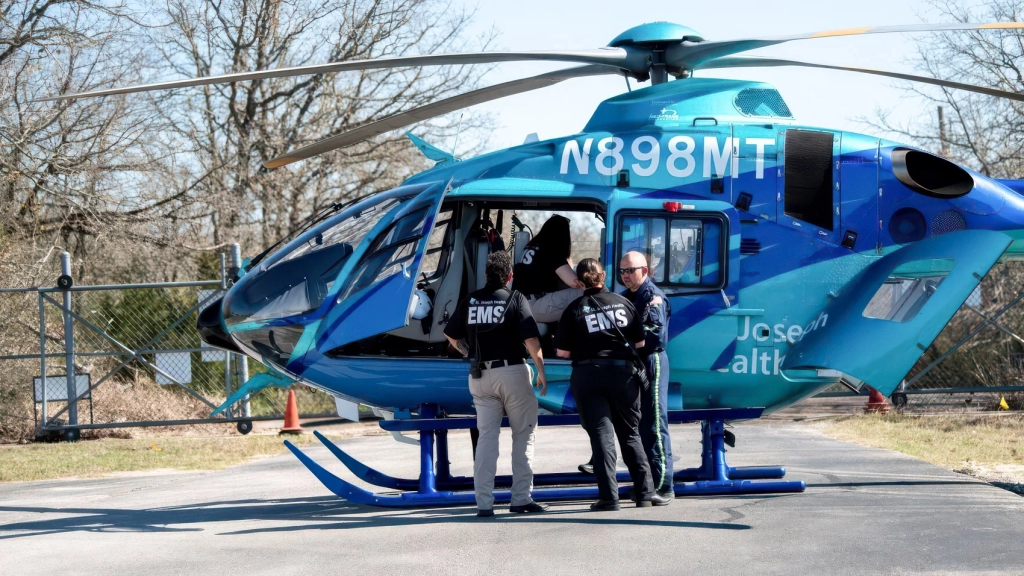 Photo credit: Texas A&M
Check out the Best Deals on Amazon for DJI Drones today!
Six hundred students. A fake bioterrorism attack. A simulated explosion. And drones flying overhead until midnight for ten straight days. This is how America trains its next generation of emergency responders.
A City Built to Burn, Flood, and Collapse
Disaster City is not a metaphor. It is a real 52-acre facility in College Station, Texas, operated by the Texas A&M Engineering Extension Service, where buildings are built to collapse on cue, train cars derail on schedule, and hazmat scenarios play out in full gear under a Texas sun, as KBTX reported.
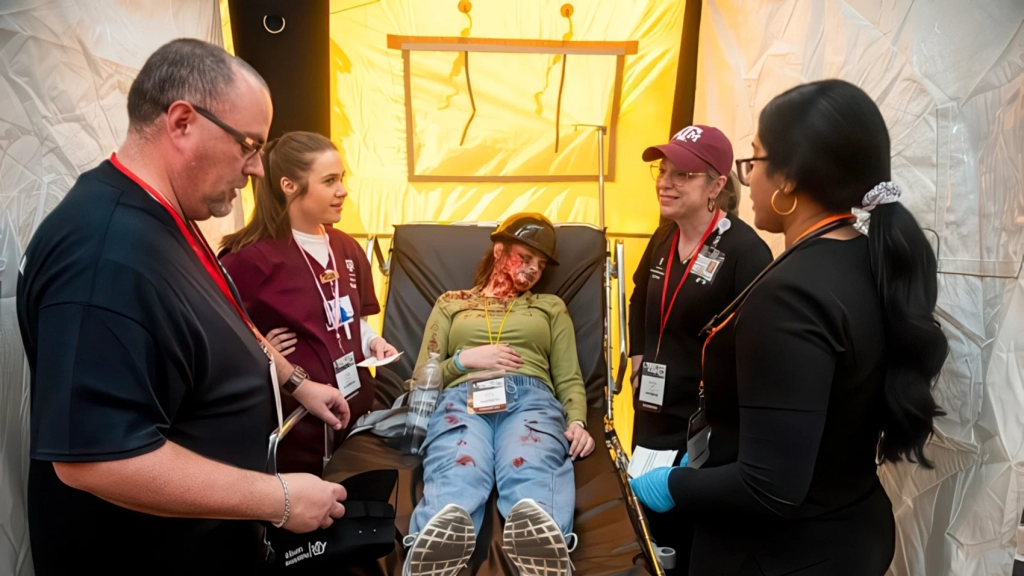 Photo credit: Texas A&M
Over 210,000 first responders train at Disaster City each year. It is one of the most sophisticated emergency response training environments on the planet.
From March 10 through March 19, TEEX is running a large-scale emergency response training exercise at Brayton Fire Training Field and Disaster City, collaborating with state and federal partners on emergency medical responses in a mass casualty environment.
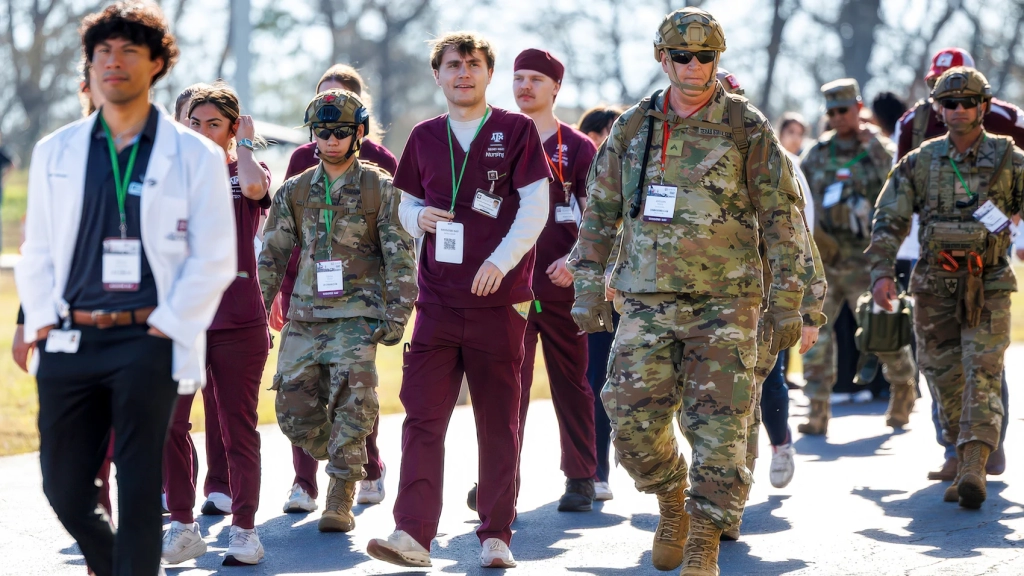 Photo credit: Texas A&M
The exercise runs daily from 9 a.m. to midnight. Residents near the facility can expect smoke, simulated explosions, recorded sounds designed to replicate a disaster scene, increased emergency vehicle traffic, and drones flying overhead throughout the exercise period.
Drones are no longer an optional add-on in mass casualty response training. They are part of the standard operational picture.
The fact that TEEX included aerial drone operations in its public notice alongside smoke and simulated explosions tells you exactly where drone integration sits in professional emergency response doctrine in 2026: it is expected infrastructure, not experimental technology.
600 Students, One Very Bad Day
On February 27, the 18th annual Disaster Day exercise took place at Disaster City as part of the broader TEEX training period. This is the nation’s largest student-led interprofessional emergency response simulation, run by the Texas A&M Health Science Center.
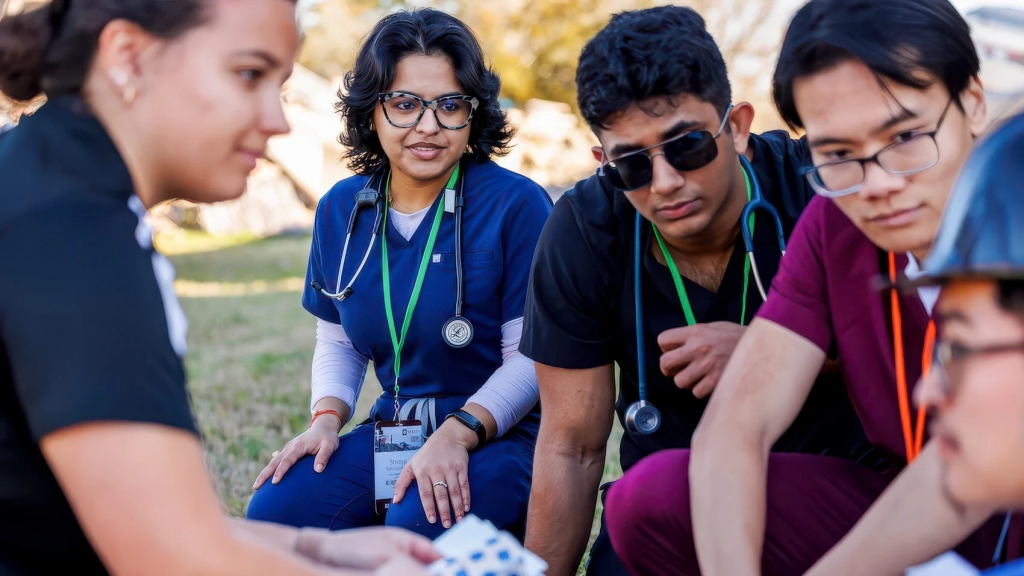 Photo credit: Texas A&M
This year’s scenario opened with a bioterrorism attack. Fair food laced with botulinum neurotoxin. Human and animal victims simultaneously requiring triage. Then, mid-exercise, a simulated explosion hit a mock country music concert and sent a new wave of blast-injury patients into the field hospitals.
Over 600 Texas A&M students worked through it. Medical students, pharmacy students, veterinary students, public health students, psychology doctoral candidates, and graduate students from the Bush School of Government and Public Service all operated in the same chaotic environment simultaneously.
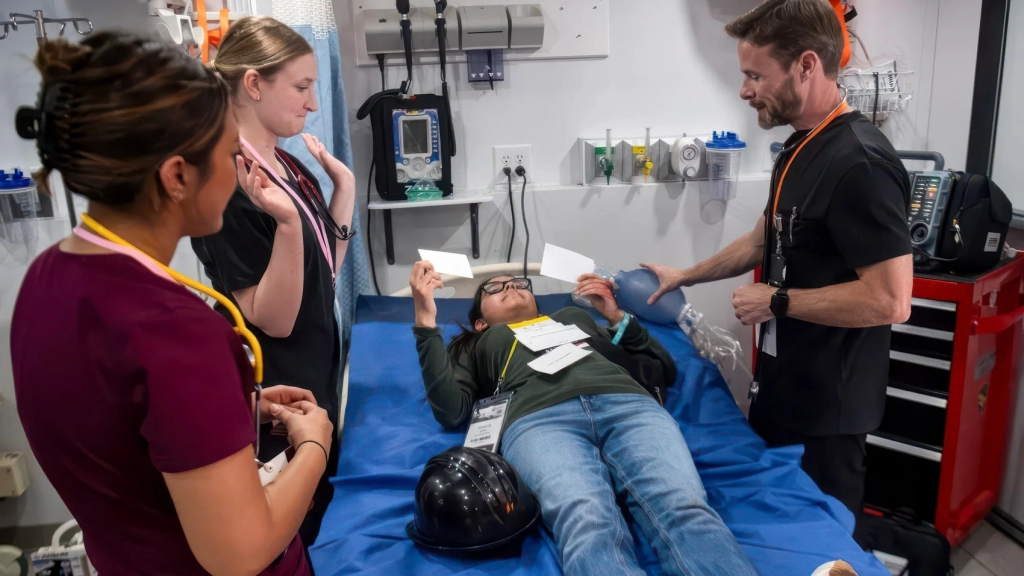 Photo credit: Texas A&M
That interprofessional structure is intentional. Real disasters do not arrive sorted by department. The Disaster Day model forces students from completely different disciplines to communicate, coordinate, and make decisions together under pressure.
Christine Kaunas, assistant vice president for Interprofessional Practice, Education and Research at Texas A&M Health, put the stakes clearly. Disasters do not discriminate. Texas sees more federally declared disasters than any other state, year after year. The students training at Disaster City today will be the responders standing in those situations tomorrow.
The Students Running the Exercise
What makes Disaster Day unusual is that students do not just participate. They run it.
Madeleine Bradford, a third-year pharmacy student at Texas A&M’s Irma Lerma Rangel College of Pharmacy, served as Student Planning Director for 2026.
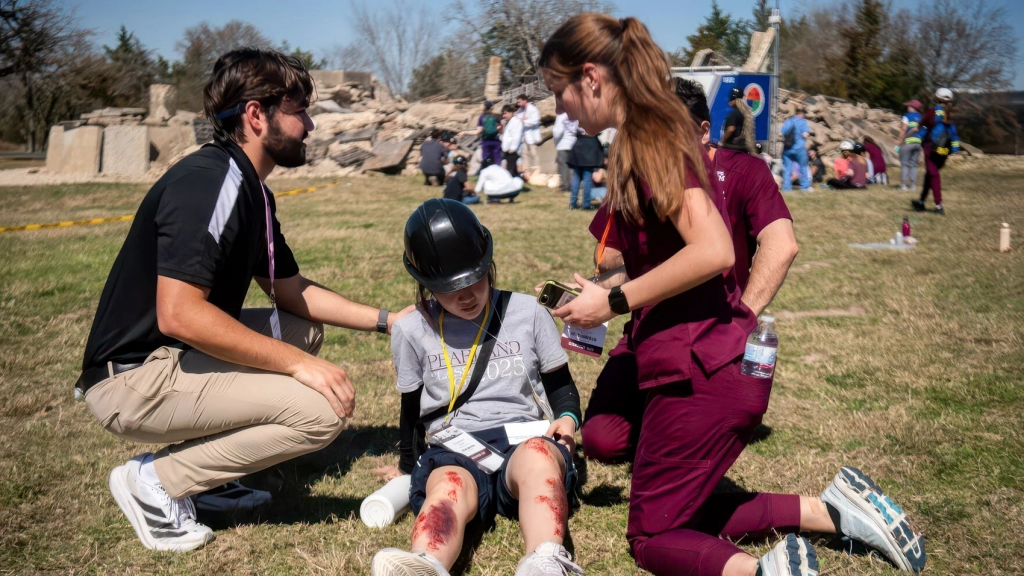 Photo credit: Texas A&M
She started three years ago as a committee member and deputy incident commander, moved to incident commander the following year, and now leads the entire student planning apparatus. She described what keeps her coming back to a job that starts before sunrise and ends near sunset.
Every time she leaves Disaster Day, she feels the biggest sense of accomplishment and passion for her future career and for emergency response in general. That feeling, she said, propels her to volunteer all over again the following year.
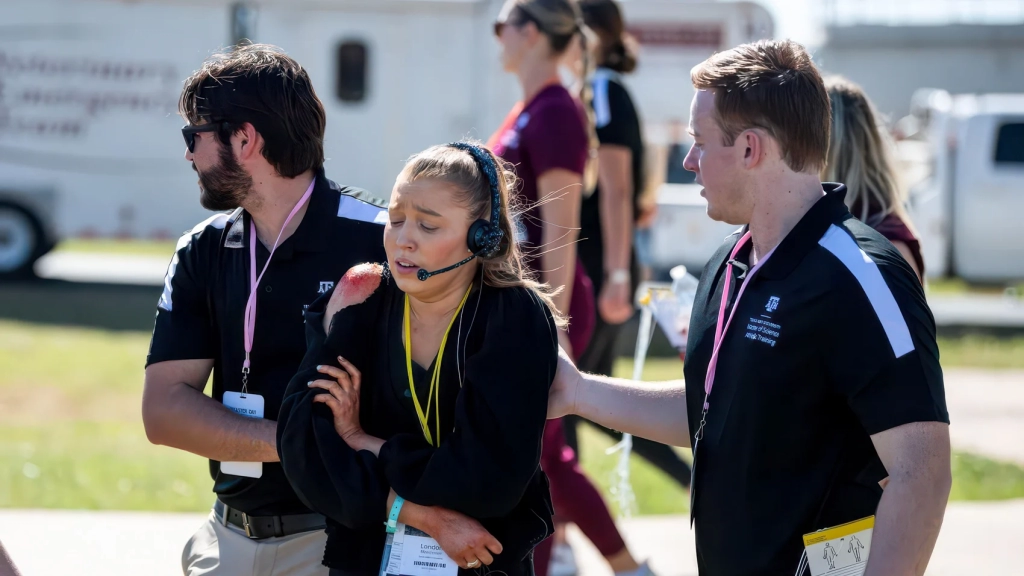 Photo credit: Texas A&M
Stephany Pinales, a fourth-year doctoral candidate in Educational Psychology, served as assistant director of simulation participant engagement for the fourth consecutive year. She described the exercise as exactly the kind of boots-on-ground experience that turns classroom knowledge into field-ready capability.
The simulation allows students to apply everything learned, collaborate, debrief, and do it again. Then one day, she said, they will be able to do it in the real field using what they already learned.
DroneXL’s Take
Ten years ago, a mass casualty training exercise like this one would have listed helicopters in that notice, maybe fixed-wing aircraft if the exercise was large enough.
Drones were a novelty in emergency response. Today they are standard enough to appear in a routine public notification alongside smoke machines and recorded explosion sounds. That is a meaningful shift in how the profession sees the technology.
Here is what I find genuinely significant about the Disaster Day model. The students who are learning to run mass casualty responses at Disaster City right now are the same students who grew up with drones as consumer products.
They are not being introduced to drone integration as a new concept. They already understand intuitively how aerial situational awareness works. The training is teaching them how to use that understanding in a structured operational framework.
The part that nobody is saying out loud is this. The US military learned through the Ukraine conflict that drone density and drone literacy at the individual responder level changes outcomes.
Emergency response is learning the same lesson through a different lens. The more responders who train with drones as a standard tool, the better the outcomes when the real call comes.
Six hundred students. A 52-acre fake city. Drones flying overhead until midnight. That is not a simulation of the future. That is the future, already in training.
Photo credit: Texas A&M