
Berlin’s Drone Ambitions Just Flew Into Political Turbulence.
 Photo credit: Bundeswehr
Check out the Best Deals on Amazon for DJI Drones today!
German defense startup Stark is facing mounting backlash over its ties to tech billionaire Peter Thiel, days before lawmakers decide on a drone contract that could reach €2.9 billion, as Financial Times reports.
What should have been a celebration of Europe’s push for sovereign defense tech has instead turned into a debate about influence, democracy, and strategic autonomy.
 Photo credit: Bundeswehr
At the center of it all is Germany’s plan to equip the Bundeswehr with lethal attack drones. Stark, a Berlin based startup, is one of two companies selected. The political question is no longer about drone performance alone. It is about who sits behind the curtain.
Thiel’s Shadow Over Berlin
Germany’s defense minister Boris Pistorius has publicly expressed unease over Thiel’s involvement. That is not subtle language in Berlin’s cautious political culture.
Pistorius made clear that the level of influence matters. If Thiel holds operational sway or a blocking minority, the implications are serious. If he is merely a passive minority shareholder with no special rights, that is another matter entirely.
Stark says Thiel owns less than 10 percent and has no special voting rights or information access to sensitive products.
 Photo credit: Bundeswehr
But optics are powerful. And in politics, perception sometimes outruns paperwork.
Thiel is no ordinary investor. He was an early and vocal supporter of Donald Trump, donated to his 2016 campaign, and served on his transition team.
He also backed JD Vance before Vance’s Senate run. In short, Thiel is closely tied to a wing of American politics that many in Europe view with caution, especially as Europe talks more loudly about reducing dependence on Washington.
For critics, the irony is sharp. Europe wants strategic autonomy in defense. Yet here is a flagship drone supplier backed by a figure deeply embedded in US political networks.
The opposition Alliance 90/The Greens has been particularly vocal. Sebastian Schäfer, the party’s defense specialist on the Bundestag budget committee, warned that Germany should not rely on shareholders who question European liberal democracies. He has even suggested Stark should replace Thiel with another investor.
That is a remarkable request in a startup ecosystem where venture capital funding is oxygen. Asking a company to swap out a high profile investor before receiving a major defense contract is not business as usual.
The €2.9 Billion Question
The financial stakes are enormous.
Stark’s initial contract is valued at €269 million, with the potential to scale up to €2.86 billion. That dwarfs many previous drone procurements in Germany and signals how seriously Berlin now takes loitering munitions and autonomous strike systems.
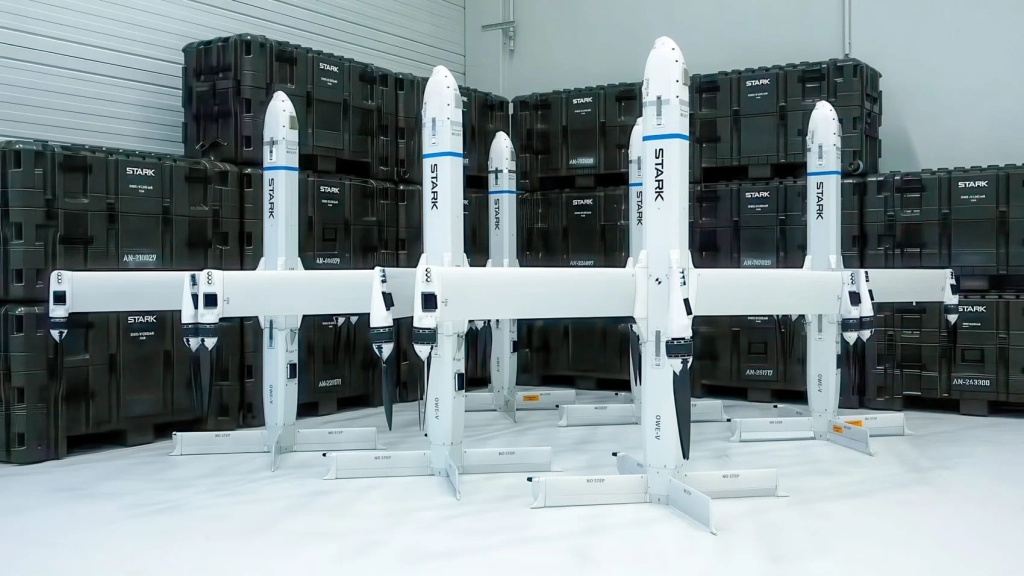 Photo credit: Stark
The second supplier, Helsing, is also in line for a major deal worth up to €1.46 billion. Helsing is backed by Daniel Ek, the founder of Spotify. That contrast has not gone unnoticed. One startup tied to a Swedish tech entrepreneur. Another linked to a polarizing American political financier.
Even delivery timelines differ. Stark’s Virtus drones could take up to 26 months for delivery, while Helsing’s HX-2 is scheduled for up to 13 months. Lawmakers are now asking why contract sizes and timelines vary so significantly.
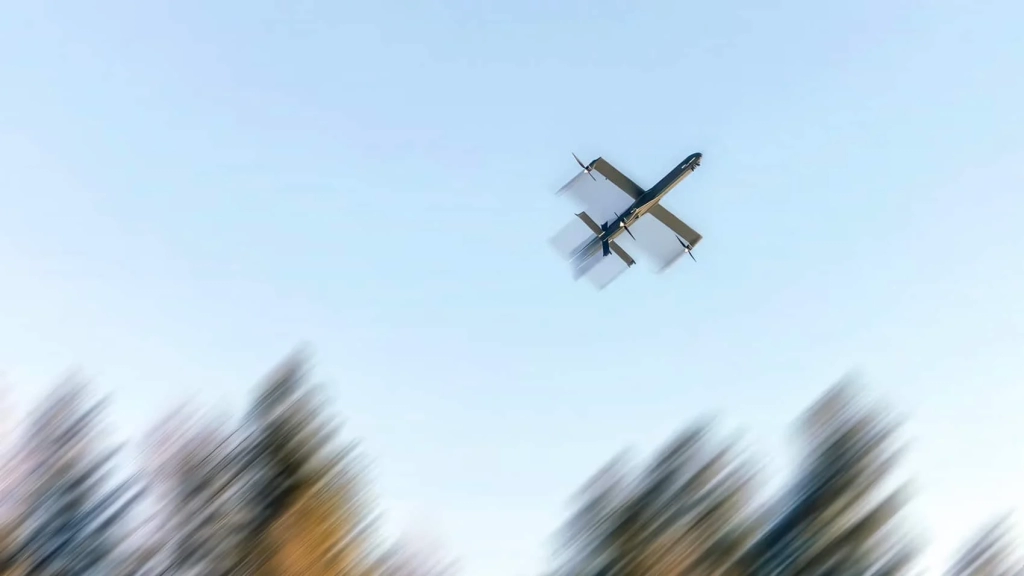 Photo credit: Stark
Members of the Bundestag’s budget committee want more transparency. For a program of this size, they argue, every euro and every month must be justified.
Behind the scenes, another layer complicates the story. Stark’s investors include In-Q-Tel, the CIA linked venture capital firm, and Döpfner Capital, founded by Moritz Döpfner. That global web of capital underscores how defense startups today are rarely purely national ventures. Money flows across borders, and so do political narratives.
Europe’s Autonomy Test
This controversy lands at a sensitive moment. Europe is recalibrating its defense posture, expanding budgets, and accelerating procurement after years of underinvestment. Drones are central to that transformation.
The war in Ukraine proved that small, lethal, relatively inexpensive drones can reshape battlefields. Germany does not want to lag behind. It wants domestic suppliers. It wants speed. It wants scale.
Yet autonomy is not only about manufacturing location. It is also about governance and control.
If Stark’s ownership structure is clean, compliant with German export laws, and insulated from foreign operational influence, then the political storm may fade after clarification. If not, this could become a defining case for how Germany screens defense investments in an era of geopolitical fragmentation.
The Bundestag’s upcoming decision is therefore more than a procurement vote. It is a referendum on how comfortable Germany is with global capital intertwined with national security.
Drone companies often promise frictionless flight. Stark’s drones may well deliver that in the field. But in Berlin’s political airspace, the winds are gusty.
DroneXL’s Take
This is not really about Peter Thiel. It is about Europe’s unresolved tension between speed and sovereignty.
Germany wants to build cutting edge drone capabilities fast. Venture capital makes that possible. But venture capital is rarely patriotic. It is opportunistic, global, and politically entangled.
If Berlin demands perfectly “pure” ownership structures, it risks slowing innovation. If it ignores political optics, it risks eroding public trust in defense procurement.
The real question is simple. Can Europe build world class drone companies without relying on American capital and networks? If the answer is no, then the autonomy debate needs a reality check. If the answer is yes, then this Stark episode may accelerate the creation of a truly European defense funding ecosystem.
Either way, one thing is clear. In modern warfare, drones fly above the battlefield. But the real battles often happen in committee rooms.
Photo credit: Stark, Bundeswehr.