
US Army Advances STAMPEDE Drone Manufacturing Initiative with Option for Up to 10,000 Aircraft
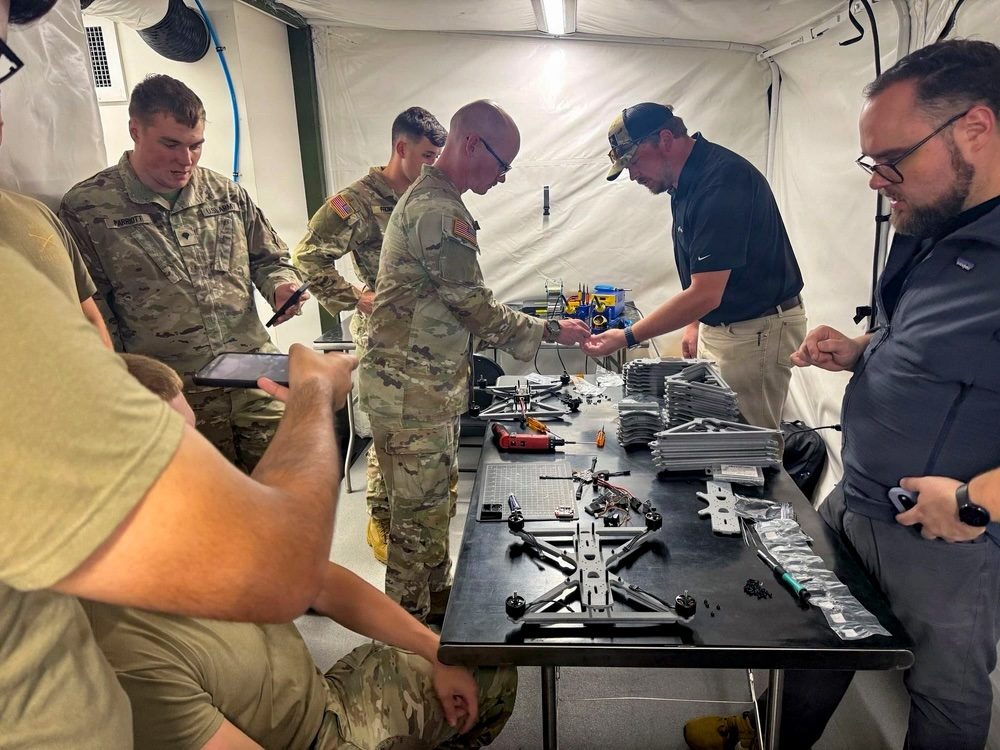
Army procurement plans include an option to purchase up to 10,000 aircraft.
The US Army Contracting Command has outlined progress on an initiative designed to accelerate domestic drone manufacturing and strengthen supply chains.
In an announcement published November 23, the command detailed its support for the Army’s Manufacturing Rodeo. The project, known as STAMPEDE, stands for Supply-Chain Testing & Advanced Manufacturing Prototype Evaluation for Defense Expansion.
The command is coordinating contract awards for the assembly of 400 drone systems and 20 ground control systems. The equipment will support the Drone Dominance Gauntlet scheduled for March 2027.
A Different Approach to Drone Manufacturing
As DRONELIFE previously reported, the Army issued a solicitation on November 13 outlining its plans for a small drone Manufacturing Rodeo.
Traditional defense manufacturing has often focused on relatively small quantities of expensive, specialized equipment. The growing demand for affordable drones presents a different industrial challenge.
Rather than relying exclusively on commercial factories, the Army proposes combining government manufacturing infrastructure with private-sector innovation.
The model draws on the Army’s Organic Industrial Base, a network of government-operated depots and manufacturing facilities. Commercial partners would contribute aircraft designs, software and product development expertise.
The Army first announced the broader Manufacturing Rodeo initiative in October at the Association of the United States Army (AUSA) Annual Meeting.
Testing Manufacturing Capacity and Supply Chain Resilience
The Manufacturing Rodeo will evaluate industrial capacity alongside aircraft performance. The Army wants to determine whether manufacturers can maintain production during supply shortages and respond to sudden increases in demand.
STAMPEDE aims to establish shared, high-volume production infrastructure using standardized components from multiple Army facilities.
The project includes a contractual option to purchase up to 10,000 aircraft. That option does not represent a confirmed purchase.
Implications for the Domestic Drone Industry
For smaller drone manufacturers, access to government production facilities could reduce the need for significant capital investment in manufacturing infrastructure.
The initiative also highlights a shift in military procurement priorities. Production capacity, affordability and supply chain reliability are becoming increasingly important alongside technological innovation.


