
AI Drone Beats Human Champions In Abu Dhabi
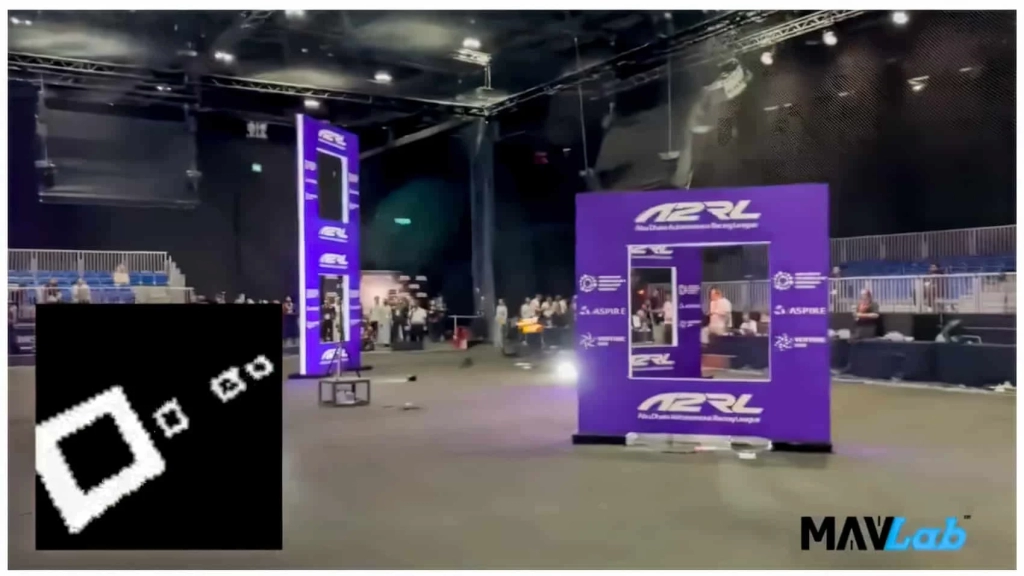 Photo credit: TUDelft – MAVLab
Check out the Best Deals on Amazon for DJI Drones today!
In April 2025, inside the neon charged arena of the A2RL Drone Championship in Abu Dhabi, something quietly historic happened.
An autonomous racing drone did not just compete. It defeated three human FPV world champions in head to head knockout rounds, as Small Wars Journal reported.
No pilot.
No goggles.
No thumbs on sticks.
Just silicon nerves and a neural network running at 500 Hz.
And almost nobody outside the drone world noticed.
From Space Lab to Race Track
The winning drone came from the MAVLab team at Delft University of Technology. But its brain was born in an unexpected place: the European Space Agency.
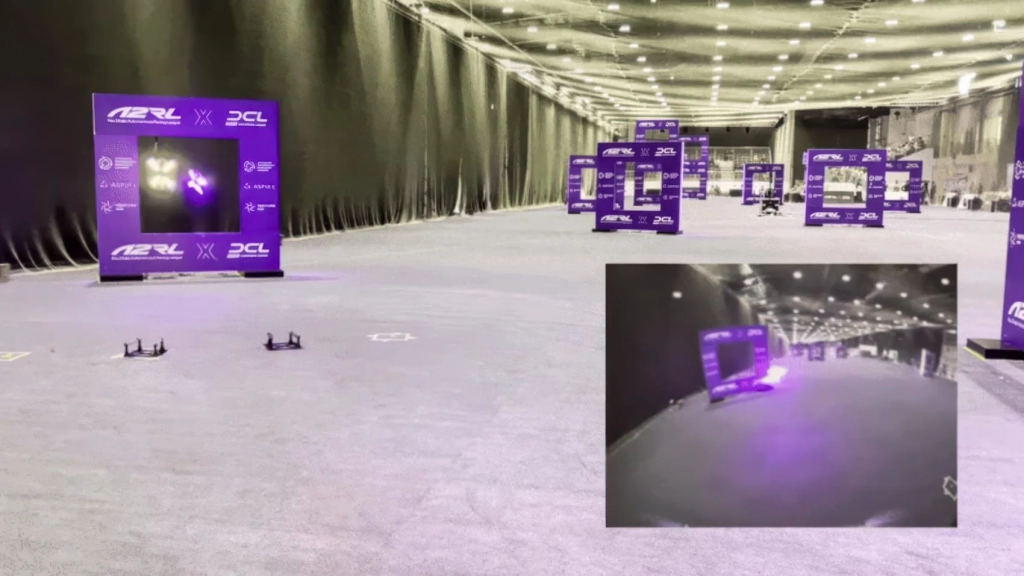 Photo credit: TUDelft – MAVLab
ESA researchers had been working on something called Guidance and Control Networks. Instead of separating guidance and control like traditional aerospace systems do, they fused everything into a single deep neural network that could think and act in one motion.
In simple terms, the AI did not calculate a plan and then hand it off to another system.
It decided and moved in the same breath.
The final system, detailed in the MonoRace research paper, used a single monocular camera and an IMU. No motion capture. No external tracking. Just onboard computation. The neural net sent motor commands directly to the ESCs, bypassing traditional control loops.
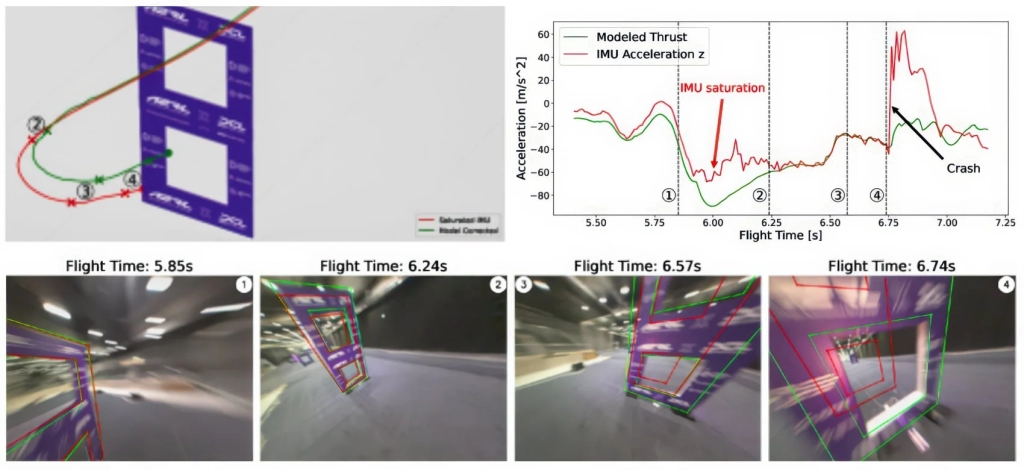 Photo credit: TUDelft – MAVLab
The result? Speeds approaching 100 km per hour on a tight, technical indoor course.
That is not a simulation. That is physical reality.
The AlphaGo Moment of Drone Racing
Back in 2016, Google DeepMind stunned the world when AlphaGo defeated Go champion Lee Sedol. It was seen as a turning point for AI.
This race in Abu Dhabi may be the drone equivalent.
Unlike chess or Go, drone racing is not a board game. It is a physical test of perception, reflexes, control, and risk management. The AI was not solving a puzzle in virtual space. It was flying a high speed carbon fiber missile through gates in the real world.
That matters.
The AI beat three former champions from the Drone Champions League in knockout rounds. These are elite pilots. The kind who see race lines in their sleep.
And the machine outflew them.
Why This Matters Beyond Racing
If you read DroneXL regularly, you already know where this goes.
Modern FPV racing drones share DNA with battlefield FPV systems. The same speed. The same agility. The same aggressive flight profiles.
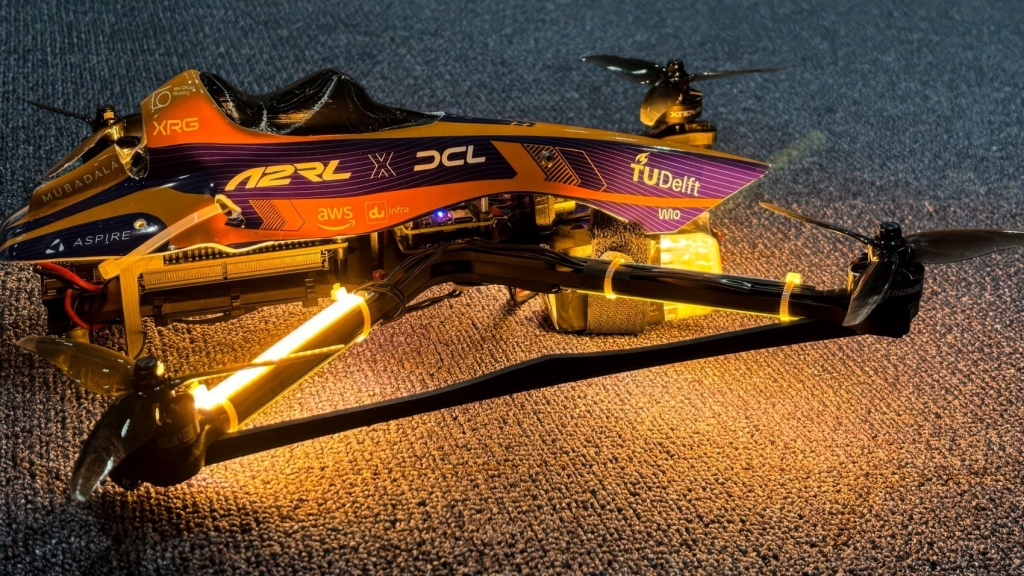 Photo credit: TUDelft – MAVLab
Right now, most weaponized FPV drones still rely on human pilots. Humans get tired. Humans blink. Humans need sleep.
Neural networks do not.
The Abu Dhabi victory proves that autonomous systems can now outperform elite human operators in fast, high stress aerial maneuvering inside unpredictable environments.
That is the firebreak.
From here forward, AI will not just assist pilots. It will replace them in specific mission sets.
Expect to see:
- Fully autonomous strike drones that do not rely on RF links
- Swarming systems coordinating in real time
- Onboard AI that adapts mid flight to jamming and signal disruption
- Reduced training requirements for militaries adopting FPV systems
The trajectory is clear. Racing is simply the laboratory.
A Reality Check
This does not mean humans are obsolete tomorrow.
In fact, in January 2026, a human pilot managed to beat AI competitors in a later event in Abu Dhabi. Just like early chess and Go matches, humans can still win individual rounds.
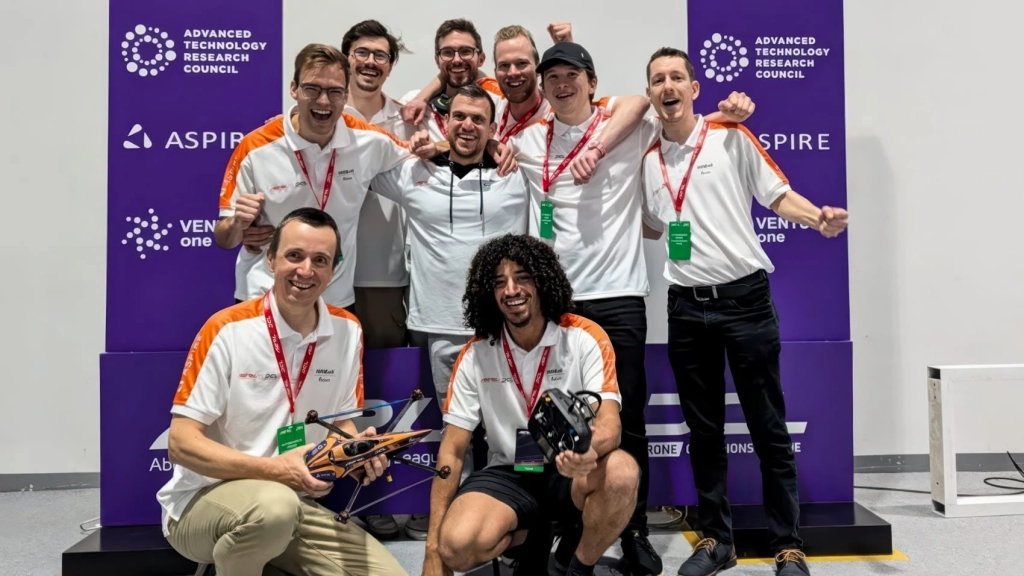 Photo credit: TUDelft – MAVLab
But the pattern is familiar. Over time, neural networks improve. They train on more data. They close the reality gap between simulation and physical world dynamics.
History suggests that once AI crosses the threshold, it does not step back.
DroneXL’s Take
This was not just a cool tech demo. It was a milestone.
An autonomous drone beat world champions in a real world competition using onboard AI and a single camera. No lab environment. No artificial constraints.
For drone pilots and robotics enthusiasts, the implications are massive. The same breakthroughs that enable AI racing dominance can spill into inspection drones, delivery systems, emergency response platforms, and eventually defense applications.
The question is no longer whether AI can outfly elite human pilots.
It already has.
The real question is who scales it first.
Photo credit: TUDelft – MAVLab