
AAMG Eyes 50 Lodd Cargo Drones For Europe And The Gulf
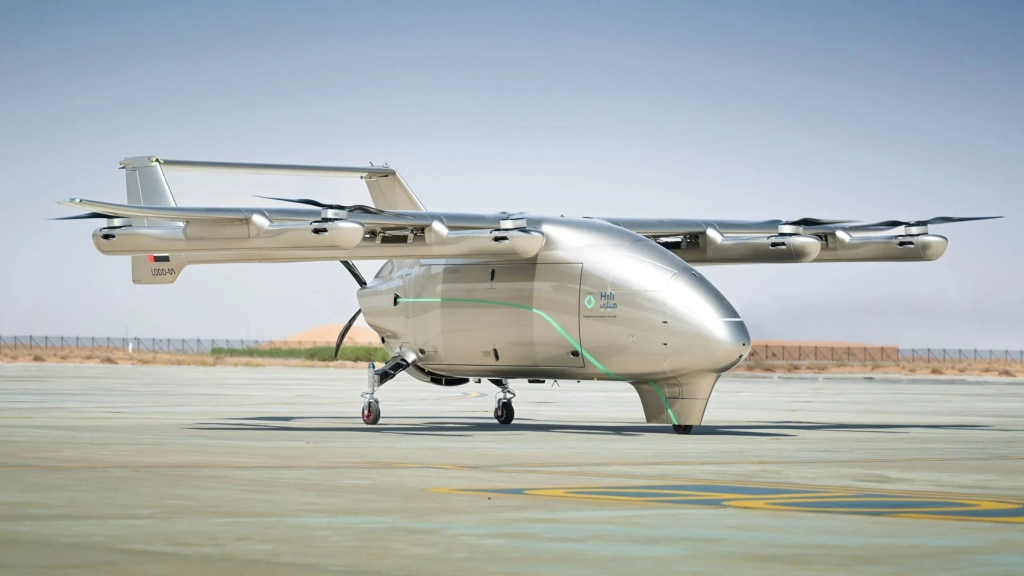 Photo credit: Lood
Check out the Best Deals on Amazon for DJI Drones today!
A European air mobility group just signed a framework deal for up to 50 hybrid cargo aircraft that can carry 551 lbs across 435 miles without a pilot. This really big cargo drone is called the Hili. It completed its first flight just four months ago and today we will know all about this deal, as reported by Zag Daily.
The Aircraft at the Center of the Deal
The Hili is not a delivery drone in the DJI Mini sense of the word. This is a serious piece of cargo infrastructure.
Built by Abu Dhabi-based Lodd Autonomous in roughly two years from founding to prototype flight, the Hili is a full-size hybrid VTOL cargo aircraft. It takes off and lands vertically using eight electric motors, then transitions to cruise flight powered by a ROTAX pusher engine at the rear.
 Photo credit: Lood
That hybrid setup gives it a cruise speed of 115 mph, a top speed targeting 136 mph, and an operational range of 186 miles with a 30-minute fuel reserve. With in-flight recharging, that range extends to 435 miles.
The cargo bay fits two Euro pallets. Maximum payload is 551 lbs. Maximum takeoff weight sits just under 3,000 lbs. The aircraft requires zero runway, operates autonomously, and is designed with multiple backup systems for avionics, sensors, and communications.
One operator can eventually manage four aircraft simultaneously. That is the target architecture Lodd is building toward.
Lodd completed Hili’s first public flight on November 13, 2025 at Emirates Falcon Aviation in Al Ain during Abu Dhabi Autonomous Week, in front of UAE leadership. The aircraft executed vertical takeoff, hover, lateral repositioning, and vertical landing in autonomous mode. Clean. No drama. For a startup that barely existed two years prior, that is a remarkable result.
What AAMG Is Actually Buying Into
The Ambitious Air Mobility Group is a European holding company focused on hybrid-electric aircraft, defense mobility systems, and vertiport infrastructure. The deal it just signed with Lodd is a framework agreement, not a firm purchase order. That distinction matters.
Under the framework, AAMG and Lodd will collaborate on experimental operations, fleet planning, and joint market development across Europe and the Middle East. The 50-aircraft target is split evenly: 25 units earmarked for European operations, 25 for the UAE and wider Middle East. Trials are planned between the fourth quarter of 2026 and the fourth quarter of 2027. Commercial validation comes first. Hardware delivery comes after.
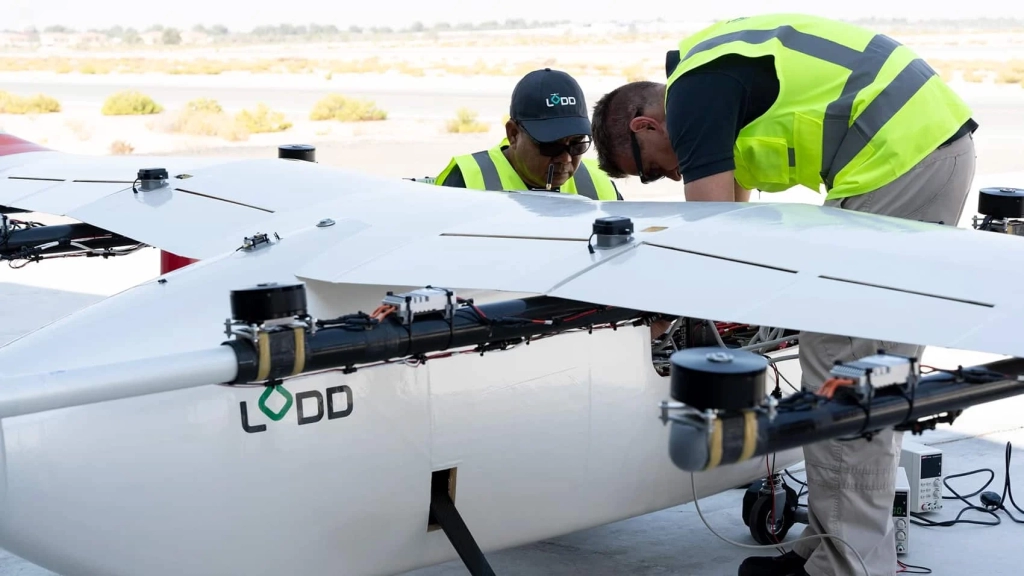 Photo credit: Lood
AAMG executive Daniel Hayes was candid about the timeline, noting that the company will visit Lodd at the end of March to review production progress. He also floated the possibility of increasing the order volume beyond 50 units as logistics becomes a greater focus for the group.
There are no disclosed financial terms yet. That is consistent with where this deal actually sits. It is a strategic handshake between two organizations that see the same opportunity, with a structured path to turn it into real operations.
Lodd’s Growing Commercial Web
The AAMG deal is part of a rapidly expanding constellation of partnerships around Hili.
Etihad Cargo signed a collaboration agreement to explore integrating Hili into UAE operations, with commercial test operations targeted for the second quarter of 2026. Aramex is running a pilot program to test Hili for middle-mile deliveries between its hubs and distribution centers in the Middle East.
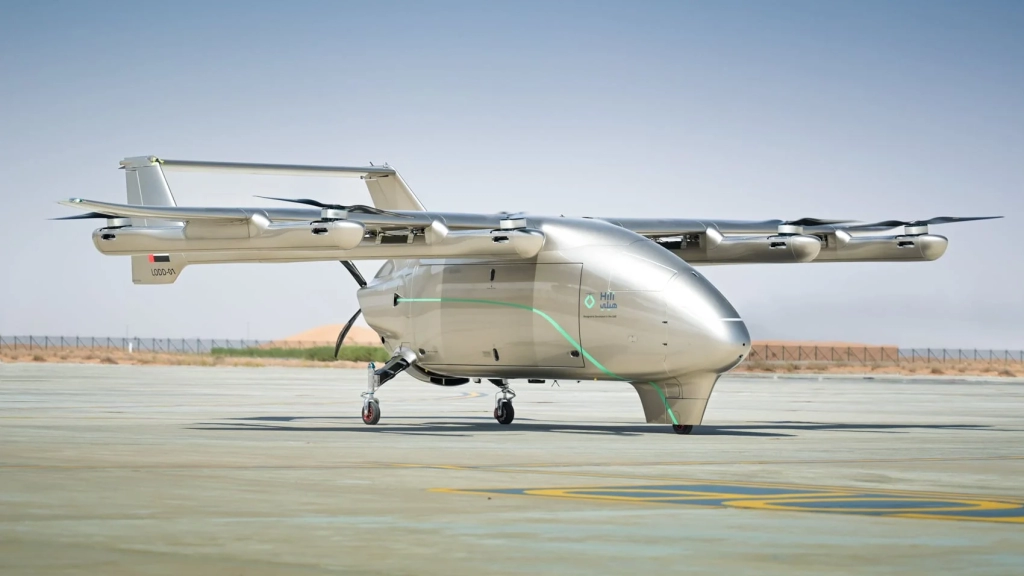 Photo credit: Lood
Skyports Drone Services signed to acquire or lease up to 10 aircraft for offshore energy operations in the UK, Europe, and the Middle East. ST Engineering, one of the world’s largest aerospace companies, signed for Asian market development.
For a company that flew its first prototype in November 2025, that is a serious list of names.
The middle-mile logistics market is the target. Hub-to-hub cargo runs, pharmaceuticals, industrial components, offshore supply chains, humanitarian relief. Routes where speed matters, runways are unavailable, and the cost of conventional air freight is hard to justify. Hili sits exactly in that gap.
DroneXL’s Take
I want to be honest about how I read this story.
Framework deals in the aviation world are signed all the time and most of them never become aircraft. The press release cycle in eVTOL and cargo UAS is littered with MoUs, letters of intent, and collaboration agreements that quietly expired without a single airframe being delivered. It is the nature of a capital-intensive industry in its early innings.
That said, Lodd is doing something right.
Going from zero to a flying prototype in roughly two years is genuinely impressive. Securing Etihad Cargo, Aramex, Skyports, and ST Engineering before you have a single certified aircraft is a real commercial signal, not a vanity metric. And the AAMG framework adds a European distribution pathway at exactly the moment when cargo drone infrastructure investment in Europe is accelerating.
The honest part is this. The question for Hili is not whether the aircraft is interesting. It clearly is. The question is whether Lodd can survive the certification gauntlet, the production scaling, and the regulatory approval processes across two very different markets while staying funded. That journey has killed stronger programs than this one.
AAMG has its own complicated history. Its attempt to acquire Lilium’s assets ended in a public standoff with the insolvency administrator, and Archer Aviation ultimately won the patent portfolio for approximately $21 million following a competitive bidding process. The group is building its portfolio through deals rather than direct development, which is a legitimate strategy but one that depends entirely on the quality of what it partners with.
Hili is worth watching. The partnership is worth watching. Whether it is worth 50 aircraft is a question that 2027 will answer.
Photo credit: Lood