
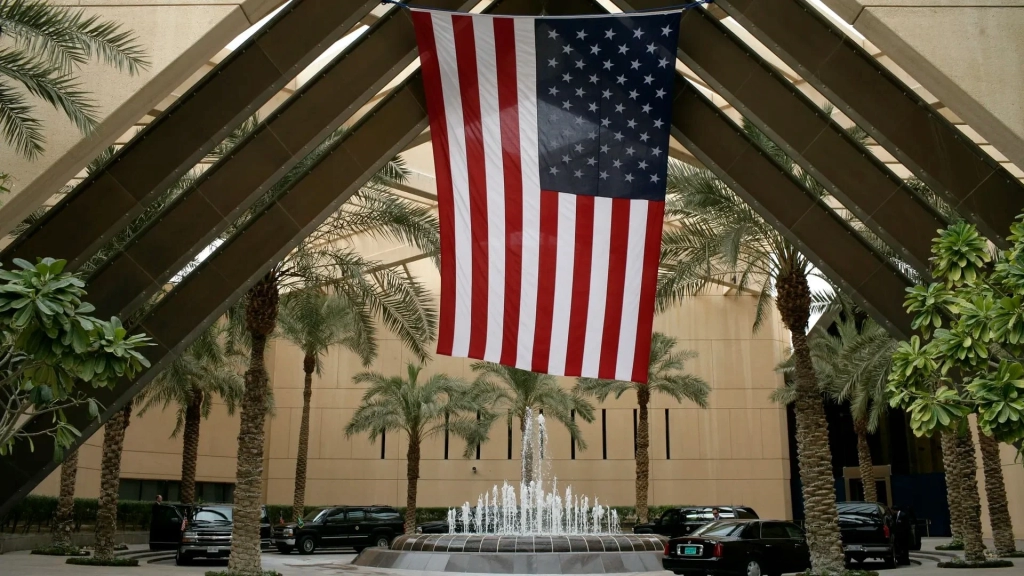
 U.S. Embassy in Riyadh, Saudi Arabia | Photo Credits: Axios
Check out the Best Deals on Amazon for DJI Drones today!
The U.S. Embassy in Riyadh, Saudi Arabia, was struck by two drones overnight, triggering a fire and “minor material damage”, according to Saudi officials. No injuries were reported, but the message was loud anyway: US citizens need to get out of Saudi Arabia, and fast.
Saudi Arabia’s Defense Ministry said the drones hit the embassy and sparked a small fire that was quickly contained. Multiple reports describe the drones as part of a broader Iranian retaliation wave following U.S. and Israeli strikes in the region.
At this point in time, we cannot immediately confirm the circumstances surrounding the drone strike, but I urge readers to stay updated as more information becomes available.
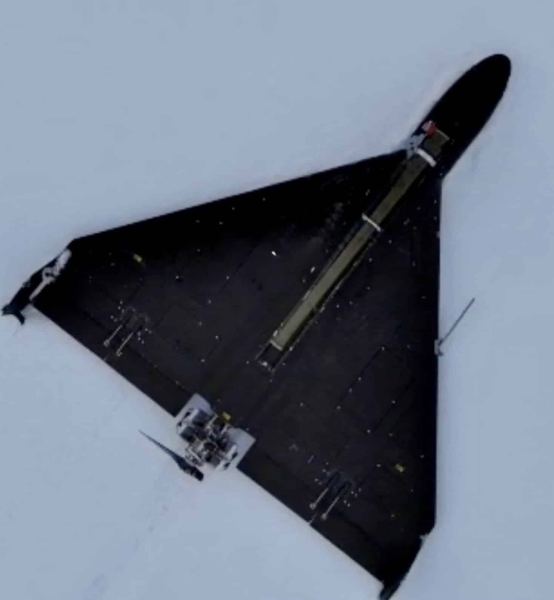 Modified Russian Shahed Drone, Similar design to the ones hitting the U.S. Embassy. Photo credit: @bayraktar_1love / X
What Have Officials Said on The Matter?
We know the following so far:
- Two drones impacted the U.S. Embassy complex in Riyadh, causing a limited fire and minor damage.
- Witness accounts cited in reporting describe a loud blast and visible flames/smoke in Riyadh’s diplomatic zone.
- The U.S. Mission to Saudi Arabia issued a shelter-in-place alert affecting Riyadh, Jeddah, and Dhahran, and restricted non-essential travel to certain areas tied to military installations and operations.
Currently, we still don’t know the exact drone type, intended target, or even the country of origin. All of that being said, it’s easy to infer that this was a targeted Iranian attack aimed at the U.S. Embassy.
And that uncertainty matters, because the drone itself is often not the only weapon. The real objective can be to create a constant barrage and uncertainty surrounding areas of interest, like government buildings.
Why Hitting an Embassy is Different than Other Targets
When drones hit a base or oil refinery, that is considered military-to-military combat. When a drone hits a ship, you can frame it as maritime escalation. When a drone hits an embassy, it is a political strike.
The U.S. Embassy is a representation of the United States, even on land which is not our own.
This is also a reminder of how drones have changed what “reach” looks like. A platform that is relatively low-cost, pre-programmable, and expendable can be used to probe defensive systems, or land hits against morale without risking much more than an expendable drone.
What kind of drones are we talking about?
Many outlets have pointed to Iran’s broader use of Shahed-style one-way attack drones across the Gulf in recent days, and the pattern fits how Iran has historically used drones: not as single silver bullets, but as persistent pressure tools.
That said, do not assume “Shahed-136” just because “Iran” and “drone strike” appear in the same sentence. Iran has a deep bench of systems and plenty of variants. The only responsible answer right now is: two drones hit the embassy, and all signs are pointing toward a pair of Iranian loitering-munitions.
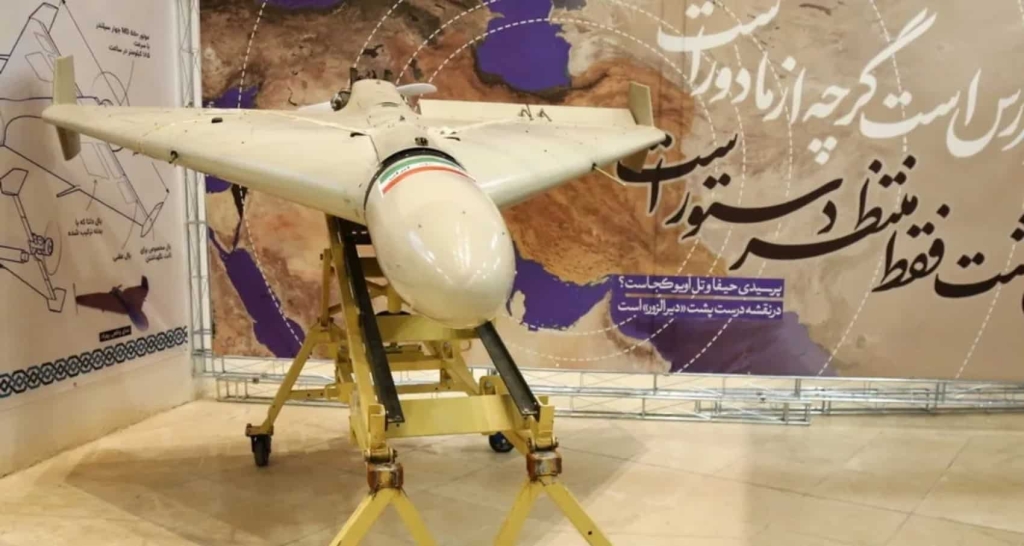 Iranian Shahed 136 | Photo Credits: Wikipedia
What This Means for Saudi Air Defense, and Those Nearby
The Gulf is already saturated with air defense capability, and that capability is being tested in real time.
A drone strike on Riyadh brings up a few questions:
- Was this a fluke, or was it a drone that was partially intercepted and still caused damage through debris and secondary fire?
- What did it fly over, and what gaps did it find?
- What else launched at the same time that may have been intercepted or not headed for the U.S. Embassy?
Even when defenders win tactically, the strategic cost is still real. Intercepts burn readiness. They burn inventory. They burn attention.
The more these strikes happen, the more likely it becomes that a drone slips through somewhere with a much higher payoff.
DroneXL’s Take
This is the uncomfortable part: a U.S. Embassy is a squishy objective during wartime. Not squishy in the sense that they are unprotected, but squishy in the sense that they are politically explosive, and vulnerable.
Two drones causing minor damage is not “mission accomplished” for Iran. The mission is the headline. The mission is the fear. The mission is forcing the U.S. and Saudi Arabia to spend time, money, and manpower defending everything, everywhere, all at once.
If you are following this as a drone nut, it is hard not to notice how predictable the playbook is. When your munitions can just cruise around until they have their target, several thousand dollars is nothing compared to the cost of the most basic airborne targets in modern conflicts.
Let me know in the comments below: what do you believe the U.S. should do to improve security around its embassies moving forward?