
A Santa Fe Skydio Drone Found An Unconscious Man In Four Minutes
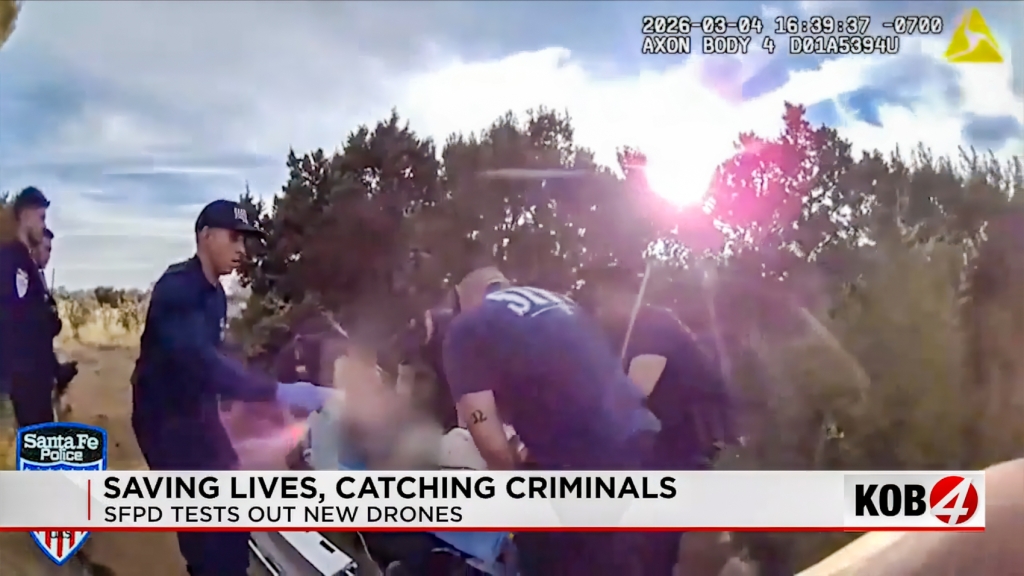 Photo credit: KOB4
Check out the Best Deals on Amazon for DJI Drones today!
A man is alive today because a drone reached his tent before the paramedics did. That is the entire story, as reported by KOB4.
Santa Fe first responders located a 47-year-old man unconscious and not breathing near Las Acequias Park after receiving a call Wednesday afternoon.
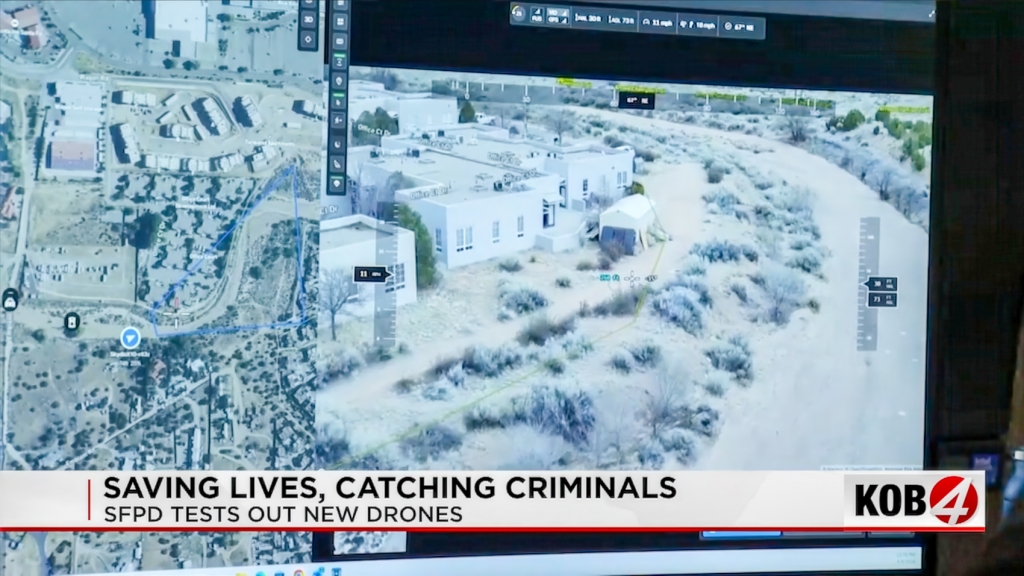 Photo credit: KOB4
A Drone as First Responder unit launched immediately, surveyed the area from the air, and pinpointed the man’s tent in four minutes. Officers and firefighters reached him, began life-saving care on the spot, and he survived.
It was the first life saved through the Santa Fe Police Department’s DFR program. It will not be the last.
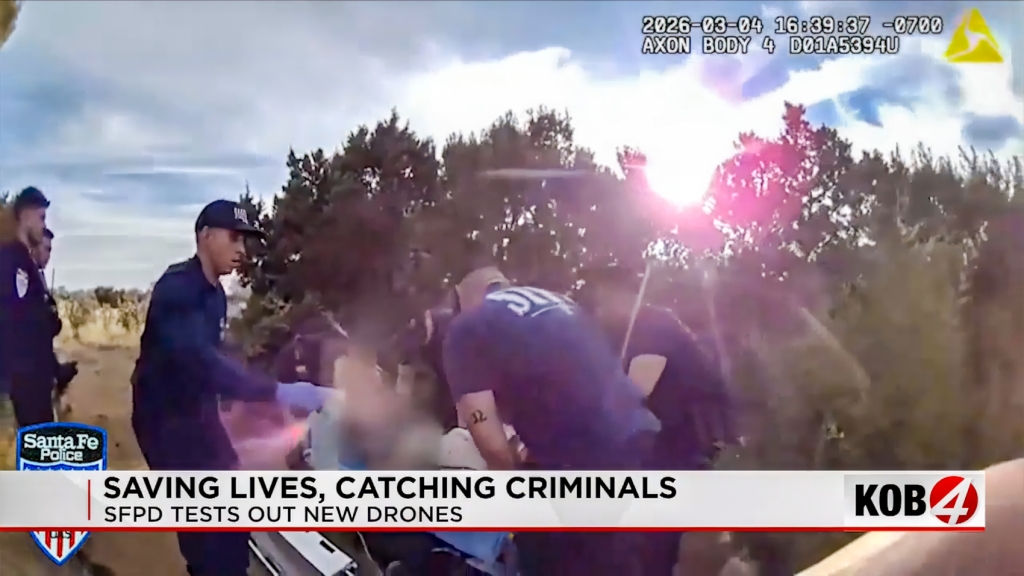 Photo credit: KOB4
The Aircraft Behind the Rescue
The drone flying that mission is the Skydio X10, the centerpiece of a DFR program Santa Fe runs in partnership with Axon and Skydio. It is one of the most capable public safety drones currently operating in American law enforcement, and its spec sheet explains why a four-minute locate time is realistic rather than remarkable.
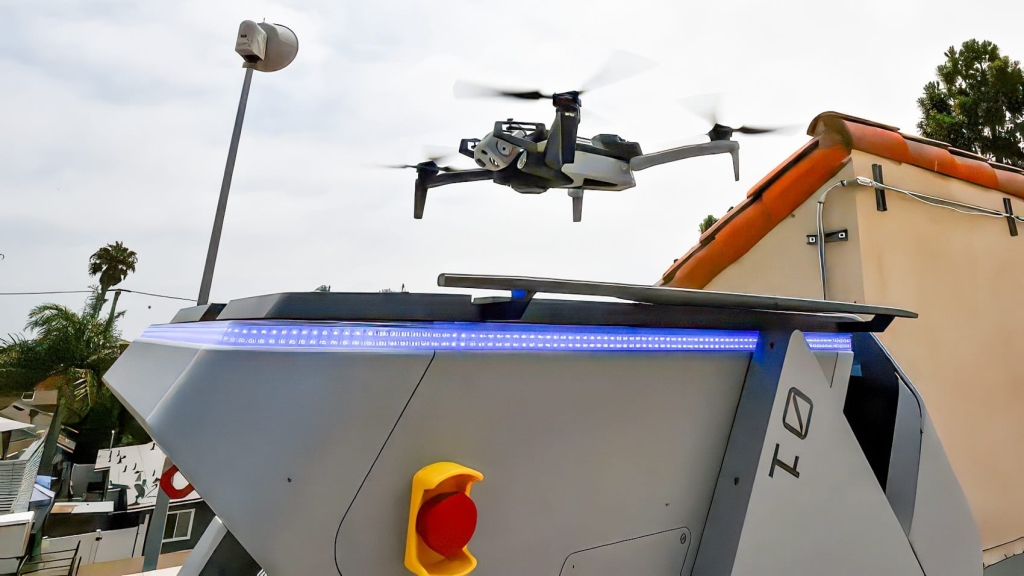 Photo credit: Jeff Gritchen, Orange County Register
The X10 weighs 4.65 pounds, folds into a backpack, and can be airborne in under 40 seconds from a dock. Flight time runs up to 40 minutes. It carries a triple-camera sensor payload that includes a 64-megapixel narrow camera, a 48-megapixel telephoto zoom with 128x digital reach, and a 640×512 Teledyne FLIR Boson+ thermal sensor, the most sensitive thermal imager ever integrated into a drone this size.
It can detect temperature differences as small as 0.054 degrees Fahrenheit. A person lying unconscious in a tent, with residual body heat, is not invisible to that sensor.
The aircraft is IP55 rated, which means rain and wind are not reasons to keep it on the ground. Santa Fe’s representative made a point of highlighting this at Thursday’s demonstration, noting that earlier drone versions in the department’s fleet could not fly in wet conditions. The X10 does not have that limitation.
It runs on an NVIDIA Jetson Orin onboard processor, giving it genuine AI-driven autonomy rather than basic autopilot.
It can navigate GPS-denied environments, track subjects through obstacles, and fly in complete darkness using Skydio’s NightSense system, which pairs infrared illumination with 360-degree obstacle avoidance cameras. Six navigation lenses eliminate blind spots entirely.
Each patrol shift in Santa Fe now has a certified drone pilot assigned to it. Every sergeant has one. The drone can be on scene and streaming live footage in under three minutes, regardless of traffic, terrain, or weather.
A Program Built for This Moment
Santa Fe’s drone program launched in August 2023 with five aircraft and six FAA-certified pilots. By mid-2024 the department had grown to ten drones operated by nine certified officers, deploying them for crash scene documentation, missing person searches, and the apprehension of dangerous individuals.
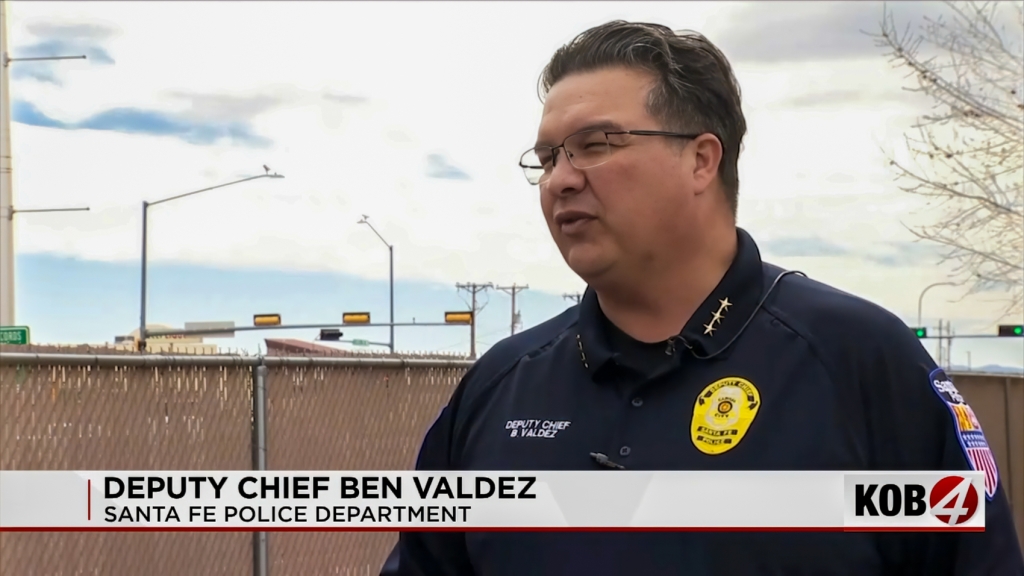 Photo credit: KOB4
The department is now actively testing a full DFR expansion. A proposal before the city council would add 15 drones stationed at five locations across Santa Fe, creating a response network designed to get an aircraft over any priority call within three minutes.
In a demonstration for city leaders this week, a Skydio drone created a complete 3D rendering of a crash scene in four minutes. The same work using ground-based scanning equipment takes over 30 minutes.
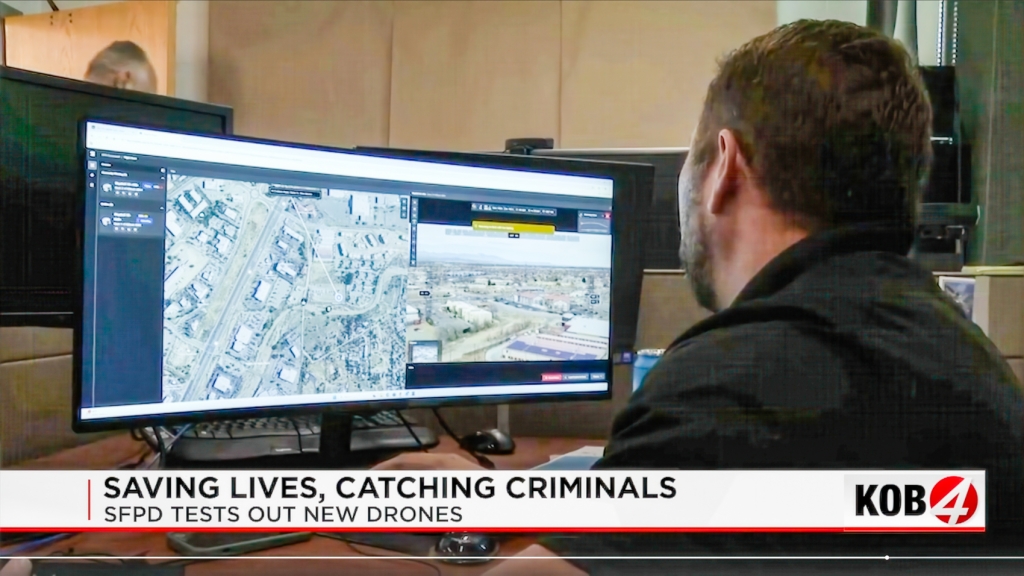 Photo credit: KOB4
The Axon partnership brings dispatch integration into the equation. When a call comes in, the drone does not wait for a human to decide to launch it. The system can trigger autonomous deployment the moment a priority call enters the CAD system. An officer monitors the feed. The drone goes.
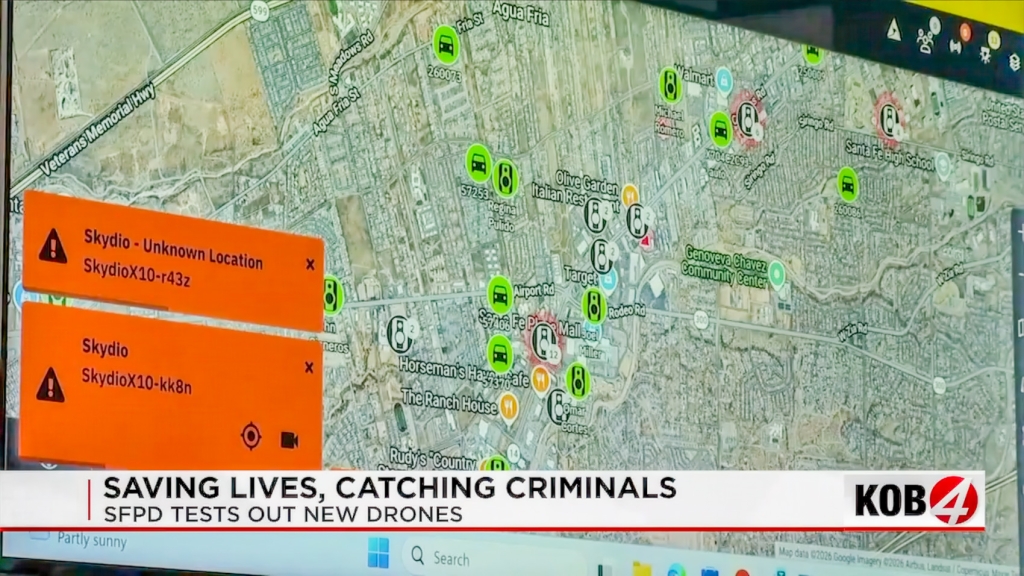 Photo credit: KOB4
In Lakewood, Colorado, where Axon’s DFR program has been running longer, drones arrive ahead of officers on nearly half of all calls. Roughly 40 percent of those calls are resolved without any officer needing to attend the scene at all. Santa Fe is watching those numbers closely.
DroneXL’s Take
Here’s what I actually think: what happened near Las Acequias Park on Wednesday is the cleanest possible argument for DFR, and it does not need embellishment.
A man was not breathing. A drone found him in four minutes. He is alive.
You can debate surveillance policy, budget priorities, and community oversight until the council chamber empties out. Those conversations are legitimate and they need to happen. But when the outcome of a working DFR system is a 47-year-old man going home instead of going to the morgue, the case for the technology makes itself.
No sugarcoating this: the departments that are slow-walking DFR adoption because of political friction are making a choice. They are choosing procedural caution over response time. Sometimes that is the right call. In a city like Santa Fe, with documented staffing shortages and a growing missing persons caseload, it is harder to defend.
The Skydio X10 did its job. The pilot did theirs. The man in the tent got a second chance.
That is what this technology is for.
Photo credit: KOB4, Jeff Gritchen, Orange County Register