
Russian Rubikon Drone Operator Defects To Ukraine
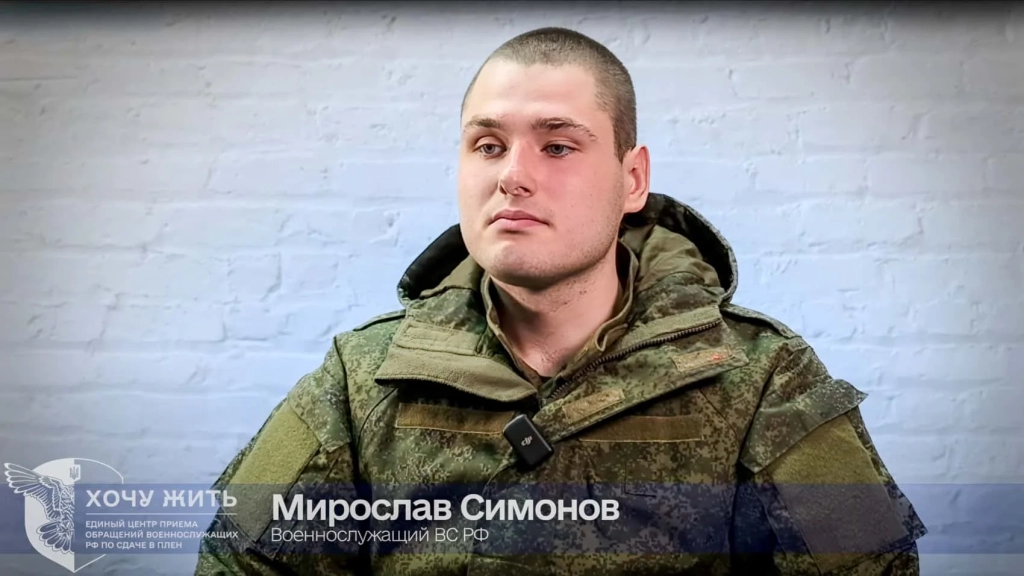 Photo credit: Youtube
Check out the Best Deals on Amazon for DJI Drones today!
A former drone operator from Russia’s elite Rubikon unit has defected to Ukraine, offering a rare inside look at how one of Moscow’s high profile UAV formations recruits, trains, and maintains control over its personnel.
The interview was published by Ukraine’s Defense Intelligence Directorate through its “I Want to Live” surrender initiative, and reported by Militarnyi.
From Real Estate to the Front Line
Miroslav Simonov, originally from Novosibirsk, says he worked in real estate before being swept into Russia’s mobilization system.
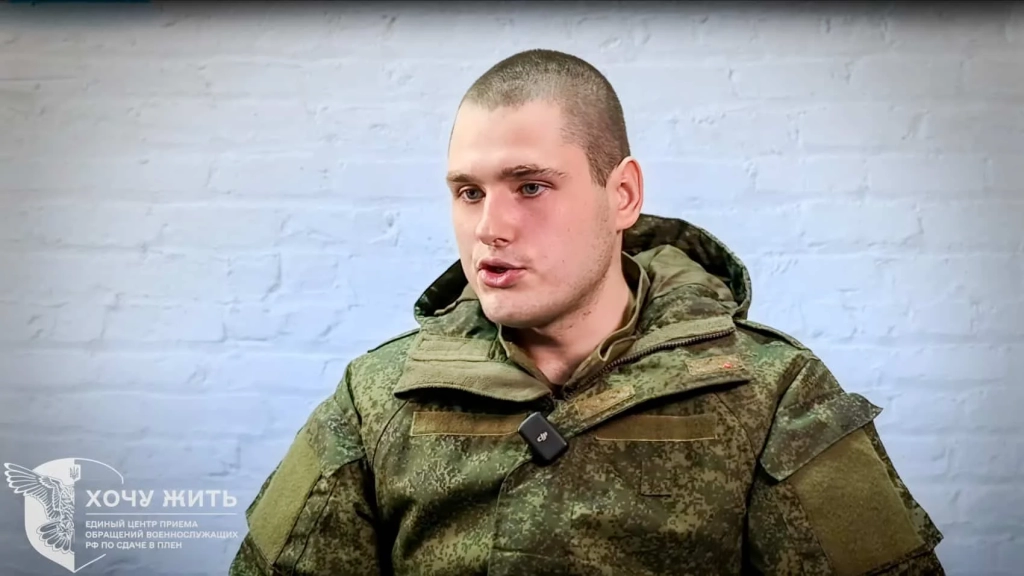 Photo credit: Youtube
During a trip to Moscow, he claims he was detained by police and pressured with the threat of a criminal case. The choice presented to him was blunt: formal conscription with likely deployment to the front, or an assignment closer to his father, who was already serving in a support role.
He signed.
Simonov says he was sent first to the Avangard collection point and then to the Pogonovo training ground in Russia’s Voronezh region.
There, recruits trained for two to three weeks as attack drone operators before being distributed into specialties. He was assigned to a UAV unit under Russia’s 20th Army and deployed to the Luhansk region.
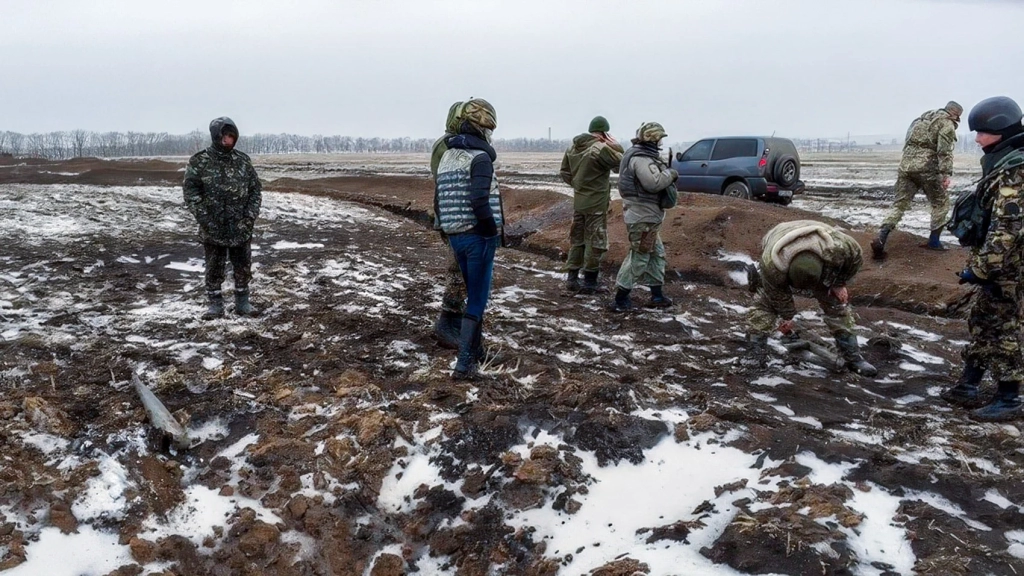 Photo credit: Russian Defense Ministry
According to Simonov, his early exposure to drones consisted of brief instruction on DJI Mavic quadcopters, widely used by both Russian and Ukrainian forces for reconnaissance and improvised strike roles.
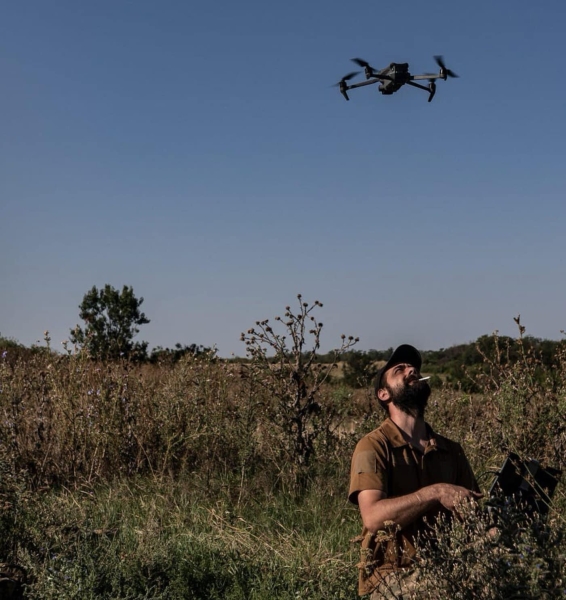 Ukrainian soldier flies a DJI Mavic 3 drone during a military training session in Donetsk, Ukraine on August 17, 2023. Photo credit: Anadolu Agency
He described much of his time as administrative, with limited structured technical training.
The atmosphere inside the unit, he said, was defined by intimidation. Commanders were allegedly selected for loyalty rather than technical competence, and threats of being sent into high casualty infantry assaults were used to enforce discipline.
Inside Rubikon’s Drone Center
After additional exposure to reconnaissance platforms, including training on the Supercam UAV in Izhevsk, Simonov says he was unexpectedly transferred into the elite Rubikon formation.
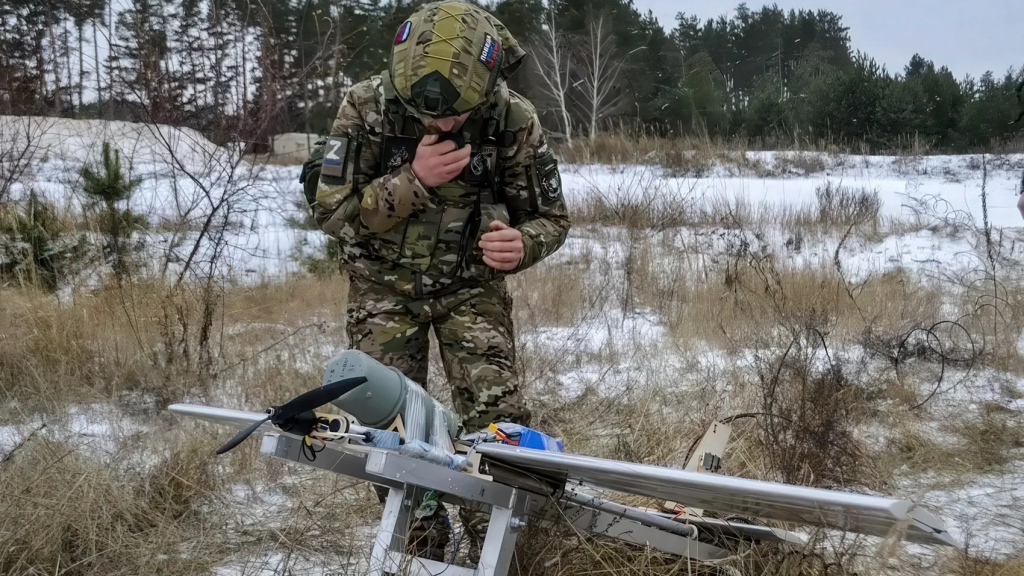 Photo credit: Russian Defense Ministry
Rubikon has been portrayed in Russian media as a cutting edge drone unit, combining reconnaissance, strike coordination, and electronic warfare support. Simonov describes being moved to a base in Naro Fominsk near Moscow, where security was tight and infrastructure appeared newly built.
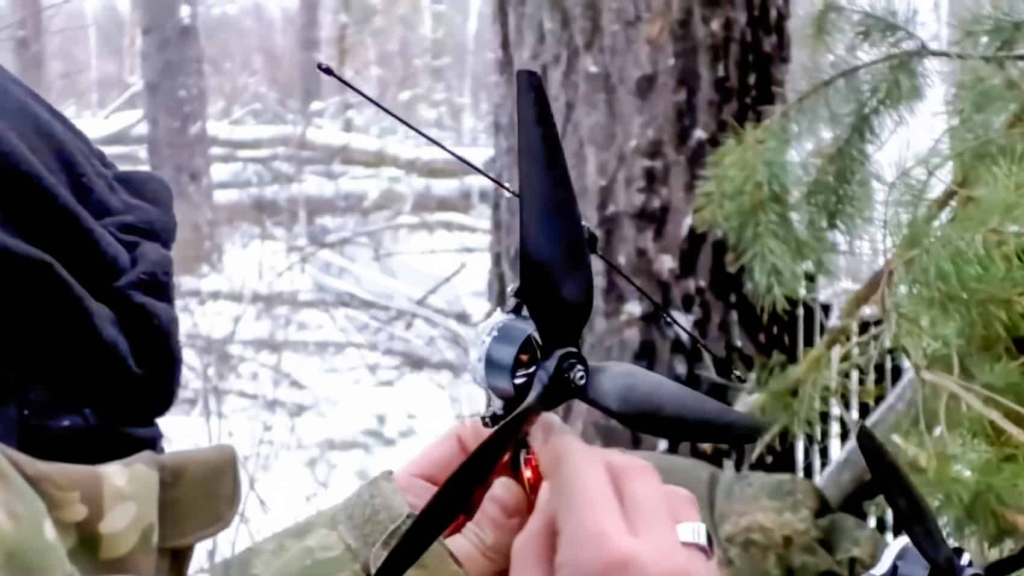 Photo credit: Preston Stewart Youtube Channel
Investigative journalists have linked the facility to the Patriot exhibition complex outside Moscow, citing public remarks by Russian television host Vladimir Solovyov that allegedly revealed details about the location. Ukrainian forces later carried out a drone strike targeting the site.
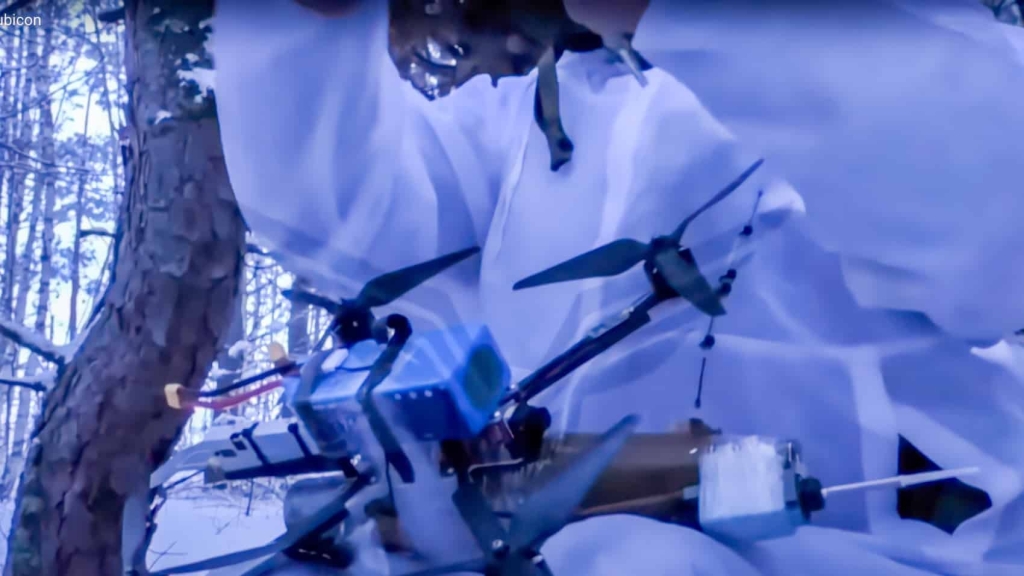 Photo credit: Preston Stewart Youtube Channel
Simonov claims that despite failing final exams during training in Izhevsk, he and others remained in support roles within the battalion. He was eventually deployed near Kupyansk as a technician.
He described Rubikon as well equipped, with a fresh fleet of vehicles and specialized facilities intended to rapidly scale drone operations. The structure, in his telling, reflected Russia’s attempt to centralize UAV capability and professionalize drone warfare after early battlefield setbacks.
A Turning Point in Kupyansk
Simonov says his decision to defect came after a strike involving a Molniya UAV allegedly hit incorrect coordinates in Kupyansk, killing a civilian girl. He described being disturbed not only by the incident itself but by what he characterized as approving reactions in internal battalion communications.
Following that event, he says he began planning his escape.
He initially forged documents for a business trip and fled his position, hiding in his hometown while preparing to cross into Kazakhstan. He was detained and returned to the front, this time assigned as a stormtrooper.
Eventually, Simonov says he established contact with Ukraine’s “I Want to Live” project. Under fire, he crossed into Ukrainian controlled territory and surrendered.
His closing remarks in the interview reflect a dramatic reversal in allegiance, expressing hostility toward Russian authorities and a desire to fight against them.
His account cannot be independently verified in full, and as with all wartime narratives, it arrives shaped by information warfare on both sides. Still, defections from elite drone formations are rare and provide insight into how both militaries are adapting their UAV strategies.
DroneXL’s Take
This story is less about one man and more about the machinery behind modern drone warfare. Russia’s creation of centralized units like Rubikon signals how seriously it now takes UAV operations, especially after Ukraine demonstrated the battlefield impact of small commercial platforms like DJI Mavic drones.
At the same time, Simonov’s account suggests that scaling drone capability is not just about hardware. It is about training pipelines, leadership culture, morale, and discipline under stress.
Drones may be silicon and carbon fiber, but the systems behind them are still human. And humans, unlike machines, can change sides.
Photo credit: Youtube, Preston Stewart, Russian Defense Ministry, Anadolu Agency.