
Russia Built Drones That Dodge. Ukraine Built Hunters.
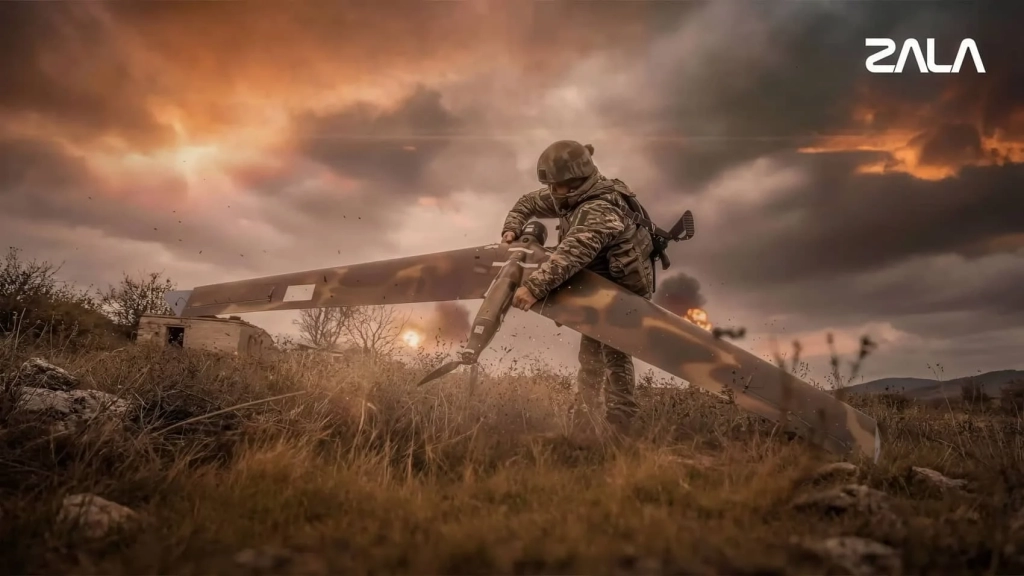 Photo credit: ZALA
Check out the Best Deals on Amazon for DJI Drones today!
,On the eastern front, the sky is more contested than the ground. And inside a downed Russian drone, Ukrainian soldiers found a circuit board that changed everything they thought they knew about the fight above their heads, as Armyinform reports.
The Circuit Board That Explained Everything
Major Ihor Romanenko of Ukraine’s 3rd Separate Heavy Mechanized Iron Brigade had a problem he could not explain.
His interceptor drones were good. His pilots were better. But certain Russian reconnaissance UAVs were surviving encounters they should not have survived. A ZALA drone spotting for artillery corrections held out for ninety minutes against multiple intercept attempts, maneuvering away from every approach before finally going down.
That kind of evasion does not happen by accident.
When his air defense troops analyzed the wreckage of a downed ZALA, they found their answer. A small circuit board, still labeled in its original Russian language: FPV Detection System.
The Russians had taught their drones to see the hunters coming.
How the Dodgers Work
The technology inside that circuit board is more sophisticated than it sounds.
The ZALA Z-16 reconnaissance drone, one of the most active Russian platforms over the front lines, has been progressively upgraded with multiple evasion layers.
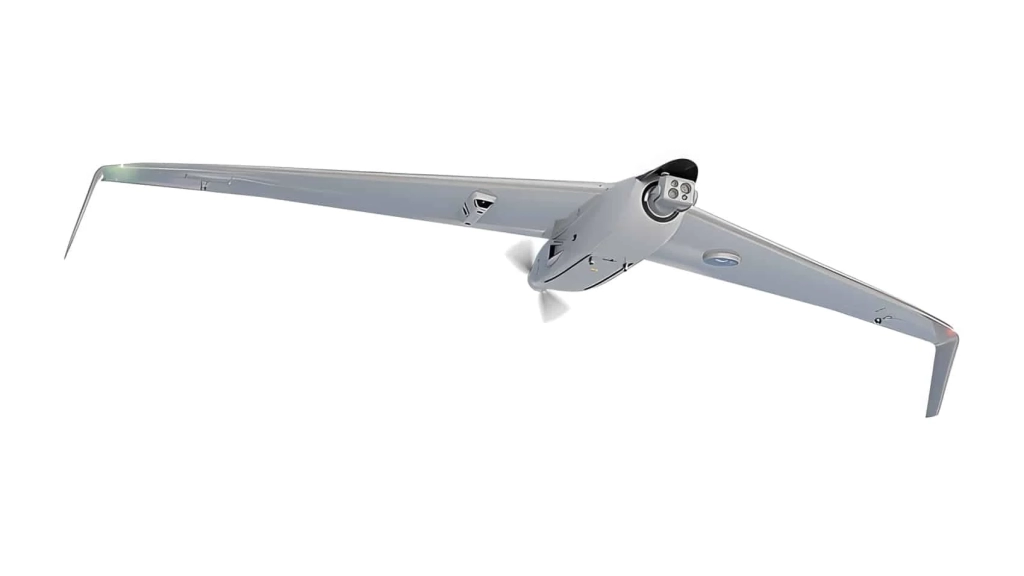 The Zala Z-16 Drone
Photo credit: ZALA
The first generation used rear-facing cameras to give human operators a visual warning when an FPV interceptor was closing in. That worked, until response times proved too slow.
The current generation cuts the human out of the loop entirely.
A panoramic overhead camera combined with machine vision software monitors the airspace around the drone in real time. The moment the system detects an incoming FPV interceptor, it automatically triggers a pre-programmed evasion algorithm without waiting for operator input. Sharp direction changes, altitude shifts, and heading reversals are executed in milliseconds.
A second layer uses radio frequency detection. An antenna scanning from 4.9 to 6.2 GHz picks up the FPV video transmission signal that interceptor drones continuously broadcast. When that signal reaches a threshold strength indicating the interceptor is within roughly 26 feet, a brief jamming burst fires to disrupt the drone’s guidance link at the critical final approach moment.
Both systems together create a drone that essentially fights back without a pilot ever touching a controller. Ukrainian specialists who analyzed the recovered hardware found that a standard 2.5-watt video transmitter generates enough signal to trigger the detector. The evasion fires before a human pilot can react.
The Iron Brigade’s soldiers started calling them Dodgers.
What the ZALA Z-16 Actually Costs Ukraine
Understanding why this matters means understanding what the ZALA Z-16 does on the battlefield.
This is not a cheap consumer drone. The Z-16 is a professional military reconnaissance platform with a wingspan of 13 feet, a flight endurance exceeding 4 hours, a communication range beyond 47 miles, and an operational ceiling of 16,400 feet.
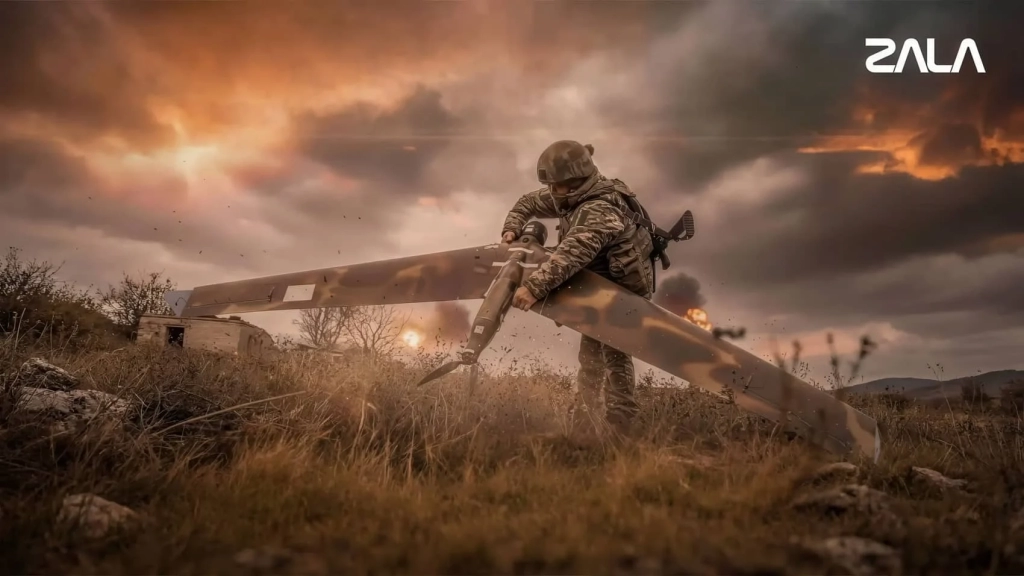 Photo credit: ZALA
It flies between 40 and 68 mph, is hardened against electronic warfare interference, and carries an AI-assisted targeting system that identifies and prioritizes ground targets automatically.
Its primary job is calling in artillery. It orbits above Ukrainian positions, identifies targets with precision optics and thermal cameras, feeds coordinates to Russian guns, and corrects fire in real time. When a Z-16 is active over a sector, every Ukrainian vehicle, position, and movement within miles becomes visible to the enemy.
Shooting one down costs Ukraine an FPV interceptor worth roughly $1,135. The Z-16 itself is valued at around $200,000. Every time a Dodger evades and survives, that cost equation works in Russia’s favor.
Major Romanenko confirmed that when his brigade manages to down several in a single day, Russian operators sometimes begin routing around his sector entirely. The economic and psychological pressure flows both directions.
Ukraine’s Answer to the Dodgers
Romanenko was clear that his brigade has not run out of answers.
Smart pilots are studying the evasion patterns. The Dodgers maneuver predictably enough that experienced Ukrainian interceptor crews have begun anticipating the moves. New tactical approaches are being developed and tested in real time against active threats, information his team is not sharing publicly for obvious reasons.
At a broader level, Ukrainian developers are building the next generation of the response. Sky Hunter, a software platform currently in development, automates FPV intercept guidance by integrating radar tracking data and calculating optimal intercept trajectories without relying on a human pilot’s reaction speed.
The logic is direct: if Russian drones evade by outpacing human reflexes, Ukrainian interceptors need to operate faster than human reflexes too.
The evasion algorithm fires in milliseconds. The intercept algorithm will need to match it.
DroneXL’s Take
Here is what keeps me thinking about this story.
A circuit board labeled FPV Detection System, found in a war zone inside a drone that cost $200,000 and flew for ninety minutes while multiple pilots tried to bring it down.
Someone sat at a workbench in Russia (or maybe on the US, you never know), designed that board, tested it, approved it for mass production, and shipped it to the front. And it worked well enough that Ukrainian soldiers gave the drones a nickname. That is not a random insurgent modification. That is an industrial engineering response to a battlefield problem, deployed at scale.
Here is what I actually think. The drone war in Ukraine is running a faster development cycle than any weapons program in peacetime history. A capability appears. A countermeasure follows within weeks. A counter-countermeasure follows that. What used to take defense contractors five years to develop, test, and field is happening in months on both sides.
This is starting to look like when the first fpv drones attacked russian tanks, then the russians start to use counter drone interference tech and then the ukranians begin to use optic fiber…
The Dodgers are real. The hunters are learning. And somewhere over the Southern-Slobozhansk direction right now, that chase is still going.
Photo credit: ZALA