
Pentagon Pushes Low Tech Defenses Against Small Drones
 Photo credit: Wikipedia
Check out the Best Deals on Amazon for DJI Drones today!
The Pentagon has issued new guidance urging the use of camouflage, nets, barriers, and other low cost physical defenses to protect critical infrastructure and crowded venues from small drones, a move that quietly confirms what drone professionals have been saying for years, consumer and FPV drones have changed the security equation for good.
The document was released by the Defense Department’s Joint Interagency Task Force 401, which leads national counter drone efforts, and is meant to support security planning for the 2026 FIFA World Cup, as reported by Forbes.
With matches and fan zones spread across the United States, officials are preparing for scenarios that extend well beyond traditional stadium security.
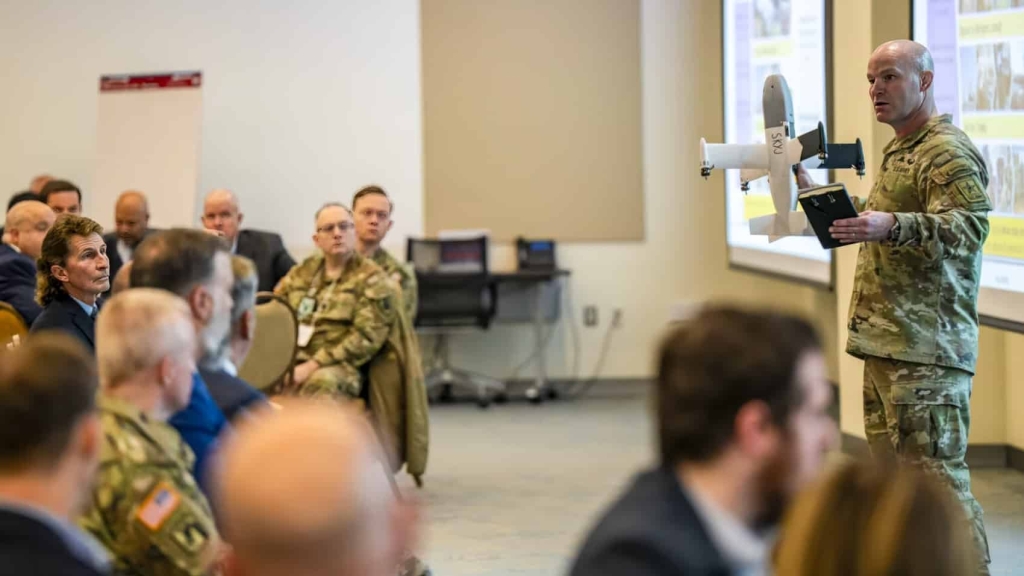 Photo credit: DOW
Brig. Gen. Matt Ross, director of JIATF 401, made it clear that homeland defense now includes places where people gather in large numbers, not just military bases or power plants. Stadiums, open plazas, and temporary event spaces are now considered potential targets simply because drones make distance irrelevant.
FPV Drones Change the Threat Landscape
First person view drones receive special attention in the guidance, and for good reason. FPV aircraft are fast, agile, difficult to track visually, and cheap enough to be disposable. In the wrong hands they can be used for surveillance, disruption, or far worse, especially in packed venues where reaction time is measured in seconds.
 Photo credit: DOW
Unauthorized drone flights over sporting events are already increasing, and recent years have shown that it does not take advanced military hardware to cause serious concern. A single pilot operating from outside a secure perimeter can bypass fences, checkpoints, and patrols without ever stepping foot near the venue.
The Pentagon’s assessment is blunt. Keeping people out of restricted areas is no longer enough when airspace above those areas remains vulnerable.
Nets, Barriers, And Visual Clutter As Defense Tools
Rather than focusing solely on high tech counter drone systems, the guidance emphasizes shaping the environment itself to make drone operations harder, riskier, and more visible.
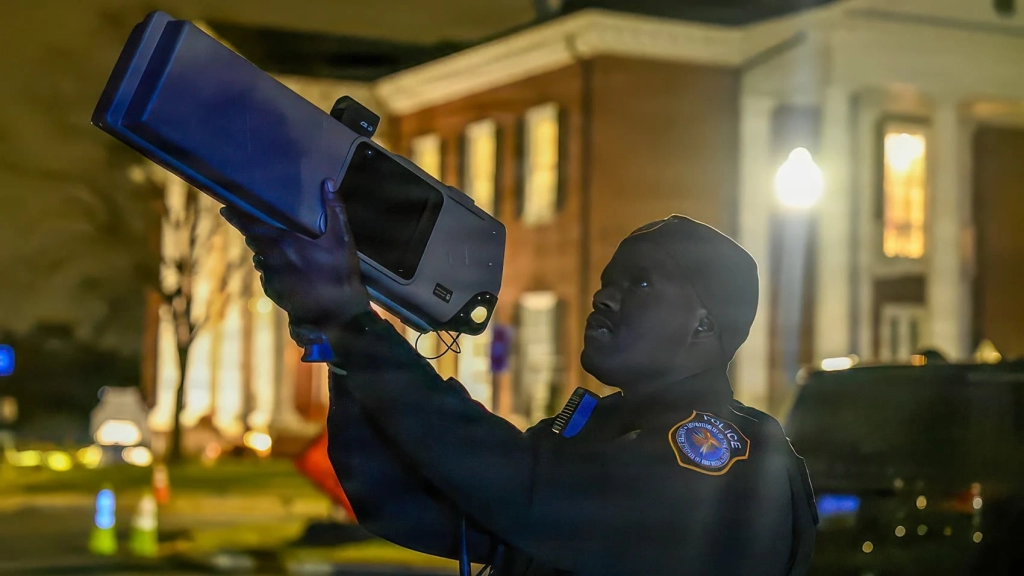 Photo credit: DVIDS
Nets, walls, retractable roofs, and overhead barriers can physically block flight paths or force drones into predictable approaches where they are easier to spot.
Camouflage and visual clutter are also recommended. By breaking up clear lines of sight and disguising key structures, drone operators lose the visual cues they rely on for navigation and targeting.
Even simple obstacles like cables, lines, or layered netting can turn a clean flight path into a dangerous gamble for an FPV pilot.
The task force also stresses behavioral analysis, watching for suspicious operator patterns, expanding security perimeters, and dispersing dense crowds when possible. The message is clear. Defense does not always require electronics or jamming when gravity and geometry can do the job just as well.
DroneXL’s Take
What this guidance really admits is that small drones have permanently reshaped public security, and the response is not always more sensors or more software, but smarter physical design. Nets over stadiums may look strange at first, but so did airport security lines once upon a time.
As drones continue to multiply, low tech countermeasures will likely become a normal part of event planning, quietly reminding everyone that airspace is no longer empty just because it looks that way.
Photo credit: DVIDS