
NATO Officers Brought Paper Maps To A Drone War. Ukraine’s Nemesis Brigade Made Them Switch To Delta.
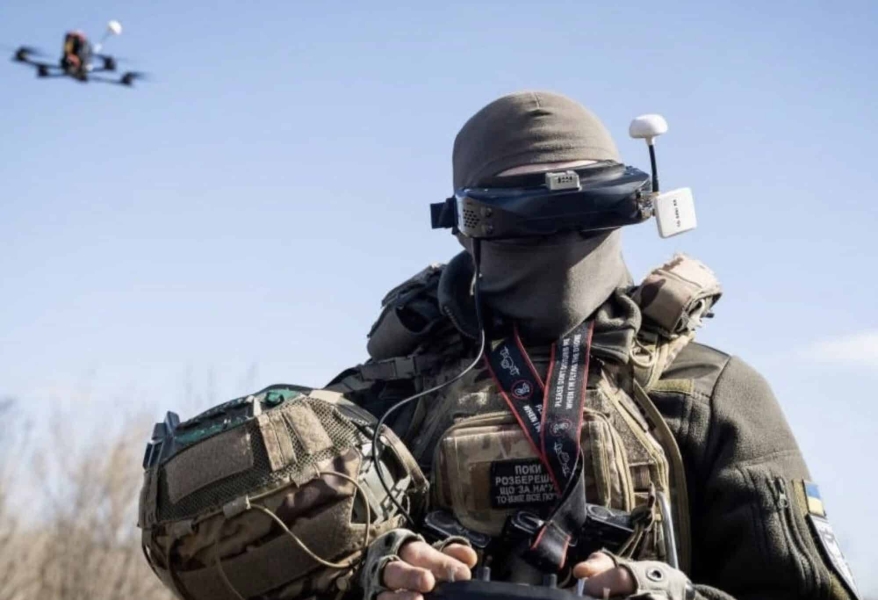 Photo credit: R. Sheremeta / X
Check out the Best Deals on Amazon for DJI Drones today!
New details from the Hedgehog 2025 exercise confirm what we reported last month: NATO’s European armies showed up unprepared for drone warfare. This time, it’s the Ukrainians themselves filling in the operational gaps the Wall Street Journal left out. The picture is worse than the headlines suggested.
Here is what you need to know:
- The development: Deputy commander of Ukraine’s 412th Nemesis Brigade, Pavlo Laktionov, revealed operational details from Hedgehog 2025 at the Ukrainska Pravda “War 2026: Humans vs Machines” conference.
- The numbers: Four Nemesis operators flew 29 sorties over three days, destroying 14 targets including seven armored vehicles, one tank, three cars, two command posts, and a bridge.
- The verdict: NATO forces had no plan for how to use a bomber drone crew and sent target coordinates by paper map and foot messenger.
- The source: Euromaidan Press, citing reporting from Ukrainian outlet Oboronka.
Four Nemesis soldiers exposed NATO’s drone integration failure
The Hedgehog 2025 exercise gathered 16,000 troops from 13 European countries in Estonia last May. Ukraine sent four members of the 412th Nemesis Brigade, its dedicated drone warfare unit: one operator, one navigator, and two ground crew. Laktionov described them as “the best of the best, taken from combat as a bonus.”
They were attached to an Estonian unit under an Estonian officer coordinating the drone component. The problem became clear immediately. European forces had no idea what to do with a bomber drone crew beyond waiting for something to blow up.
“At first, they didn’t just not know how to use us. They simply waited for something to happen so we could participate,” Laktionov said.
So the Ukrainians volunteered. They took on reconnaissance, logistics planning, and simulated mine-laying on their own initiative, roles that European forces hadn’t assigned because they hadn’t thought of them.
The exercise turned into target practice for the Ukrainian crew
Working alongside an Estonian Vector reconnaissance drone team, the combined unit located a staging area where the attacking force had parked armored vehicles under trees and bushes. The Estonians found targets. The Ukrainians struck them. The attacking force apparently assumed concealment in a forest would keep them hidden.
It did not.
“Like a shooting range. We were simulating the destruction of that equipment, choosing what exactly to hit,” Laktionov said.
Over three flying days, the Nemesis team logged 29 sorties. Fourteen ended in confirmed kills: seven armored vehicles, one tank, three cars, two command posts, and a bridge. Seven sorties went to remote mine-laying. Nine more were logistics deliveries.
That last category is where the story gets particularly revealing.
Snickers bars, sleeping bags, and the paper map problem
NATO snipers deployed in the field had no resupply system in place. No drone logistics, no way to get batteries or supplies to forward positions without physically walking them out. The Ukrainians noticed and offered to deliver Mavic batteries by drone.
Once the snipers realized what was possible, the requests kept coming.
“We kept delivering that sniper team batteries, water, Snickers bars. Then we brought them sleeping bags because they were cold out there,” Laktionov said.
This is a detail that says more about NATO’s readiness gap than any destroyed tank count. Three years into a war where Ukrainian drone crews routinely deliver ammunition, medical supplies, and food to trenches under fire, NATO forces at a planned exercise still hadn’t figured out drone logistics.
Target coordination was equally outdated. NATO officers sent a runner with a paper map to deliver coordinates to the Ukrainian drone crew. After the fourth visit, the Nemesis team refused paper entirely and taught their NATO partners to use Delta, Ukraine’s digital battlefield management system.
Delta has been the backbone of Ukraine’s drone and intelligence operations since 2022, integrating drone feeds, satellite data, sensors, and human intelligence into a single interactive map. It was deployed on Estonian soil for the first time during Hedgehog 2025.
The attacking force didn’t check for mines on roads the Ukrainians had already mined
The opposing force relied on hiding equipment in forests and assumed static concealment would work. They didn’t scan roads for mines. The Nemesis crew had already simulated mining those roads.
This is consistent with what the WSJ reported in February: NATO troops were “just walking around, not using any kind of disguise, parking tents and armored vehicles” in the open. The Ukrainians found everything. The outcome, as one NATO commander put it, was total destruction.
Laktionov said he hoped the exercise result would serve as a “cold shower” for European allies.
DroneXL’s Take
We covered the initial WSJ report on Hedgehog 2025 last month, and the broad conclusion was clear: NATO got embarrassed. These new details from Laktionov fill in the operational picture, and they’re more damning than the original report.
Paper maps. No drone logistics plan. No idea how to task a bomber crew. This wasn’t a technology gap. NATO had drones at Hedgehog. This was a doctrine gap. European forces are still thinking about drones as a nice-to-have, not as the backbone of modern operations. Ukraine figured that out in 2022 because they had no choice.
The Snickers-and-sleeping-bags detail is the one that should keep European defense planners up at night. It’s not about strikes. Any military can buy a drone and strap a munition to it. The difference is that Ukraine has built an entire operational ecosystem around drones: logistics, reconnaissance, mine-laying, resupply, and real-time digital coordination through Delta. NATO hasn’t. And a single exercise isn’t going to fix that.
We’ve been tracking this shift for over a year. Ukraine went from NATO student to NATO teacher by late 2025, with countries like Norway, Denmark, and the UK signing production and training deals. The Sting interceptor demonstration in Denmark proved Ukrainian counter-drone tech works in NATO environments. And just two days ago, we reported on how the Nemesis Brigade’s Darknode battalion now accounts for one-sixth of all Shahed shootdowns.
Expect the next 12 months to bring a wave of NATO drone doctrine rewrites, with Ukrainian advisors embedded in the process. The question is speed. Russia isn’t waiting. Ukrainian drone pilots at Hedgehog estimated Estonia alone would need 200,000 drones per month in wartime. NATO allies aren’t producing anywhere near those numbers. The industrial gap is as wide as the doctrinal one, and closing both simultaneously is the real challenge.
Editorial Note: AI tools were used to assist with research and archive retrieval for this article. All reporting, analysis, and editorial perspectives are by Haye Kesteloo.