
Luke Maximo Bell’s Peregreen V4 Goes 408 Mph, New Guinness “Fastest Drone” Record Holder
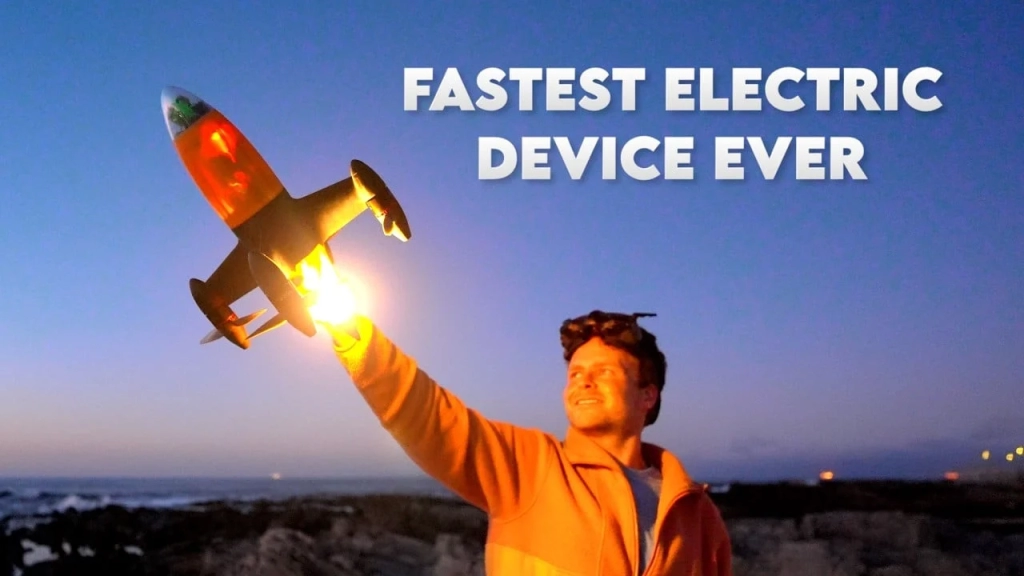 Thumbnail from THE RETURN – World’s FASTEST Drone V4 | Photo Credit: Luke Bell
Amazon Drone Deals: DJI Mini 5 Pro Fly More Combo with DJI RC2 now for $1,099!
Luke Maximo Bell’s team has reclaimed the record of making the “World’s Fastest Drone”, for the fourth time! In a new Peregreen V4 build video, Bell documents what changed after Australian aerospace engineer Benjamin Biggs took the crown with a 626 km/h (about 389 mph) run, and how the Bell team responded with a full redesign focused on reliability, drag reduction, and repeatable speed runs.
Guinness World Records now lists the fastest ground speed by a battery-powered RC quadcopter at 657.59 km/h (408.60 mph), achieved by Luke Bell and Mike Bell in Cape Town, South Africa, on December 11th, 2025.
That result lines up with what Bell shows in the V4 video: a measured, witness-backed attempt built around multiple runs in opposite directions, with an average speed being used for the official number.
 “THE RETURN – World’s Fastest Drone V4” by Luke Maximo Bell on YouTube
The V4 Approach: More than Just “Adding Power”
A big theme in Bell’s latest video is that Peregreen V4 is not just receiving a power bump. The team spent months tightening up the entire system, doing research, development, and ultimately validating changes by bench testing before committing to full-speed passes.
So, what were the biggest factors that lead to Bell’s team reclaiming the world record for the world’s fastest drone?
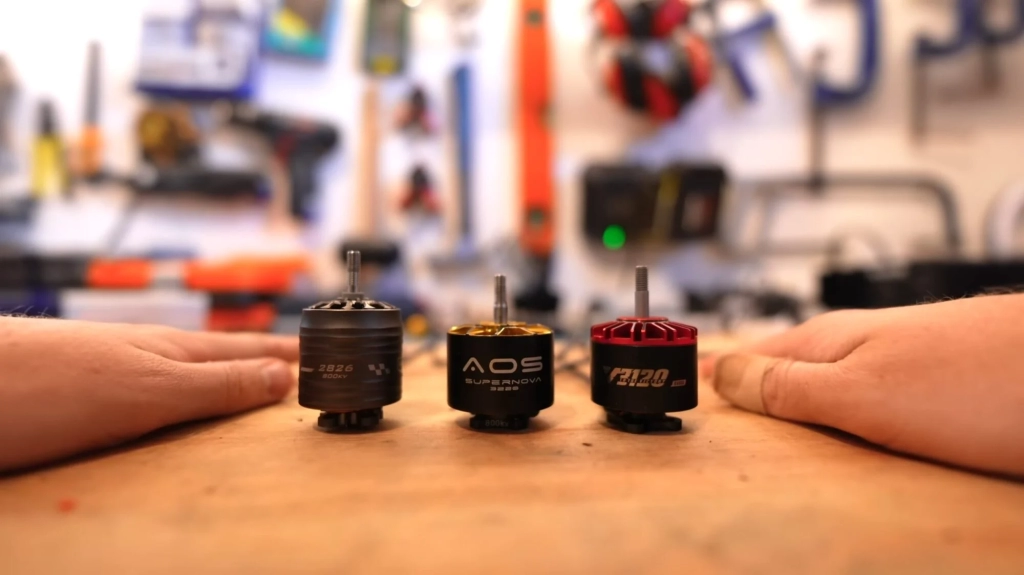 3 FPV Motors from Luke Maximo Bell’s Worlds Fastest Drone V4 Video | Photo Credits: Luke Bell’s YouTube Channel
Three factors contributed most:
- Motor testing turned into a large project
- Bell starts by comparing three motor options for the new build: the AOS Supernova 3220, AMX 2826, and T-Motor 3120. To make those comparisons meaningful, he builds a thrust test setup using strain gauges and an Arduino to capture live thrust readings, while also using a thermal camera setup to track heat during testing.
- AOS Supernova 3220 made the most thrust, but in their field testing, they found that the “motor temperature and physical wear” mattered more than peak thrust, so the T-Motor 3120’s were selected as the most reliable choice for Peregreen V4.
- A New frame was designed in CFD and finished by hand
- The Aircraft’s body was made using a Bambu Lab H2D 3D printer, which is capable of weaving layers of multiple materials together when 3D printing. He merged a hard body (PETG) material with a squishy, rubberized material (TPU) on the tip of the cone for softer landings, and to carry the 360 camera.
- KV went up, props got trimmed, and spinners got stress-tested
- With lower drag, Bell says it was time to raise motor KV from 800 KV to 900 KV to push higher RPMs and a higher top speed ceiling.
- They ran 3D Printed prop spinners through bench tests at 70,000 RPM, but they would never exceed 40,000 RPM during the attempt(s).
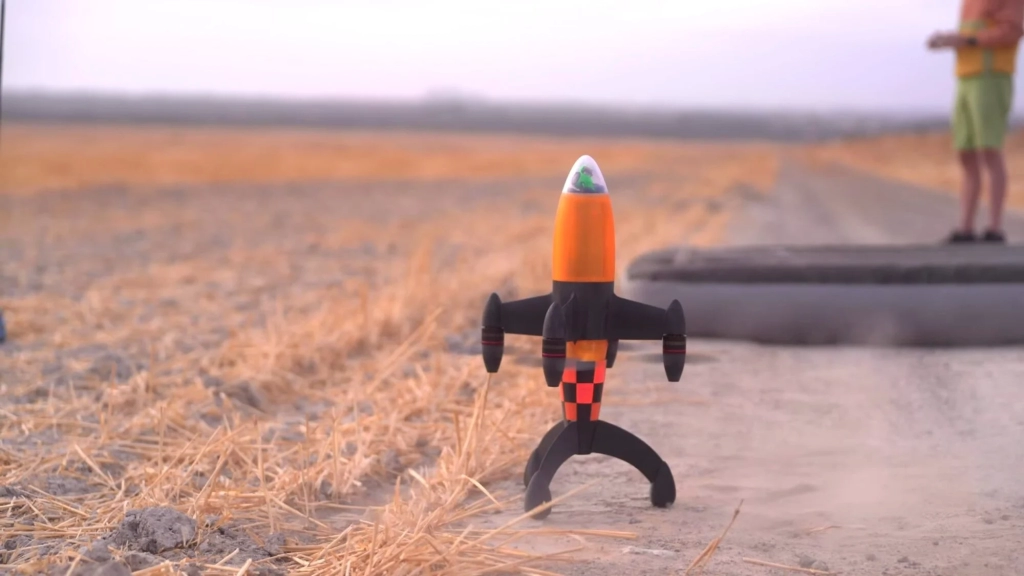 Peregreen V4 from Luke Bell’s World’s Fastest Drone V4 YouTube Video | Photo Credits: Luke Bell
Filming a 400+ Mph Quad: The “Second Fastest Drone” Proposal
Bell is blunt about how hard these drones are to film, because they are small and disappear instantly at high speeds. The V4 workaround was clever: mount an Insta360 X5 in the tail of a second high-speed drone to capture everything in 360, then reframe the shot when post-processing.
The drone flew fine with the added tail weight, but keeping both drones framed during high-speed passes turned out to be extremely difficult, and the attempt ends with “back to the drawing board” for the follow-cam concept.
The World Record Day: Four Runs, Two Directions, and One Shot
Before the official attempt, Bell shares a windy test session that perfectly explains why Guinness-style runs require both directions:
- an upwind pass hit 583 km/h (about 362 mph)
- a downwind pass hit 649 km/h (about 403 mph)
For the official record attempt, conditions were calmer with minimal wind and cool temperatures, which are generally considered ideal conditions for flying. The team completed four runs in about an hour.
After all four runs, the average record claim was 408 mph (657 km/h), which absolutely shattered the previous record set by Benjamin Biggs.
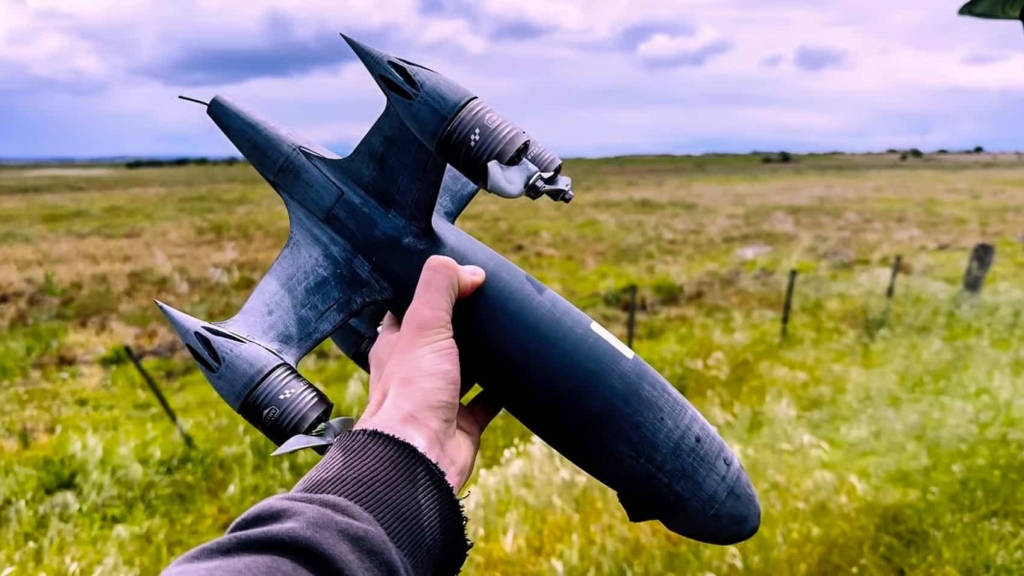 Previous Record Holder for Worlds Fastest Drone by Benjamin Biggs | Photo Credit: Drone Pro Hub
DroneXL’s Take
Peregreen V4 is a reminder that the fastest drones on Earth do not look like “drones” in the consumer sense. They look like purpose-built speed machines where every decision is about surviving a handful of passes at absurd RPM.
The most telling part of Bell’s V4 video is not the top speed. It’s the process: building a thrust testing rig because guessing is not good enough, or choosing a motor that runs cooler over one that wins a bench-thrust contest, sanding a carbon-filled print because surface finish becomes part of the performance equation, and the list goes on.
The record is back in the Bells’ hands today. If the trend continues, it probably will not stay there for long. At this point, when do you think we’ll reach the level of what’s possible with consumer-available parts? Let me know in the comments below!