
Kansas City Police Launch Drone First Responder Program
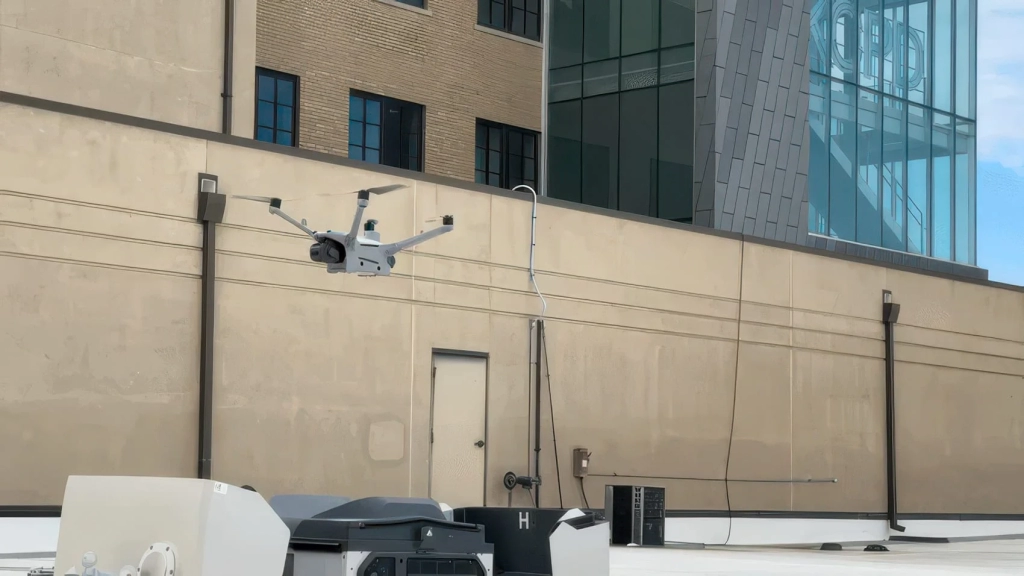 Photo credit: Kansas City PD
Check out the Best Deals on Amazon for DJI Drones today!
Eight drone nests, 30 seconds to scene, and a Chinese-made aircraft at the center of an American public safety debate. Kansas City just went live.
The System That Gets There Before the Cruiser
Eight drone nests are now positioned across Kansas City, all controlled from KCPD’s real-time crime center, as Axios reports.
When a call comes in, the nearest drone launches automatically and can reach the scene within 30 seconds. No traffic lights. No one-way streets. No waiting for a patrol unit to finish the last call. The drone goes straight up and straight there.
Capt. Jake Becchina described watching it work for the first time. The shell beeps, splits open, the blades spin, and the drone shoots straight up. His words: “It’s really kind of slick.”
Maj. Greg Williams, the program’s project manager, says the goal is to reduce by up to 20% the number of calls that require officers to physically respond. That is not about replacing police. It is about deploying them smarter. Send the eye in the sky first, assess what is actually happening, and only roll a car when a car is actually needed.
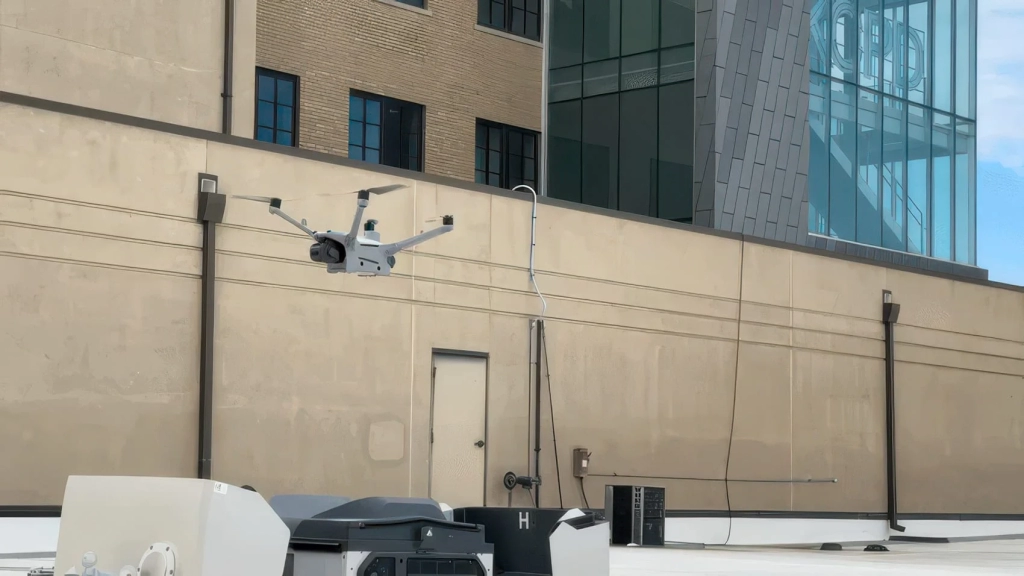 Photo credit: Kansas City PD
The drones fly at up to 35 mph, carry about 30 minutes of battery, and operate under a Part 108 waiver from the FAA that allows beyond visual line of sight flight. That last part matters more than it sounds. Standard drone regulations in the U.S. require operators to keep their aircraft in eyesight at all times. That rule makes autonomous DFR programs nearly impossible in dense urban environments. The waiver removes that ceiling and opens up the entire city grid.
A federal Counter Unmanned Aircraft Systems Program grant will soon expand the current 200-foot operating ceiling to 400 feet, significantly widening coverage and response capability.
The Drone Doing the Work: DJI Matrice 4TD
The aircraft at the center of KCPD’s program is the DJI Matrice 4TD, one of the most capable public safety drones on the market today.
The Matrice 4TD is not a consumer product. It is an enterprise-grade platform built specifically for the kind of operations Kansas City is running.
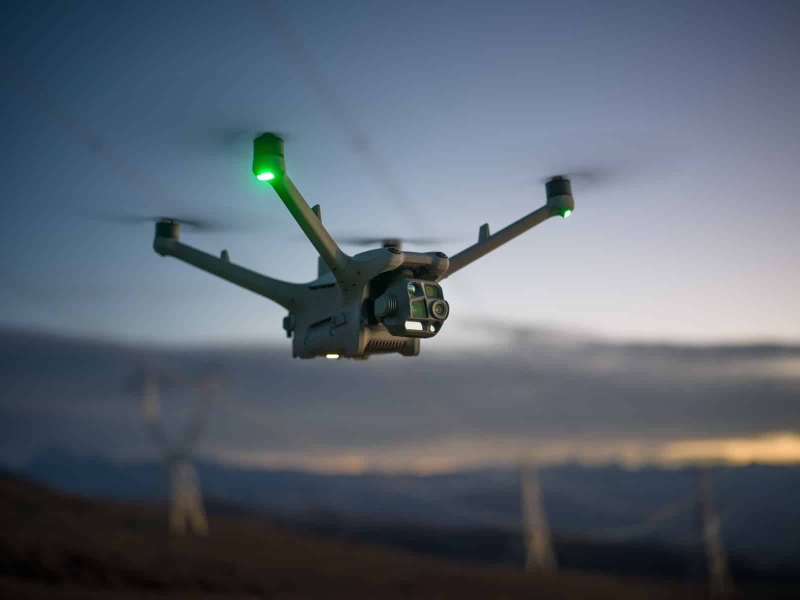 Photo credit: DJI
It carries five sensors on a single 3-axis gimbal: a 48 MP wide-angle camera, a 48 MP medium telephoto at 70mm, a 48 MP tele camera at 168mm, a 640×512 infrared thermal sensor, and a laser rangefinder that tags precise GPS coordinates from up to 5,905 feet away.
That thermal camera is the capability that changes the game in public safety deployments. It detects body heat through darkness, smoke, foliage, and in certain conditions even through light structure. In a missing person search, a pursuit, a structure fire, or a welfare check at 2 a.m., thermal imaging finds people that visible cameras cannot.
Maximum flight time is up to 54 minutes. The aircraft weighs approximately 4.1 lbs and is IP55-rated for dust and water resistance, meaning rain and fog do not ground it. It operates between negative 4 degrees Fahrenheit and 122 degrees Fahrenheit.
In sport mode it reaches 45 mph. The obstacle sensing system detects wires as small as half an inch at speed, which matters enormously when flying through a city grid at night.
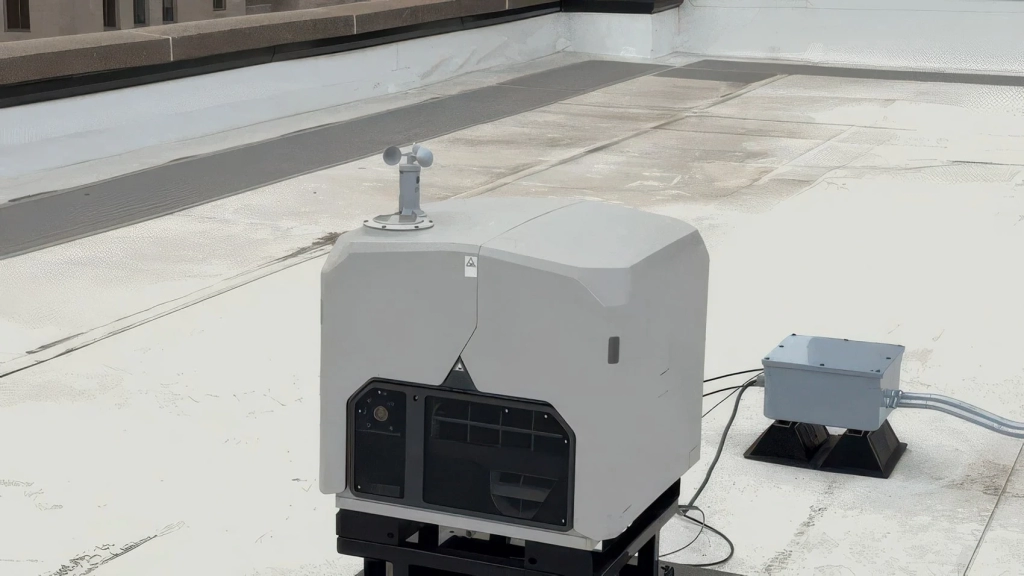 Photo credit: Kansas City PD
The Matrice 4TD pairs with DJI Dock 3, the automated nest system that charges the drone, protects it from weather, and enables autonomous launch without a pilot physically present at the nest. That is exactly the architecture KCPD is running with its eight nests citywide.
The software layer runs on DroneSense, an American-built platform purpose-designed for law enforcement operations. That distinction was important enough for KCPD to address directly in their public communications.
The DJI Question Nobody Can Avoid
The drones are made by DJI. That is the friction point in this story and KCPD knows it.
DJI is a Chinese company that dominates the global drone market. It has faced sustained federal scrutiny over data security concerns. The FCC banned the sale of new DJI drone models in the U.S., and DJI responded by filing a lawsuit against the FCC in late February. That legal battle is ongoing.
KCPD’s answer is the DroneSense software layer. American platform, American data handling, American chain of custody. Whether that is sufficient to satisfy federal security concerns long-term is a question the courts and Congress will ultimately answer. For now, Kansas City is flying.
The ACLU has separately called for strict oversight frameworks around how law enforcement uses drones to monitor crowds and respond to incidents. Williams addressed this directly, stating the drones will not be used for surveillance. Defining and enforcing that boundary in practice will be the ongoing test.
DroneXL’s Take
I have said it before and I will say it again. DJI makes the best drones. The Matrice 4TD is proof of that.
54 minutes of flight time. Five sensors on one gimbal. Thermal imaging that sees through darkness and smoke. Wire-level obstacle avoidance at speed. IP55 weather resistance. A laser rangefinder that tags GPS coordinates from over a mile away. All of that in a 4.1 lb aircraft that fits in a nest the size of a large suitcase and launches itself in under 30 seconds.
No American manufacturer is building anything that competes with this at this price point for public safety operations. That is not an opinion. That is the market reality that departments across the country are navigating right now.
Here is what I find genuinely encouraging about how Kansas City is approaching this. They are not hiding the DJI question. They addressed it publicly, explained the DroneSense software solution, and laid out exactly how the system works. Transparency at launch builds the community trust that makes these programs survive politically, not just operationally.
The 20% call reduction target is ambitious. If Williams hits it, that is thousands of patrol hours redirected toward situations where a human presence actually makes a difference. That outcome is worth taking seriously.
Thirty seconds from call to eyes on scene. That is what this technology makes possible. Kansas City is betting it changes outcomes. Based on what other DFR programs have already proven, that bet looks pretty good.
Photo credit: DJI, Kansas City PD.