
France Deploys Anti-Drone Systems To Cyprus After Iran’s Shahed Reaches RAF Akrotiri
Check out the Best Deals on Amazon for DJI Drones today!
France is sending anti-drone systems to Cyprus following the Iranian Shahed strike on RAF Akrotiri that hit the runway just after midnight on March 2. Reuters first reported the deployment decision. It makes France the first European ally to send dedicated counter-drone hardware to the island in direct response to the attack. It also confirms what the strike itself already signaled: the eastern Mediterranean has become an active front in the wider Iran conflict, and Europe’s militaries are scrambling to close an air defense gap that should have been addressed years ago.
- The Development: France is dispatching anti-drone systems to Cyprus after an Iranian Shahed-type drone penetrated defenses at RAF Akrotiri and struck the runway on March 2, 2026.
- The French Angle: France already had skin in the game before this deployment. A drone struck a French military base in Abu Dhabi on March 1, with Defense Minister Catherine Vautrin confirming “limited” damage.
- The “So What?”: Cyprus declared it is not party to any military operation. Iran treated it like a target anyway. French hardware arriving on Cypriot soil now draws Paris into a defense posture it hadn’t formally taken.
- The Source: Reuters, reporting on France’s anti-drone deployment decision following the Akrotiri attack.
France Steps In Where Britain’s Base Defense Fell Short
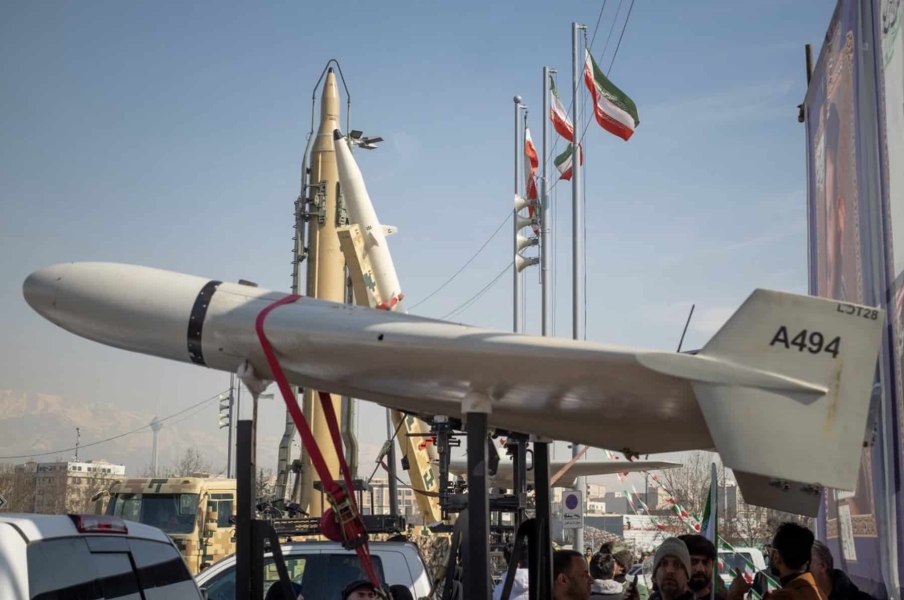
France’s decision to send anti-drone systems to Cyprus is a direct acknowledgment that RAF Akrotiri’s existing defenses were not sufficient to stop a Shahed-136 on March 2. As we reported when the strike happened, the UK had moved additional F-35 fighters, radar systems, and counter-drone equipment to Akrotiri in the weeks before the attack. A Shahed still reached the runway at 12:03 a.m. local time. UK Foreign Secretary Yvette Cooper confirmed it hit specifically the airport runway. The second drone heading toward the base was intercepted. The asymmetry there is the whole story.
Britain shot down Iranian drones over Qatar and Iraq on the same day. Two successful intercepts, one successful strike. The difference in each case was whether a layered, integrated air defense was physically present and operational at that location. Akrotiri had hardware. It did not have an intercept layer that caught a low-flying delta-wing drone coming in over mountainous Cyprus terrain at midnight.
France’s deployment addresses exactly that gap. What specific systems Paris is sending has not been confirmed publicly. France’s short-range air defense portfolio centers on the Mistral SHORAD and ground-based jamming platforms — those are the most likely candidates for a rapid deployment of this kind. France operates a military base in Abu Dhabi, which took the March 1 drone hit, so French planners already have live damage assessment from Iranian drones to inform what they’re shipping to Cyprus.
Cyprus Is Being Pulled Into a Conflict It Explicitly Rejected
Cypriot President Nikos Christodoulides was unambiguous after the Akrotiri strike: “I want to be clear, our country does not participate in any way and does not intend to be part of any military operation.” He also confirmed that Prime Minister Starmer had told him directly that Cyprus was not an Iranian target. Then a Shahed hit the runway.
France now deploying anti-drone hardware to the island complicates that neutrality posture further. Cyprus’s position is legally clear — RAF Akrotiri and Dhekelia are British Sovereign Base Areas, retained since Cypriot independence in 1960. What happens inside those bases is a UK matter, not a Cypriot one. But Iranian drones don’t observe that legal distinction, and French military equipment arriving changes the optics regardless of jurisdiction.
Christodoulides has consistently tried to position Cyprus as a humanitarian corridor and neutral party. That position held during earlier phases of the regional conflict. It’s harder to hold when your neighbor’s runway is a hole and a European ally is rushing in air defense hardware.
France Had Already Absorbed an Iranian Drone Strike Before This Decision
The Abu Dhabi hit on France’s military base on March 1 matters here. As we noted in our coverage of Iran’s broad Gulf strike wave, a French base in Abu Dhabi took a drone strike the same day Shaheds hit Bahrain, Kuwait, and the Fairmont Palm hotel in Dubai. Vautrin called the damage “limited,” but the political signal was the same as every other strike in that wave: Iran is treating any country that provides basing rights to the US or Israel as a legitimate target.
France, the UK, and Germany followed up with a joint statement warning Iran to halt attacks and flagging the possibility of “potentially enabling necessary and proportionate defensive action to destroy Iran’s capability to fire missiles and drones at their source.” As we covered in our reporting on Zelensky’s counter-drone offer to Gulf partners, that language is conditional and diplomatic. But France sending physical hardware to Cyprus is not a statement. It’s a deployment.
The Shahed Cost Equation Is Breaking European Defense Assumptions
The Shahed-136 costs Iran between $20,000 and $50,000 per unit. A THAAD intercept costs $12 million. A Patriot missile costs around $1 million. Fire enough Shaheds and the defender goes broke economically even when winning every single engagement. We detailed this math in depth when covering Iran’s Shahed tactics and the friendly fire problem Kuwait just exposed. France’s decision to send anti-drone systems reflects an understanding that you can’t Patriot-missile your way out of a mass Shahed campaign.
Germany reached a similar conclusion domestically. As we reported, Germany’s Bundestag voted on February 27 to give the Bundeswehr authority to intercept, jam, and shoot down drones over German territory — a legal shift that would have been politically unthinkable two years ago. That vote and France’s Cyprus deployment are two data points on the same curve: Europe is adapting to drone threats faster than its peacetime procurement timelines allow.
The irony is that Ukraine has been absorbing the exact same weapon — from Russia, not Iran — for over three years. As Zelensky put it on March 1, Ukraine’s experience is “largely irreplaceable.” Britain is already deploying Ukrainian counter-drone specialists to help Gulf partners. France’s hardware deployment to Cyprus suggests Paris is working a parallel track: send equipment now, figure out the doctrine as you go.
Europe’s Counter-Drone Push Was Already Accelerating Before the Akrotiri Strike
France’s Cyprus deployment doesn’t come from nowhere. The E5 defense framework — the UK, France, Germany, Poland, and Italy backing the LEAP program for low-cost autonomous drones inspired by Ukrainian methods — was announced ten days before the Akrotiri strike. The European Commission’s drone action plan, published in February, called out Europe’s “embarrassing inability to detect and stop hostile drones” and flagged a potential 100-gram registration threshold change as part of a counter-drone effort. The Shahed that hit Akrotiri weighed roughly 200 kilograms in total airframe weight. Those regulatory conversations and this kinetic reality are now converging fast.
The UK’s DragonFire laser system, capable of destroying drones at approximately $13 per shot, is not scheduled for Royal Navy deployment until 2027. That 18-month gap is where France’s anti-drone hardware has to operate. Short-range kinetic interceptors and jamming systems are the bridge between today’s threat and tomorrow’s directed energy solutions.
DroneXL’s Take
France shipping anti-drone systems to Cyprus is the right call, made about 48 hours too late. The more important question is what those systems actually are, because “anti-drone systems” covers a range from cheap RF jammers to proper short-range air defense, and the Shahed threat at Akrotiri requires the latter.
I’ve been tracking the Shahed’s trajectory since Russia began mass deployments against Ukrainian cities in late 2022. Every time a new country gets hit, there’s a flurry of procurement announcements and deployment decisions that should have been made years earlier. The pattern is consistent: observe, assess, be shocked when it happens to you, then scramble. France absorbed a drone hit at its Abu Dhabi base on March 1. By March 3, it’s sending systems to Cyprus. That’s a faster response cycle than most NATO countries manage. But the Shahed was already there.
What concerns me most here isn’t the hardware gap. France has capable short-range air defense systems and the military competence to deploy them quickly. The real gap is doctrine. As we covered in the Kuwait friendly fire incident, layered air defense only works when all the layers can identify each other. Cyprus now has British forces, French equipment, Cypriot civilian airspace, and US aircraft operating from the same base. Deconflicting all of that under live Shahed attack conditions requires coordination protocols that take months to build, not days.
My prediction: within 45 days, Cyprus will host a formal multi-nation air defense coordination cell — UK, French, and possibly US — with a common recognized air picture covering the eastern Mediterranean. The Akrotiri strike proved ad hoc arrangements aren’t enough. France’s deployment is the first piece. The coordination architecture around it is what actually determines whether the next Shahed gets through.
Editorial Note: AI tools were used to assist with research and archive retrieval for this article. All reporting, analysis, and editorial perspectives are by Haye Kesteloo.