
EDA Advances Swarming Underwater Drone Tech
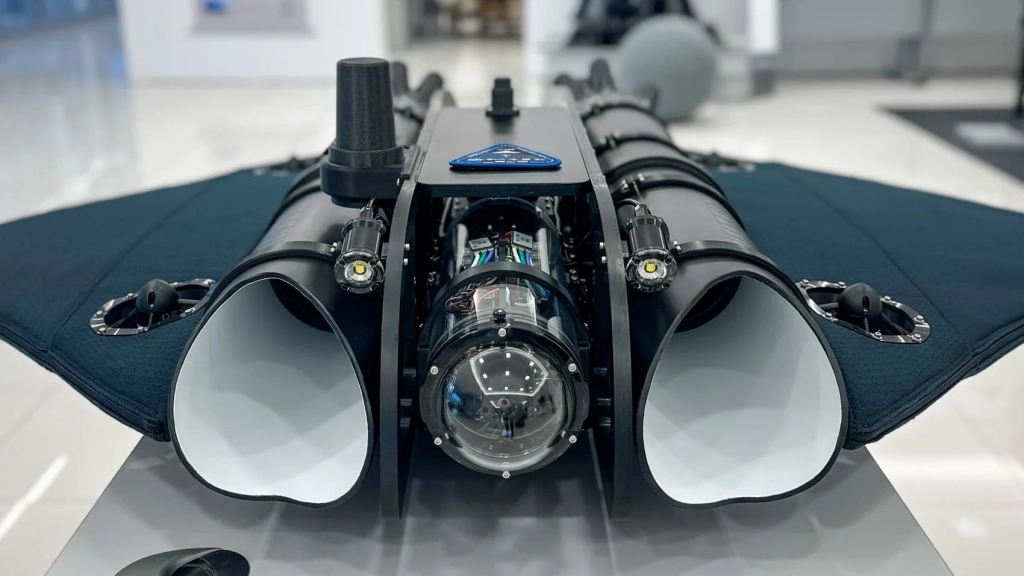 Photo credit: EDA
Check out the Best Deals on Amazon for DJI Drones today!
The ocean is a hostile place for autonomy: GPS disappears a few meters below the surface, radio waves weaken, latency stretches, and water itself behaves like a restless, shifting labyrinth.
That is the environment where the European Defence Agency decided to test the future of naval robotics, and they announced through a Press Release.
After four years of development, the agency has concluded the second stage of its Swarm of Biomimetic Underwater Vehicles program, known as SABUVIS II.
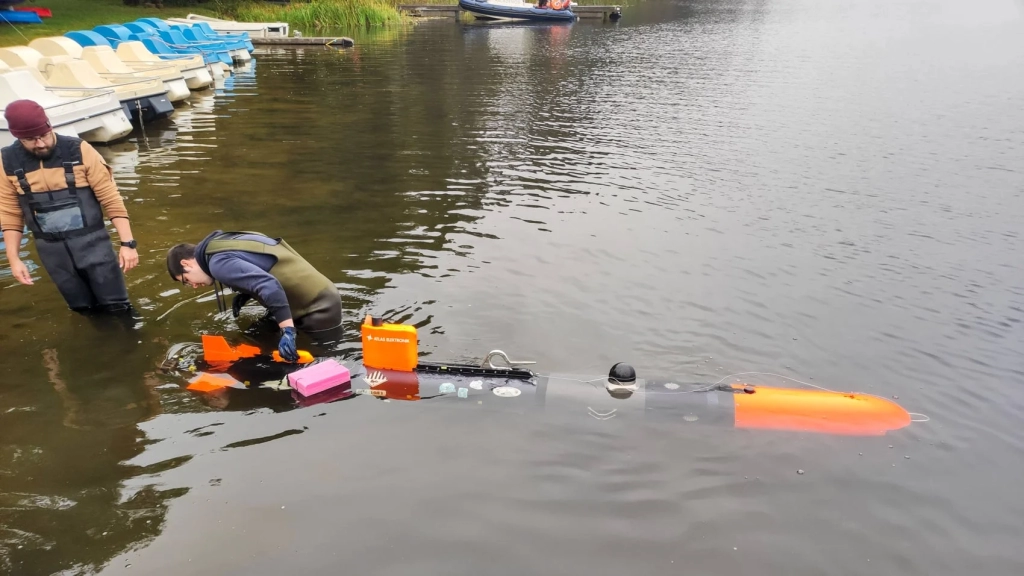 Photo credit: EDA
The objective was not simply to improve individual autonomous underwater vehicles, but to make them operate as a coordinated swarm, functioning as a single, distributed system rather than isolated machines.
Instead of sending separate drones into the deep with limited coordination, SABUVIS II focused on creating underwater vehicles that move, sense, and adapt together.
From Isolated AUVs to Coordinated Systems
SABUVIS II was managed by the EDA with a budget of €3.7 million. Poland served as the lead nation, with Germany, Portugal, and Slovenia contributing. The second phase concluded in early February 2026.
The technical hurdles were substantial. Satellite based tracking does not function underwater. Communication bandwidth is extremely limited. Acoustic links introduce significant latency. Environmental conditions change rapidly and unpredictably. Traditional AUVs typically execute pre programmed missions with minimal real time collaboration.
A swarm requires something different.
During field demonstrations in Poland, Germany, and Portugal as part of REPMUS 2025, mixed swarms of underwater drones were tested in real world operational settings. The trials validated coordinated movement, reliable data exchange, formation control, and adaptive mission execution.
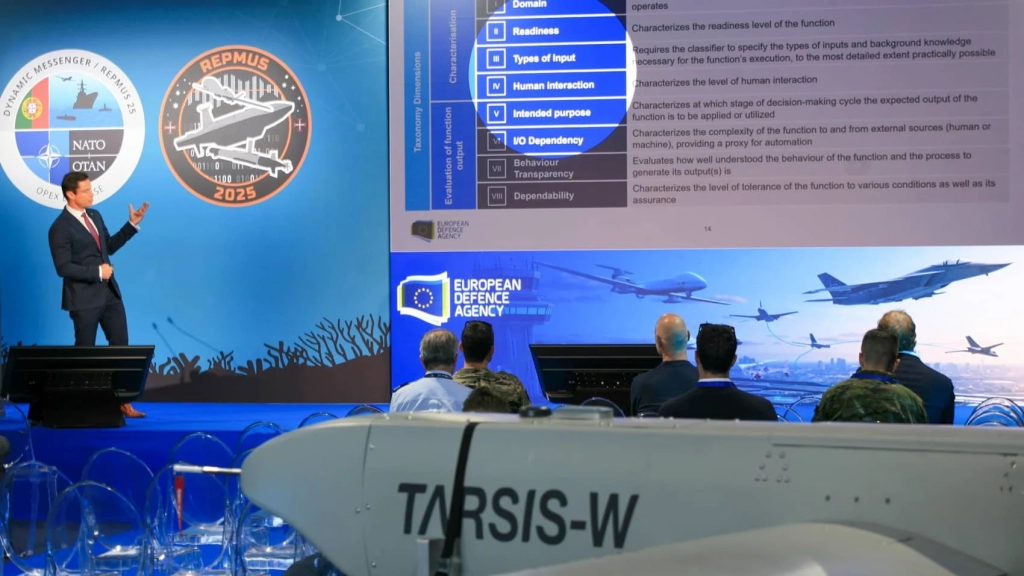 Photo credit: EDA
Equally important, the project advanced command and control integration. Vehicles from different countries and manufacturers were aligned through common standards and interfaces, allowing heterogeneous systems to interoperate within a unified framework. That interoperability is critical for multinational naval operations.
SABUVIS II also builds on earlier EDA work, including the SALSA project, which developed adaptive protocol technologies for self configurable underwater acoustic networks. SALSA addressed the connectivity challenge. SABUVIS II extended that foundation into coordinated swarm behavior.
Three Complementary Swarm Concepts
The second phase of the project developed and assessed three complementary operational concepts.
First, scalable and lower cost AUV swarms designed to reduce dependence on single high value platforms. Distributing capability across multiple vehicles increases resilience and flexibility.
Second, biomimetic underwater vehicles optimized for maneuverability in shallow or cluttered littoral waters. Drawing inspiration from marine life, these designs aim to improve agility and operational effectiveness in complex coastal environments.
Third, mixed swarms integrating underwater vehicles with autonomous surface vessels. This layered approach enhances communication pathways and expands operational coverage by linking platforms above and below the waterline.
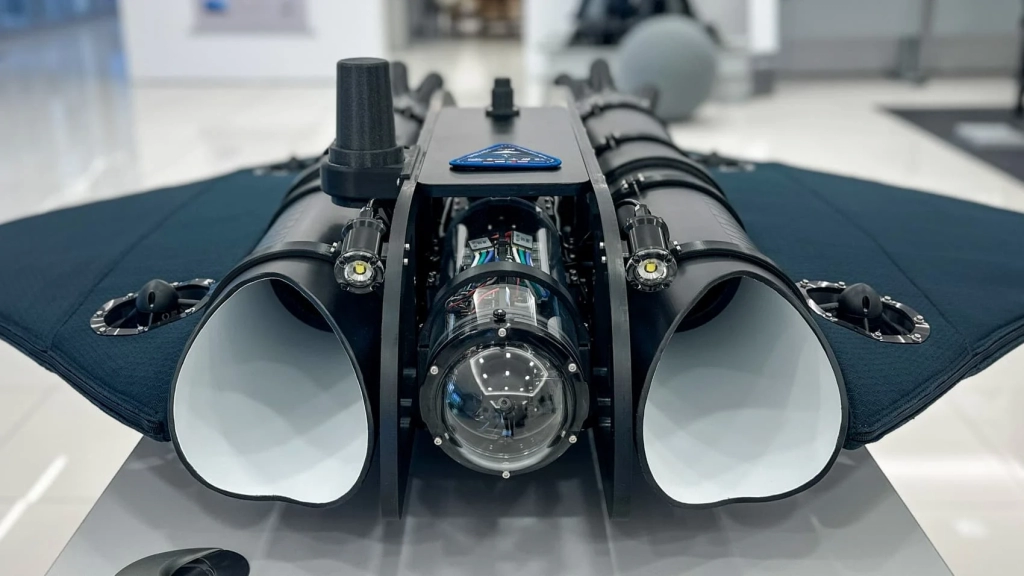 Photo credit: EDA
SABUVIS II demonstrated that mission execution does not need to rely on one platform alone. If one unit fails, others can compensate. Tasks can be redistributed dynamically. The mission becomes a property of the network rather than a single vehicle.
Beyond hardware and algorithms, the project established advanced simulation and testing environments. These tools allow swarm behaviors to be evaluated, optimized, and validated before deployment, reducing operational risk and accelerating development cycles.
Implications for Future Naval Missions
The EDA considers the results directly relevant to a broad set of naval applications. These include intelligence, surveillance and reconnaissance missions, protection of critical maritime infrastructure, harbor security, and high risk operations where redundancy is essential.
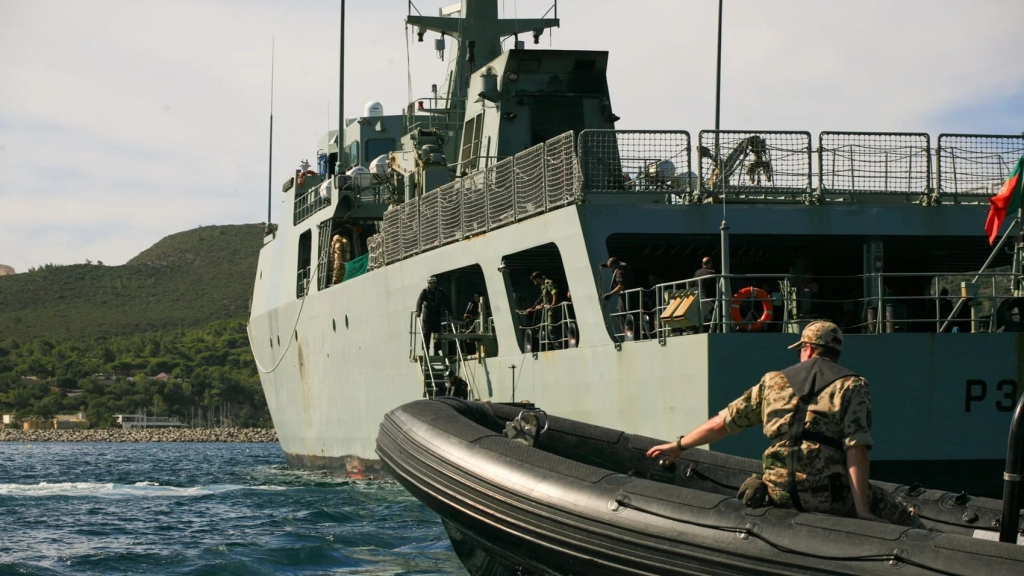 Photo credit: EDA
In an era where undersea cables, pipelines, and offshore energy installations form part of national security infrastructure, persistent and adaptable monitoring is becoming increasingly important.
Swarming underwater drones offer a way to extend coverage, improve survivability, and reduce operational costs compared to deploying single large platforms.
The completion of SABUVIS II signals a shift in thinking about underwater autonomy. The focus is no longer solely on making one vehicle smarter.
It is about enabling many vehicles to operate as a coordinated, interoperable system under some of the most challenging communication constraints on Earth.
The seabed is evolving into a networked operational domain, and swarming AUVs may become a foundational capability for future European naval forces.
DroneXL’s Take
SABUVIS II is not about flashy new hardware. It is about architecture and resilience. By investing in interoperability, distributed autonomy, and adaptive underwater networking, the European Defence Agency is laying groundwork for more robust naval operations in contested and infrastructure heavy maritime environments.
The real breakthrough is collective behavior under extreme constraints. Underwater swarms that can coordinate despite limited bandwidth and high latency represent a meaningful step toward persistent, scalable maritime autonomy. If procurement and doctrine follow, Europe could see a gradual transition from platform centric naval robotics to distributed underwater ecosystems that operate quietly and cooperatively beneath the surface.
Photo credit: EDA