
DJI Dock 2 Cleared For BVLOS In Brazil
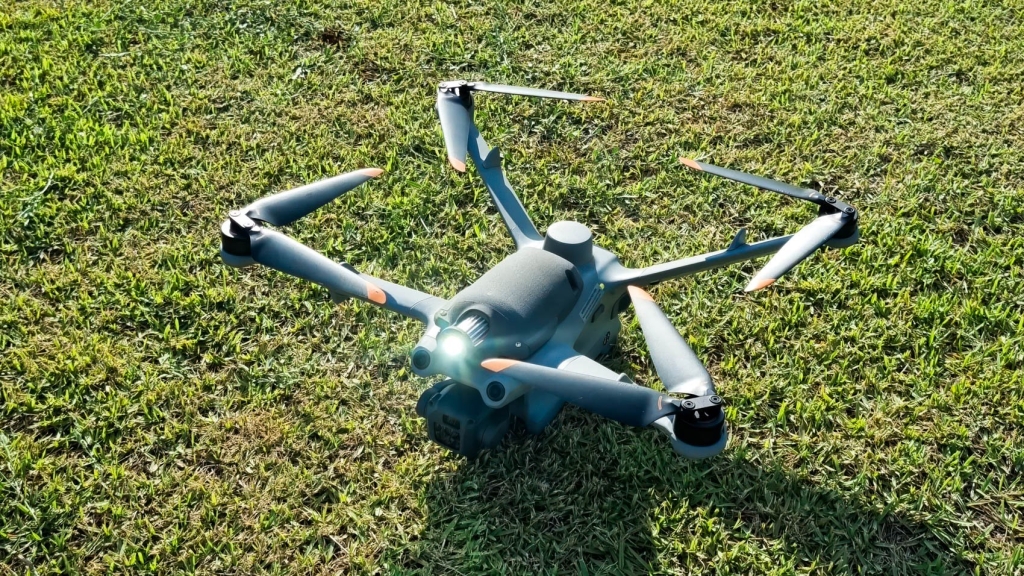 Photo credit: DJI
Check out the Best Deals on Amazon for DJI Drones today!
On January 21, 2026, Brazil’s aviation authority, Agência Nacional de Aviação Civil granted Design Authorization to the DJI Dock 2 and the DJI Matrice 3D Series, as reported by DJI.
Translation for enterprise teams: the paperwork mountain just got bulldozed.
For years, the biggest obstacle to scaling dock operations was not battery life, wind resistance, or even skeptical CFOs. It was regulatory fog. The hardware was ready. The automation was ready. The use cases were screaming for deployment. But BVLOS approval often felt like trying to open a bank vault with oven mitts.
This authorization flips the script. Instead of asking, “Can we fly legally?” operators can now focus on “How fast can we deploy?”
And that is a very different conversation.
What ANAC Actually Approved
This was not a rubber stamp. Working alongside Brazilian integrator AL Drones, DJI went through a full system-level review under ANAC’s supervision.
Here is what that means in practical terms:
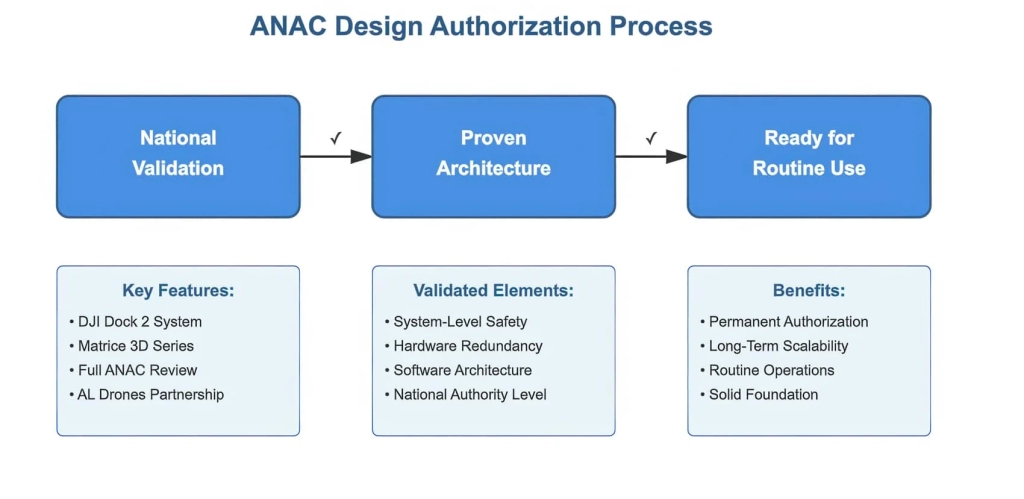 Photo credit: DJI
- National validation of the Dock 2 system architecture.
- Hardware redundancy and safety systems reviewed at authority level.
- Software logic and operational framework assessed and accepted.
- Approval for routine operations, not just a demo project or pilot test.
In short, the blueprint is approved. The airworthiness foundation is baked in. The Dock 2 is no longer “interesting experimental tech.” It is officially recognized infrastructure.
That matters.
It also means operators no longer need to reinvent the certification wheel every time they deploy a unit. The heavy regulatory lifting has already been done at the design level.
No more starting from zero. No more proving that gravity still works.
What Operators Still Need to Handle
Before anyone starts launching fleets unattended across Brazil, let’s stay grounded.
Design Authorization does not remove operator responsibility. It removes duplication.
Operators still need:
Proper business and operational approvals under Brazilian law.
Qualified remote pilots or operators.
Mission specific risk assessments.
Flight requests submitted through SARPAS to DECEA.
Active human monitoring during missions.
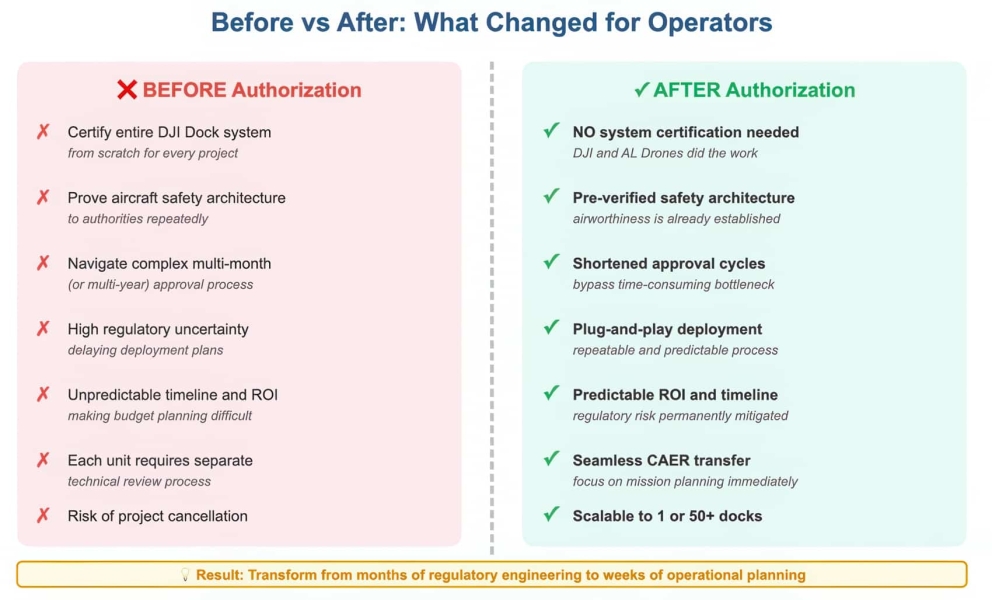 Photo credit: DJI
Automation assists. Humans remain accountable.
For BVLOS operations, each individual aircraft also needs a CAER, Brazil’s Special Airworthiness Certificate for drones.
The CAER Certificate: Every Matrice 3D series drone deployed in Brazil is now eligible for a CAER (Special Airworthiness Certificate for Drones).
Think of the Design Authorization as the “Type Approval” for a car model, while the CAER is the specific “License Plate” for your vehicle. It is important to mention that the CAER Certificate is conditioned to the installation of an specific ANAC approved Anti-Collision light on the M3D Series, and proof of installation on the aircraft (Picture) will be required to obtain CAER.
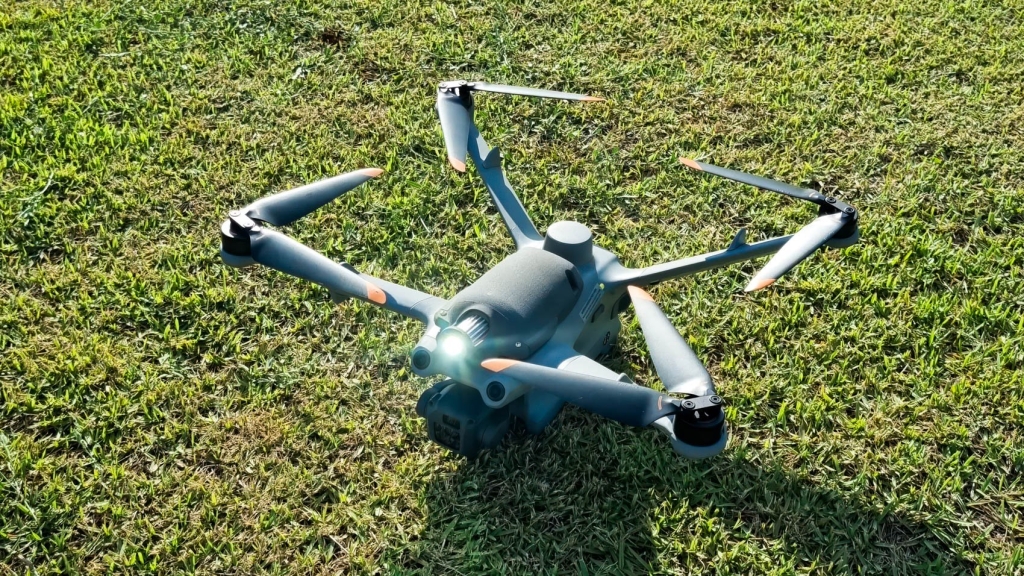 Matrice 3D series with Anti-Collision Light
Photo credit: DJI
There is one extra detail: the Matrice 3D must be fitted with an ANAC approved anti collision light, and proof of installation is required for CAER issuance. No light, no golden ticket.
Once the CAER is secured, operators can submit BVLOS requests through SARPAS. That is the gateway to routine long range missions.
The big advantage here is transferability. Units can arrive “airworthiness ready,” allowing teams to focus on deployment planning instead of regulatory engineering.
Time to operation shrinks dramatically.
Why This Changes the Enterprise Timeline
Before this authorization, certifying a drone in a box system for BVLOS could take months, sometimes longer than the procurement cycle itself. Legal reviews. Technical reviews. More reviews reviewing the reviews.
Now, the system level approval bottleneck is gone.
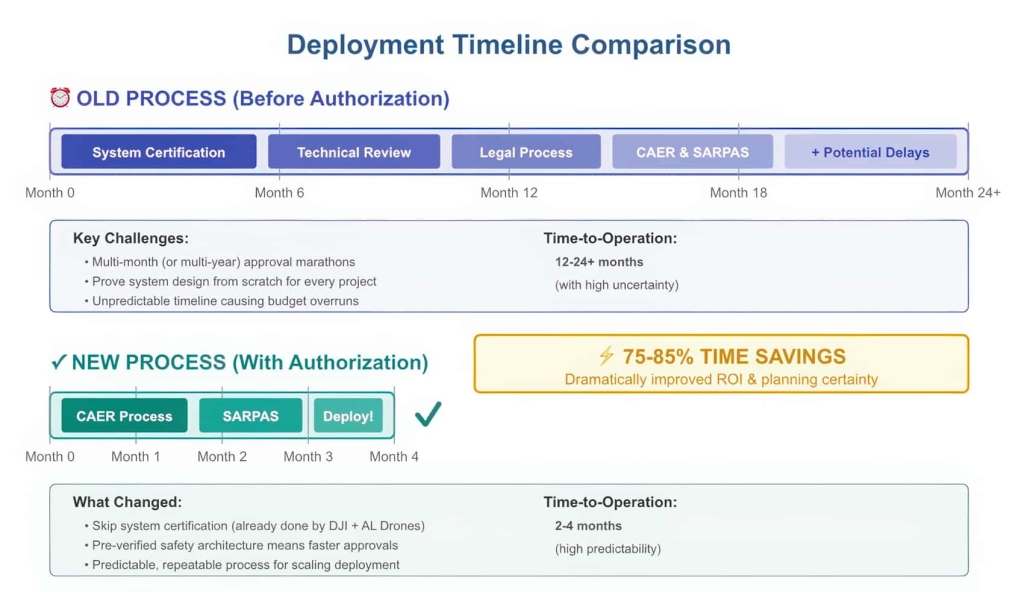 Photo credit: DJI
That transforms the Dock 2 into what it was always meant to be: a scalable industrial tool.
Deploy one dock. Deploy fifty. The regulatory pathway is repeatable. Predictable. Forecastable.
For enterprise operators, that means clearer ROI projections and fewer boardroom headaches. Regulatory risk at the hardware level has already been mitigated.
And there is a global ripple effect.
ANAC is widely respected for its aviation standards. When Brazil signs off on system level safety for autonomous operations, other regulators pay attention. This decision becomes a reference point for discussions worldwide.
DJI calls this Compliance by Design. The idea is simple: do not build first and negotiate later. Engineer to meet strict regulatory expectations from day one.
This approval suggests that approach is working.
Autonomous dock operations are no longer a futuristic slide deck concept. In Brazil, they are now legally structured reality.
DroneXL’s Take
This is not just a regional certification story. It is a strategic milestone.
Dock based BVLOS operations are the holy grail for infrastructure inspection, utilities, mining, and large scale asset monitoring. The technology has been ready for years. Regulation was the gatekeeper.
Brazil just opened the gate.
If other civil aviation authorities follow this model, 2026 could quietly become the year autonomous drone networks shift from pilot projects to permanent infrastructure. And once that shift happens, there is no going back to manual-only workflows.
The Dock 2 is no longer waiting for permission. In Brazil, it has it.
Photo credit: DJI