
 Photo credit: Wikipedia
Check out the Best Deals on Amazon for DJI Drones today!
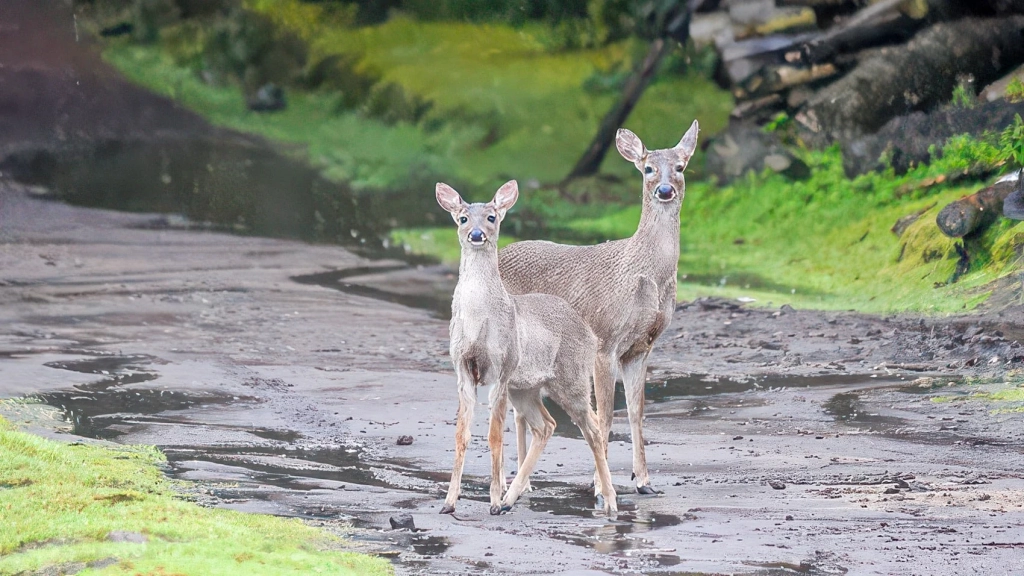
Hillsdale and Montvale are waiting on results from recent deer population surveys carried out with thermal imaging drones, with reports expected sometime in February, as The Press Group reports.
Borough administrator Mike Ghassali, who is also Montvale’s mayor, said both towns were surveyed back to back during the winter, a period that improves accuracy because trees are bare and deer stand out clearly against colder ground.
The surveys were conducted by the Center for Environmental Studies at Raritan Valley Community College under the supervision of biology professor Dr. Jay Kelly. The final reports will include maps of the areas flown, estimated deer counts, and an assessment of whether local populations exceed the land’s biological carrying capacity. As with similar studies across New Jersey, the reports will not recommend specific management actions, leaving those decisions to local and regional officials.
Why the Autel EVO II Dual is used for deer surveys
The drone at the center of these surveys is the Autel EVO II Dual equipped with a FLIR 640 thermal sensor, a setup widely used in wildlife research because it balances portability, endurance, and high resolution thermal imaging.
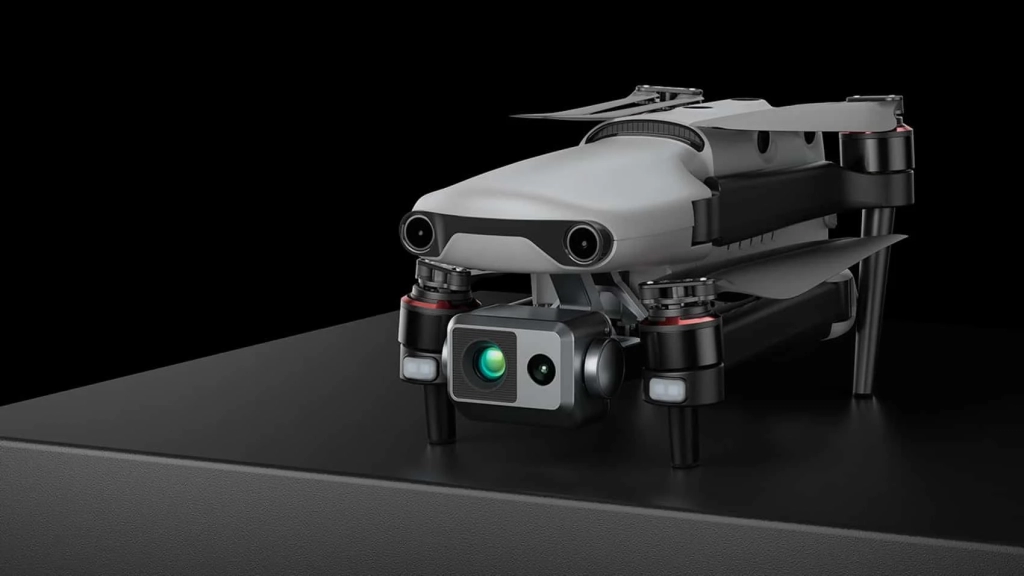 Photo credit: AUTEL
The thermal camera allows deer to appear as bright heat signatures, visible even when animals are standing still or partially obscured by brush.
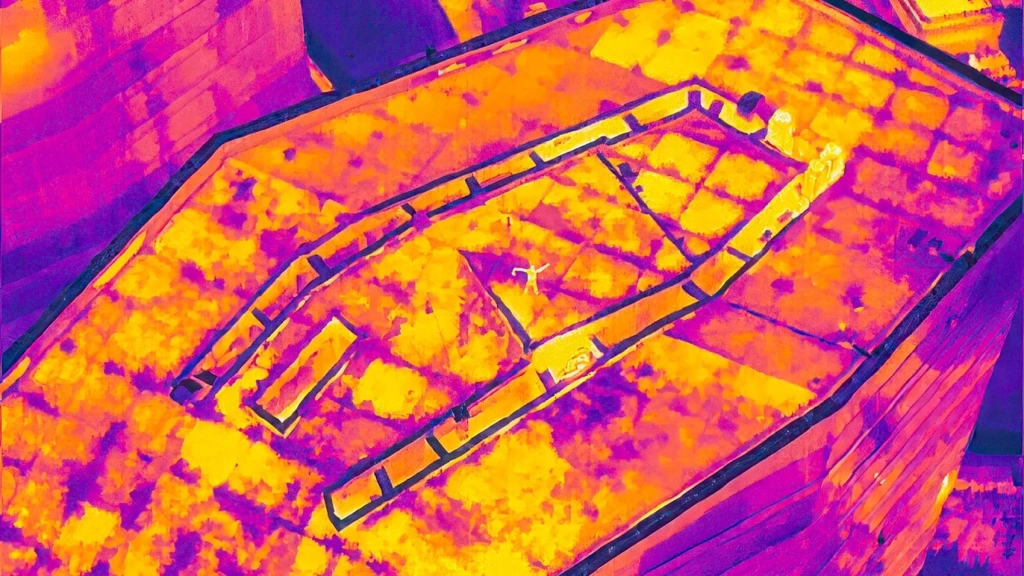 Photo credit: FLIR
RVCC’s survey team flies the drone at night, when the temperature difference between deer and the surrounding landscape is greatest.
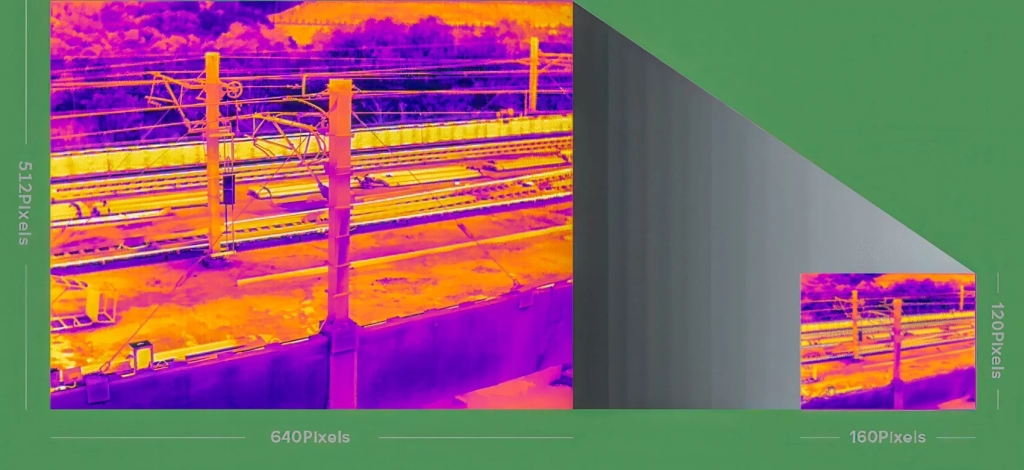 Photo credit: FLIR
Flights are conducted by an FAA certified pilot with a trained visual observer approved for nighttime operations, and all missions take place in public Class G airspace in compliance with federal regulations.
The drone follows a grid like pattern, flying overlapping transects that ensure full coverage of each study area and a surrounding buffer zone.
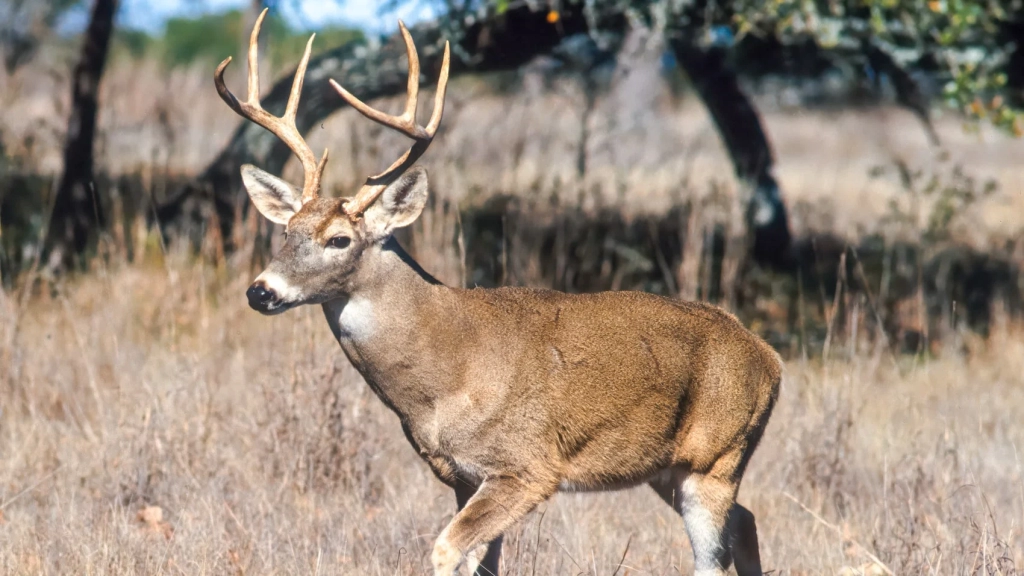 Photo credit: Wikipedia
When deer are detected, the drone pauses in a hover so the team can count individuals accurately. If needed, it descends or shifts angle to confirm identification. All detections are logged and mapped in real time using professional mapping software, creating a detailed spatial record of where deer are concentrated.
To keep the numbers conservative and reliable, the team applies multiple quality control steps. If a herd is seen moving, nearby areas are surveyed next to avoid double counting. If deer appear near a previously recorded location, the drone returns to the original spot to confirm whether animals moved.
Any heat signatures that cannot be confidently identified as deer are excluded from the final analysis.
What similar drone surveys have already revealed
The same Autel EVO II Dual platform was used in late March and early April 2025 to survey three large Essex County parks, South Mountain, Eagle Rock, and Hilltop Reservations.
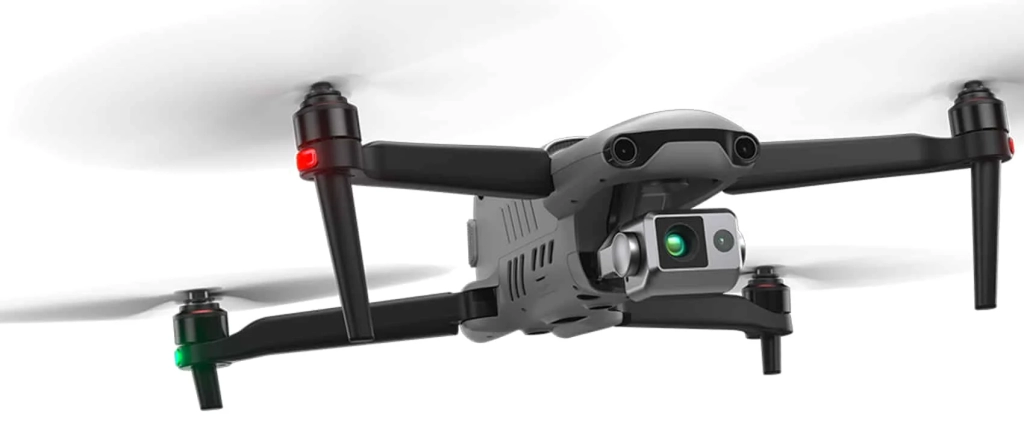 Photo credit: AUTEL
Those surveys counted 172 deer across South Mountain, 133 deer at Hilltop, and 61 deer at Eagle Rock. When adjusted for land area, densities ranged from about 31 deer per square mile to more than 70 deer per square mile.
In two of the three parks, deer numbers had increased substantially compared to earlier drone surveys conducted in 2021 and 2023. Even in the park where densities dipped slightly, numbers remained well above what biologists consider sustainable.
Dr. Kelly has said most North Jersey landscapes can support roughly 10 deer per square mile, with noticeable ecological damage beginning above 20. Drone surveys across the region routinely show densities several times higher than those thresholds.
These elevated populations are linked to degraded forest understory, poor forest regeneration, increased deer vehicle collisions, and higher risks of tick borne illnesses such as Lyme disease.
Ghassali has emphasized that one immediate step residents can take is to stop feeding deer or wildlife. Feeding is illegal and artificially inflates deer numbers by boosting survival and reproduction while drawing animals deeper into residential areas. He has urged residents to report wildlife feeding to local authorities so the practice can be stopped.
DroneXL’s Take
Using an Autel EVO II Dual with a FLIR 640 thermal sensor turns deer counts from a guessing game into a repeatable scientific measurement, and that matters when emotions run high.
These drones do not decide policy, but by showing just how far populations exceed biological limits, they force towns to confront the scale of the issue, and they give neighboring communities a shared set of facts that can finally anchor a regional conversation.
Photo credit: AUTEL, FLIR, Wikipedia.