
BRINC Launch Signals Next Phase of U.S. Public Safety Drone Industry
New Guardian platform and Seattle factory highlight scaling pressure, public safety adoption, and policy shifts shaping the U.S. drone market.
A Defining Moment for U.S. Drone Manufacturing
A pair of announcements set for release today at BRINC’s live event mark more than a product launch. They reflect a turning point for the U.S. drone industry.
BRINC has announced a new Seattle factory alongside the debut of its next-generation Drone as First Responder (DFR) platform, Guardian. Together, the developments point to a broader shift. The industry is moving beyond early adoption and into a phase defined by scale, integration, and operational impact.
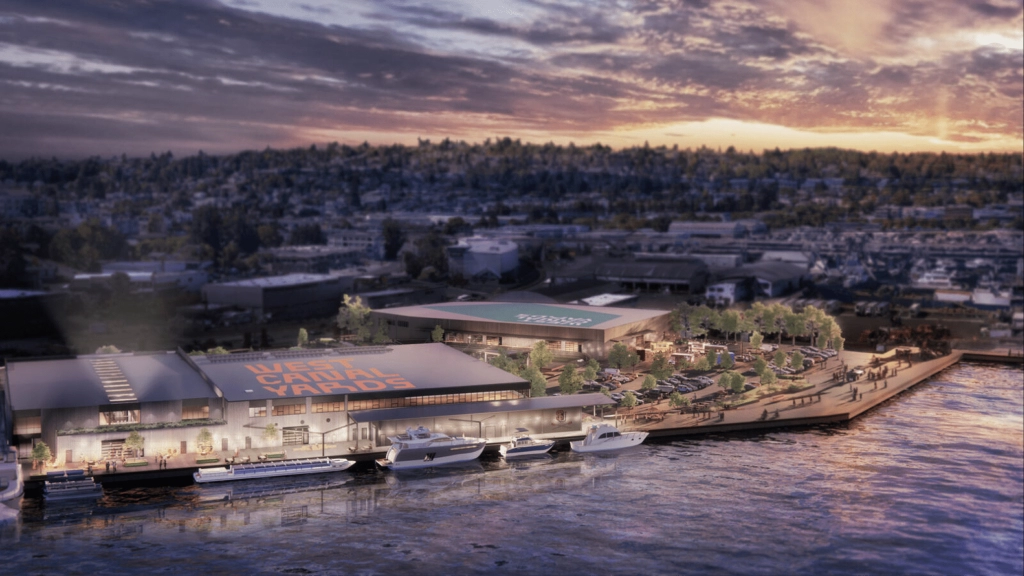
The BRINC West Canal Yards Campus
As public safety agencies expand drone programs and policymakers increase scrutiny on foreign-made systems, the pressure on U.S. manufacturers to deliver at scale is rising.
Scaling Production to Meet Demand
The new Seattle factory more than doubles BRINC’s production footprint and is designed to support rapid scaling of manufacturing, bringing engineering and production together in one location. This approach supports faster iteration, tighter quality control, and improved supply chain resilience.
“Co-locating manufacturing and engineering in Seattle has been a strategic advantage for BRINC, from speed of development to quality control to supply chain resilience. We’ve outgrown our previous facility, and this investment allows us to scale production rapidly while remaining fast, focused, and vertically integrated. As demand for 911 response drones accelerates, we’re committed to building that capability here in the United States.”
The expansion follows rapid growth. The company reports that it more than tripled revenue and significantly increased production capacity in 2025.
For the broader industry, the message is clear. Scaling production is becoming a requirement, not a long-term goal.
Guardian: Advancing Drone as First Responder
Guardian at a Glance
• 62-minute flight time
• 8-mile range
• Starlink connectivity
• Automated battery swap
At the center of the announcement is Guardian, a new platform designed to support autonomous emergency response.
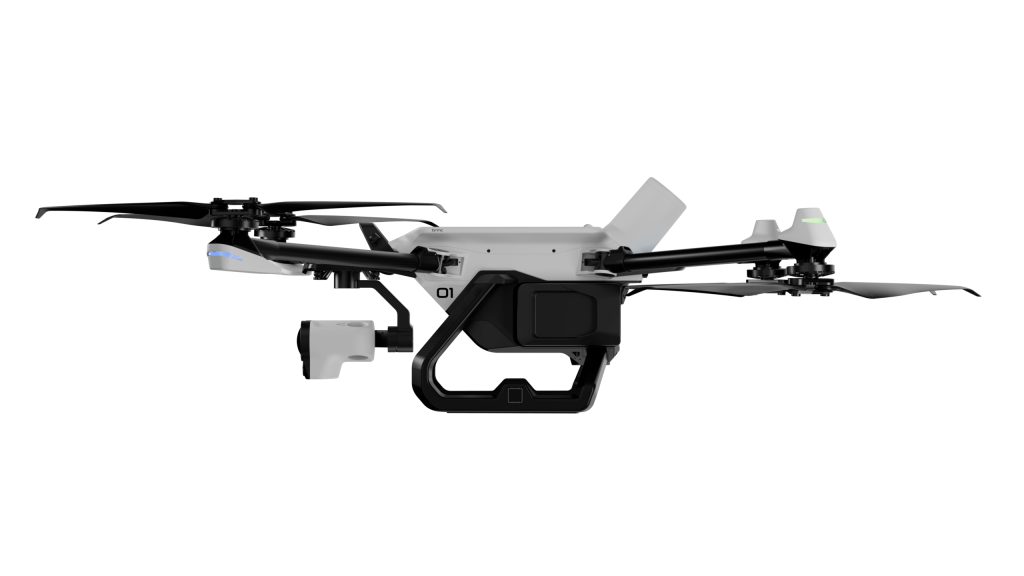
Guardian is engineered to launch within seconds of a 911 call and deliver real-time situational awareness to first responders.
The system pairs with Guardian Station, a robotic dock that enables automatic battery swapping and payload loading. This allows continuous 24/7 operation without human intervention.
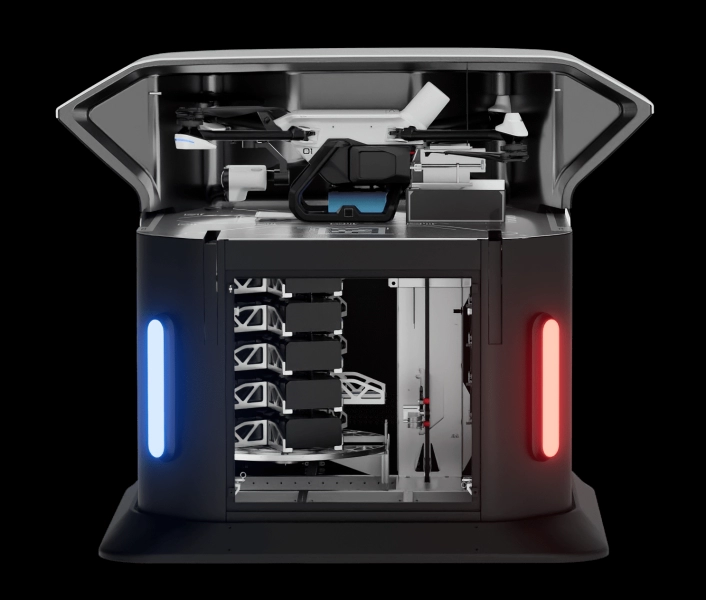
A look inside Guardian Station
Key capabilities include extended flight time of more than 60 minutes and a response range of up to eight miles.
The platform also integrates Starlink connectivity, enabling operation even when traditional communications infrastructure is unavailable.
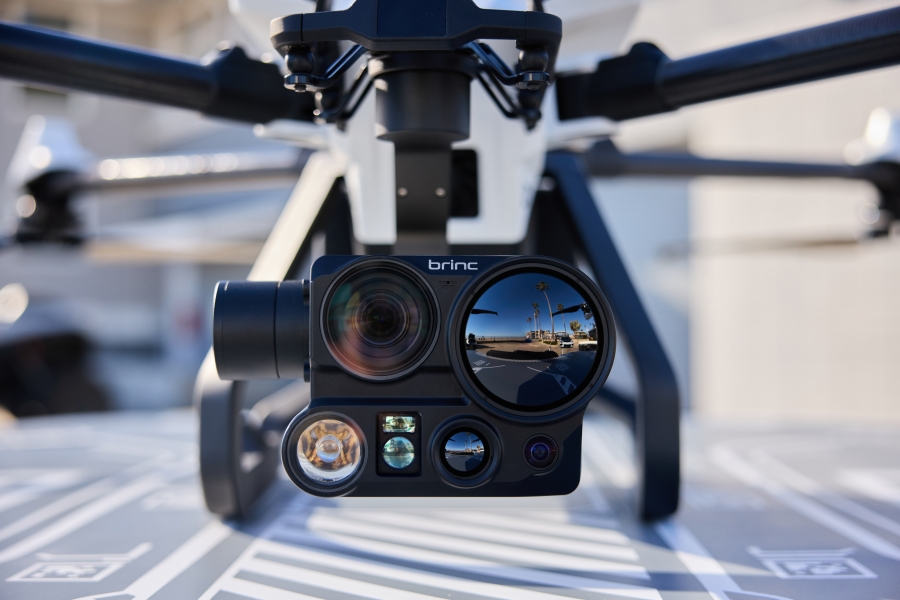
“Drone as First Responder operations have been limited by camera capabilities, connectivity and contact charging. Guardian changes the paradigm, supporting true 24/7 operations and enabling advanced operations like vehicle pursuits. This is the drone I’ve wanted to build for a decade, and I’m proud of the entire BRINC team for materializing it.”
These features represent a step toward persistent aerial coverage rather than intermittent deployment.
A Tool for De-Escalation and Life-Saving Response
Public safety drones are increasingly positioned as tools that can reduce risk rather than escalate it.
BRINC reports that more than 900 public safety agencies and over 20% of SWAT teams in the United States use its systems.
In many cases, drones allow officers to assess a situation before arriving on scene. This can reduce unnecessary confrontation and improve decision-making, keeping both officers and community safe.
Guardian expands that role. In addition to imaging and communication capabilities, the platform can deliver payloads such as AEDs, Narcan, and EpiPens. The result is a shift in how drones are used. They are moving from passive observation tools to active participants in emergency response.
Integration with Public Safety Workflows
The value of these systems depends on how well they integrate with existing infrastructure.
BRINC’s partnership with Motorola Solutions connects its drones directly to public safety command centers. Guardian can integrate with CommandCentral Aware, allowing dispatchers to incorporate drone data into real-time operations.
“Motorola Solutions is excited to enable the next generation of DFR programs through our strategic alliance with BRINC by connecting their drones to public safety agencies’ central nervous systems—their command centers. Agencies can get eyes on the scene faster, deliver lifesaving support before first responders arrive, and securely capture and store drone footage in our integrated digital evidence management software.”
This level of integration suggests that drones are becoming embedded in core response workflows.
Policy Pressure and the Push for U.S. Manufacturing
The timing of BRINC’s announcements also aligns with broader regulatory developments.
Recent actions by the FCC to expand restrictions on certain foreign-made communications and drone-related technologies are increasing attention on supply chains. These policies may influence procurement decisions across public safety and government agencies.
For U.S. manufacturers, this creates both opportunity and pressure. Companies that can deliver domestically produced systems at scale may be well positioned. However, scaling production quickly remains a significant challenge across the industry.
BRINC’s vertically integrated, U.S.-based manufacturing approach aligns with this shift, reflecting a broader need for capacity across the sector.
An Industry Moving Toward Scale
Taken together, the factory expansion and the launch of Guardian highlight a larger trend.
The drone industry is entering a new phase. Early innovation is giving way to operational deployment at scale. Success will depend on reliability, availability, and the ability to integrate into real-world systems.
For public safety agencies, drones are becoming part of everyday operations. For manufacturers, the challenge is no longer just building advanced systems. It is delivering them consistently and at volume.
Looking Ahead
Today’s announcements signal a maturing market. As demand for public safety drones grows and policy continues to evolve, the ability to scale manufacturing and deploy reliable systems will define the next phase of the U.S. drone industry.
The future of Drone as First Responder programs may depend as much on production capacity as on technological innovation.