
Voice Controlled Drone Swarm Contest: Details Behind SpaceX’s Pentagon Bid
 Photo credit: SpaceX
Check out the Best Deals on Amazon for DJI Drones today!
SpaceX is reportedly competing in a secret Pentagon challenge to build voice controlled, autonomous drone swarming technology, as Reuters reports. On paper, it reads like the next chapter in military innovation. In context, it also reads like a sharp philosophical U turn.
According to Bloomberg News, SpaceX and its AI subsidiary xAI are among a select group of companies chosen for a $100 million Pentagon prize competition launched in January. The six month contest aims to develop systems that can translate spoken commands into digital instructions and coordinate multiple drones at once.
Say a command. Watch a swarm respond.
That is the future the Pentagon appears to be funding.
From Warning About Killer Robots To Building Swarms
Here is where the story gets uncomfortable.
In 2015, Elon Musk signed an open letter urging a global ban on offensive autonomous weapons. The message was clear and urgent. Do not create machines that become new tools for killing people. Do not open a Pandora’s box that cannot be closed.
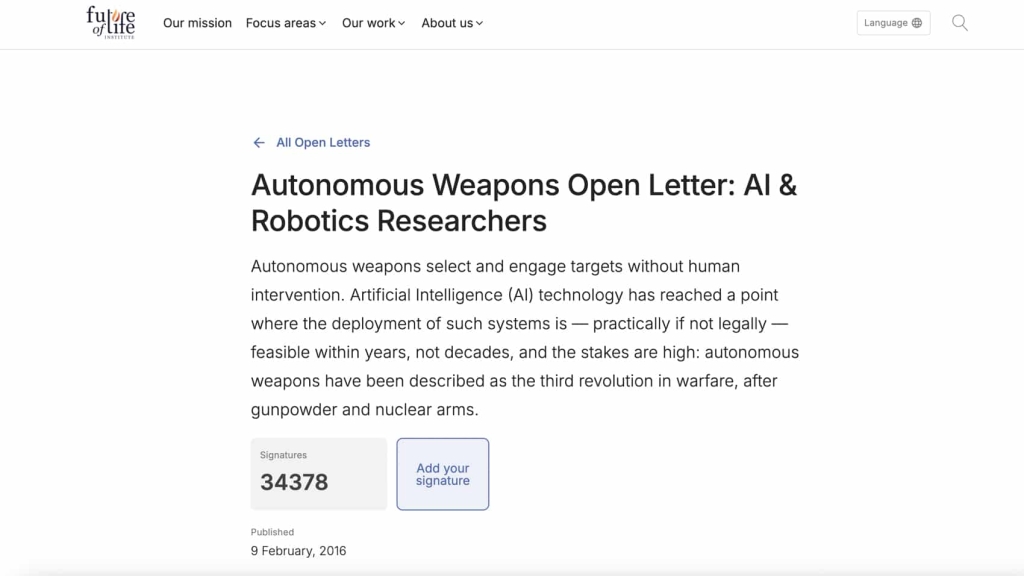
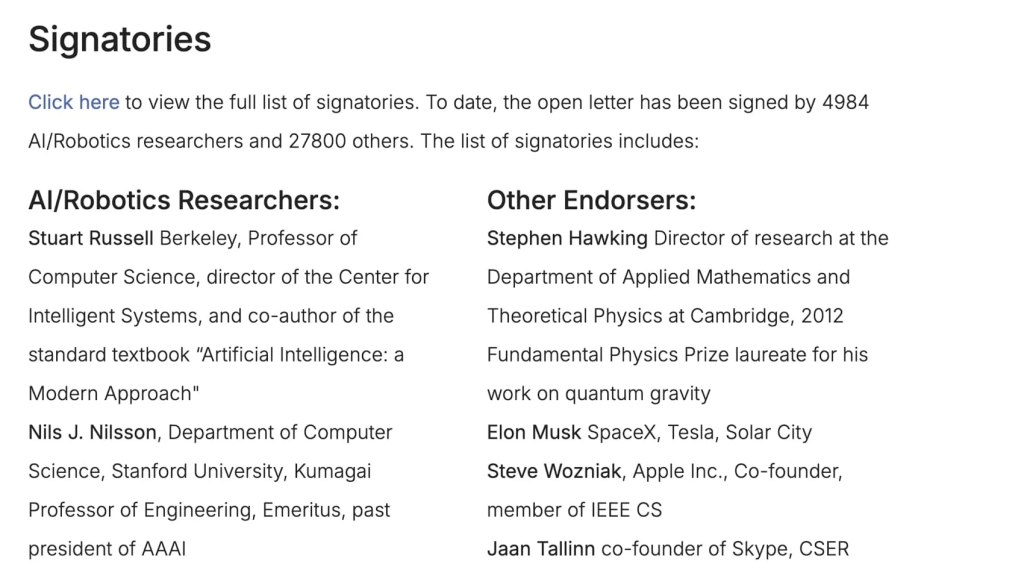
At the time, Musk positioned himself as a public critic of weaponized AI. He warned about the risks of autonomous systems making life and death decisions. He amplified fears about an arms race in artificial intelligence.
Now, a decade later, one of his companies is reportedly competing to build advanced drone swarming technology for the Pentagon.
You can call it evolution. You can call it pragmatism. Critics will likely call it hypocrisy.
Because while the technical language may emphasize autonomy, coordination, and voice interfaces, drone swarms are not abstract research projects. They are battlefield tools. A voice controlled swarm is not just a clever engineering exercise. It is a scalable force multiplier.
The same entrepreneur who once cautioned against offensive autonomous weapons is now positioned to profit from systems that could enable them.
The Pentagon’s AI Acceleration
This competition does not exist in a vacuum. The U.S. Department of Defense has been aggressively integrating artificial intelligence into its operations.
Last year, OpenAI, Google, Anthropic, and xAI secured contracts worth up to $200 million each to expand advanced AI capabilities within the Pentagon.
 Photo credit: Wikipedia
At the same time, U.S. defense leadership has pushed to cut bureaucracy and accelerate drone deployment, both for overseas operations and domestic security concerns.
With major events like the FIFA World Cup and America250 celebrations approaching, counter drone systems and rapid response technologies are a priority.
Swarming systems that can respond instantly to voice commands could play a role in both offense and defense. But the dual use argument does not erase the central tension.
When Musk signed that 2015 letter, he framed autonomous weapons as a moral red line. Today, SpaceX, freshly merged with xAI ahead of a planned IPO, is reportedly competing for a Pentagon prize tied directly to autonomous drone coordination.
DroneXL’s Take
The transformation is striking.
It highlights a broader pattern in Silicon Valley, where public warnings about AI risk often coexist with lucrative defense contracts. Principles bend. Capital flows. National security justifies acceleration.
If the Bloomberg report is accurate, Musk’s companies are no longer merely warning about the dangers of autonomous warfare. They are helping shape it.
Drone swarms that move at the speed of software do not wait for philosophical debates to settle. They respond to commands.
And now, those commands may start with a human voice.
Photo credit: SpaceX, Future Of Life Institute and Wikipedia.