
Vector and Wrap Explore the Feasibility of Drone Interception Technology
Vector Partners with Wrap to Develop Drone Countermeasure System
By DRONELIFE Features Editor Jim Magill
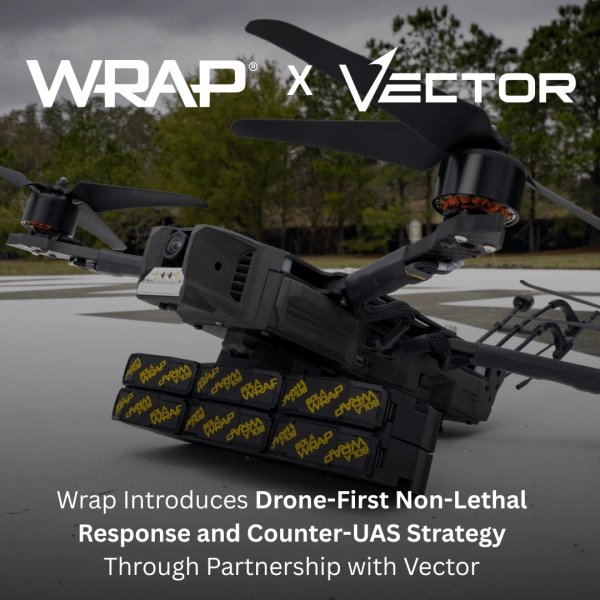
Vector, a technology company based in Utah that specializes in defense drone systems, has announced a partnership with Wrap (NASDAQ: WRAP), a developer of non-lethal response technology for law enforcement. The collaboration aims to create a cost-effective system that utilizes unmanned aerial vehicles (UAVs) to safely neutralize hostile drones.
Details of the Collaboration
The partnership, which was announced last month, combines Vector’s expertise in unmanned tactical hardware with Wrap’s Non-Lethal Response (NLR) technology. The goal is to develop a counter-UAS platform where a “friendly” drone can deploy a tether to ensnare a threatening UAV, allowing it to crash land safely without causing harm to people or property.
Andrew Yakulis, CEO and co-founder of Vector, explained that the tether system was inspired by a non-lethal bullet concept used in law enforcement, designed to immobilize individuals. The tether will be mounted on Vector drones for deployment.
Target Markets and Applications
Vector plans to market this drone countermeasure system to the U.S. Department of Defense and federal law enforcement agencies, particularly as they invest in counter-UAS technologies ahead of major events such as the FIFA World Cup and the America 250 celebrations. The service is intended for use by authorized federal law enforcement officers trained in drone mitigation.
Yakulis noted that the system could be utilized to protect various critical infrastructures, including:
- Stadiums
- Power infrastructure grids
- Airports
- Border security
As law enforcement agencies seek solutions to address the risks posed by hostile UAVs, Yakulis emphasized the importance of counter-UAS systems, citing incidents like Operation Epic Fury in Iran, which demonstrated the potential impact of drones in conflict scenarios.
Technological Considerations
The Vector-Wrap platform is designed to be part of a multi-layered counter-UAS defense strategy. It offers a kinetic solution that can be deployed in situations where electronic countermeasures may not be feasible. Yakulis explained the limitations of jamming technology, particularly in domestic environments where it could interfere with aircraft operations and communications.
Vector’s Business Model and Future Plans
Founded to provide drone systems as a service primarily to the U.S. military, Vector aims to fill a gap in the market for consumable drone technology. Prior to its partnership with Wrap, the company focused on developing one-way attack drones. Yakulis highlighted the need for a service-based contract model to keep pace with rapidly evolving drone technology.
Vector has conducted extensive testing of the Vector-Wrap system and is preparing to present it to federal agencies. Yakulis stated, “We have validated the technology and are looking forward to being able to present this to DHS and other law enforcement elements in the very near future.”
Additionally, Vector is collaborating with another undisclosed partner to develop technology for locating and identifying drones in specific airspaces. This integrated system aims to enhance drone defense capabilities by directing the counter-drone UAV to the target before a human pilot takes control for the final maneuver.
Yakulis concluded by emphasizing the need for a comprehensive approach to drone defense, stating, “What we have done with Wrap is provide just one layer, but really the defense of the homeland needs many layers, of many different capabilities, to provide a sort of counter-drone shield.”