
Underwater Drones Reveal The Hidden Start Of Algal Blooms
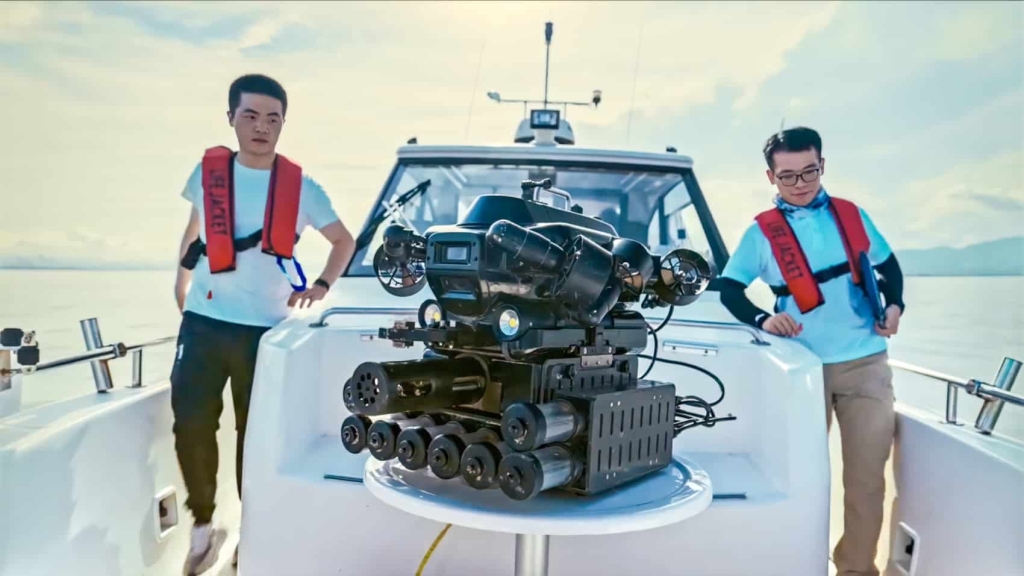 Photo credit: Chinese Academy of Sciences
Amazon Drone Deals: DJI Mini 5 Pro Fly More Combo with DJI RC2 now for $1,099!
Algal blooms are a bit like that one houseguest who shows up uninvited, eats everything in the fridge, and refuses to leave. Once they appear on the surface of lakes and reservoirs, the damage is usually already done. Drinking water gets threatened, fish get stressed, and everyone starts asking the same question: Where did this mess come from? Turns out, the trouble starts well before the water turns green.
A new study from researchers at the Harbin Institute of Technology and partner institutions reveals that toxic algal blooms don’t just pop into existence overnight, as published by Phys.org.
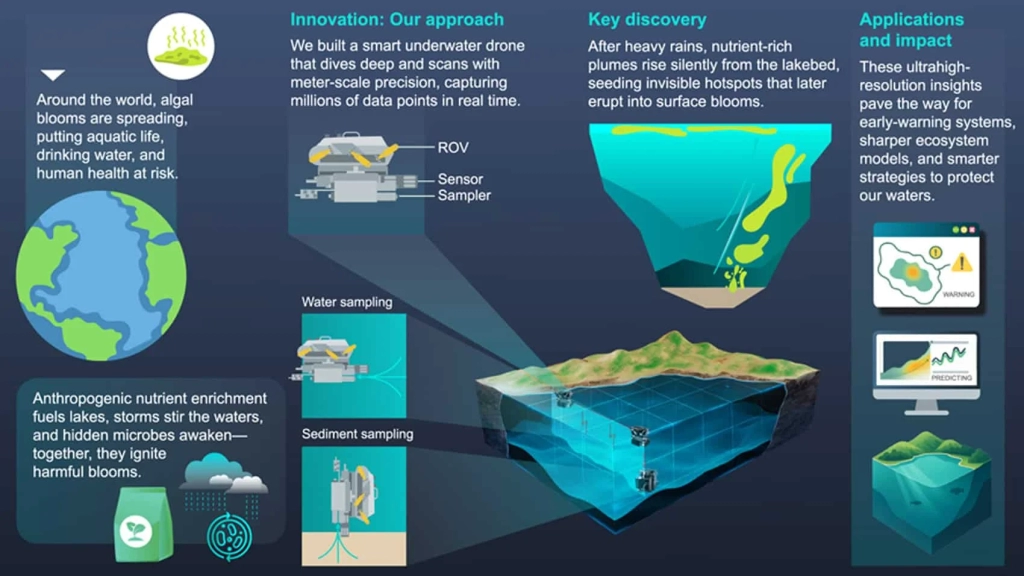 Photo credit: Chinese Academy of Sciences
They begin quietly, underwater, and with about 48 hours of advance warning, if you know where to look. The findings were recently published in Environmental Science and Ecotechnology, and they might change how we fight blooms for good.
The bloom before the bloom
Satellites are great at spotting algal blooms once they reach the surface. From space, those green slicks look impossible to miss. The problem is timing. By the time satellites see them, the bloom has already arrived, unpacked, and started causing problems.
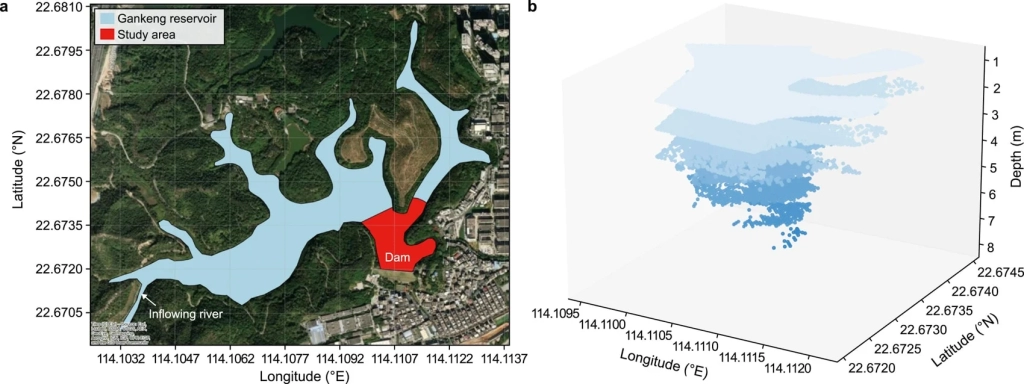 Photo credit: Chinese Academy of Sciences
What satellites can’t see is the opening act. According to the research team, blooms follow a slow, sneaky, bottom up process. The real action begins at the lakebed, where algae can lie dormant in sediment like seeds waiting for the right moment. That moment often arrives with heavy rainfall. Rainfall stirs things up. Literally.
Strong storms create turbulence that shakes the lake bottom, lifting sediment, nutrients, and sleeping algal cells into the water column. Instead of spreading out randomly, these algae organize themselves into something far more interesting. Enter the “ghost plumes.”
A lake gets a CT scan
To catch this underwater drama in the act, the researchers deployed an autonomous underwater drone loaded with high precision sensors. Think less “cute underwater robot” and more “serious scientific detective.”
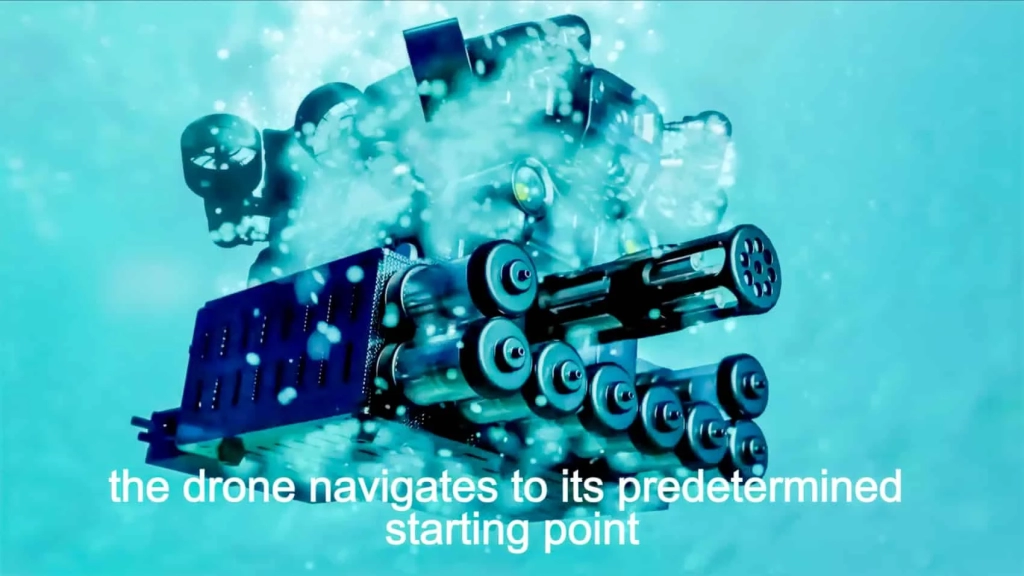 Photo credit: Chinese Academy of Sciences
Over four months, the drone collected more than 2.8 million data points, scanning the lake at one meter vertical intervals. The result was a detailed three dimensional map of the water column, basically a medical grade CT scan, but for a lake instead of a human.
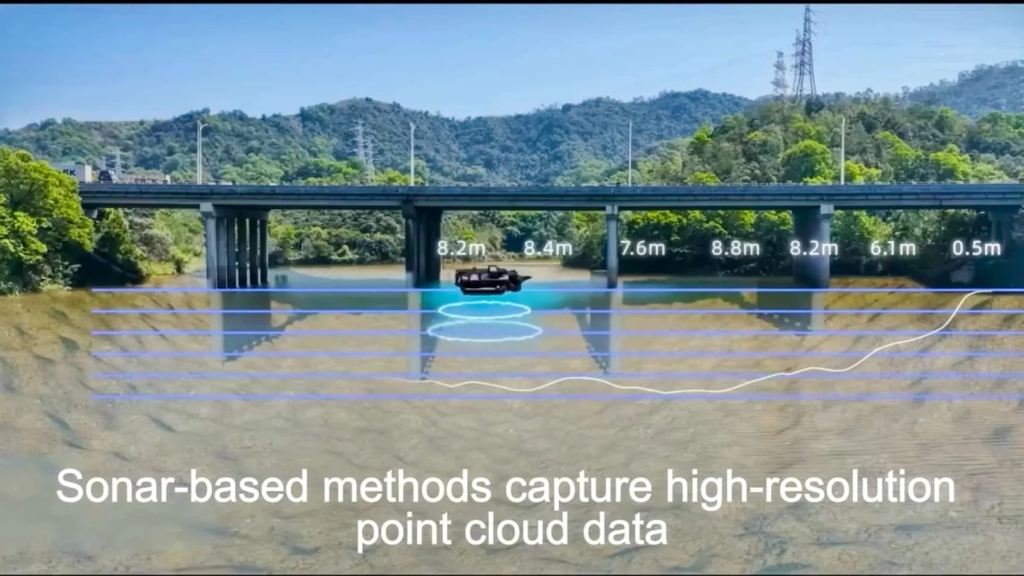 Photo credit: Chinese Academy of Sciences
What the team saw was surprising. Rather than drifting upward like pollen in the air, algae formed narrow, concentrated columns called coherent plumes. These plumes rose steadily from the sediment toward the surface, carrying nutrients and biomass like an express elevator for trouble.
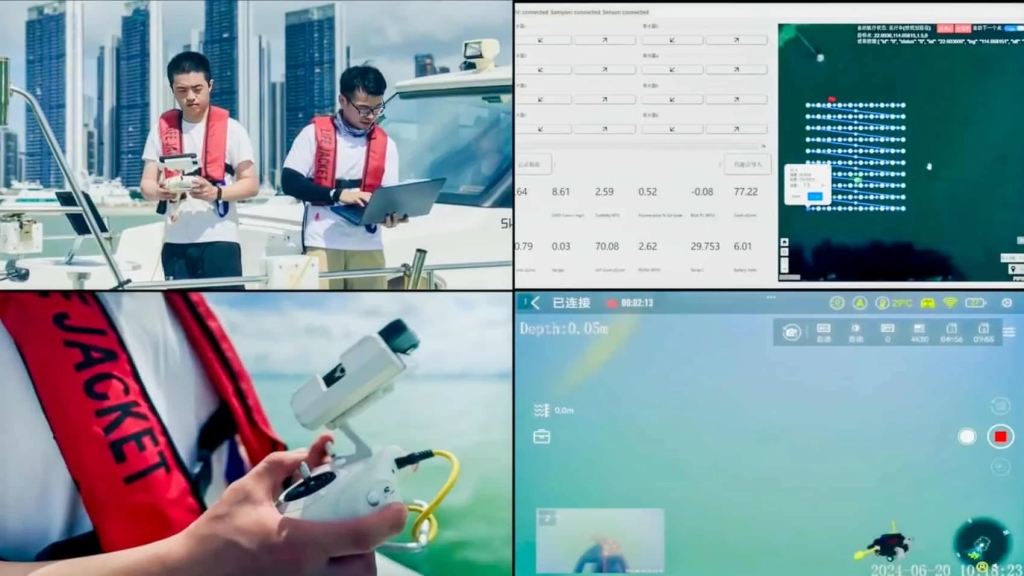 Photo credit: Chinese Academy of Sciences
The researchers identified the bloom process in three clear acts:
- First, the awakening. Heavy rain shakes the lakebed and kicks algae and nutrients into motion.
- Second, the stealthy ascent. Algae organize into vertical plumes that slowly climb upward, invisible from the surface and completely undetectable by satellites.
- Third, the outbreak. One to two days later, those plumes reach the surface, spread out horizontally, and suddenly the lake looks like it needs antibiotics.
That 48 hour delay is the key.
From panic mode to early warning
Most bloom monitoring today is reactive. Authorities discover blooms when they are already at their peak, which turns response into firefighting rather than prevention. This research flips the script.
By detecting ghost plumes early, water managers could intervene before the bloom explodes at the surface. Instead of treating an entire lake, they could focus on specific hotspots where plumes originate. Targeted sediment management, localized treatments, or preventative measures suddenly become possible.
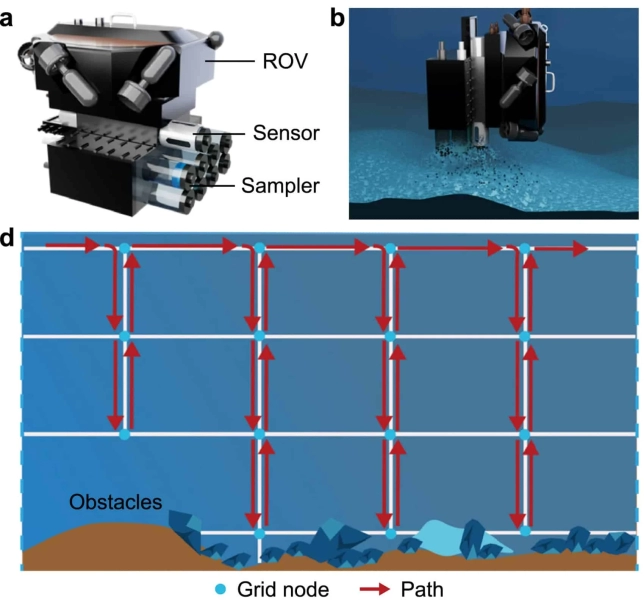 Photo credit: Chinese Academy of Sciences
It’s the difference between stopping a kitchen fire with a fire extinguisher and rebuilding the house afterward. And with climate change increasing the frequency of extreme rainfall events, these early warning systems are becoming less of a luxury and more of a necessity.
DroneXL’s Take
Underwater drones are the unsung heroes of this story. Satellites can’t see through murky water, and manual sampling is slow, expensive, and often misses the moment. Autonomous underwater vehicles can patrol quietly, collect massive datasets, and reveal patterns humans simply can’t catch on their own. In this case, they exposed a hidden countdown ticking beneath the surface.
Algal blooms may still be a growing global problem, but thanks to underwater drones, they’re losing their element of surprise. And when it comes to protecting drinking water and aquatic life, knowing your enemy 48 hours early can make all the difference.
Photo credit: Chinese Academy of Sciences