
Ukraine Uses Heavy-Lift Drone to Evacuate Wounded Soldier in First Documented Rescue
Successful battlefield evacuation highlights an emerging use for unmanned aircraft as Ukrainian manufacturers develop dedicated aerial medical evacuation systems.
Ukrainian forces have reported a successful evacuation of a wounded soldier using a heavy-lift drone. The operation demonstrates a potential new application for unmanned aircraft in situations where ground rescue is too dangerous or impossible.
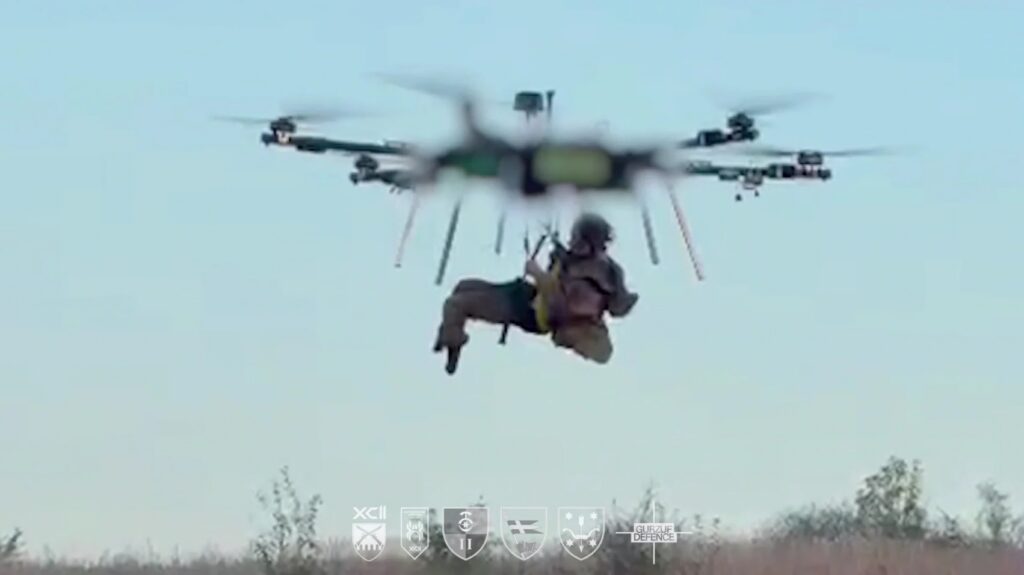
Ukraine’s 92nd Separate Assault Brigade announced the rescue on October 19, describing it as the world’s first evacuation of a wounded soldier from the front line using an aerial drone.
The operation also highlights growing interest in unmanned medical evacuation systems, as Ukrainian manufacturers develop aircraft capable of transporting injured personnel.
Drone Provides an Alternative to Ground Evacuation
According to Ukraine’s ArmyInform military news service, the wounded soldier was in an area that ground evacuation vehicles could not safely reach.
Minefields and the threat of enemy drones made conventional evacuation particularly dangerous. Ukrainian forces instead used a modified heavy-lift hexacopter to transport the soldier away from the front line.
The aircraft was developed by Ukrainian manufacturer Gurzuf Defence. The military and manufacturer conducted testing and made modifications to improve stability while carrying a person.
The successful operation provides an early example of how unmanned aircraft could help evacuate casualties from areas where conventional rescue methods face significant obstacles.
However, a successful individual mission does not establish that the technology can support routine medical evacuation. Further testing and operational experience will be needed to determine its reliability and limitations.
Heavy-Lift Drone Adapted for Human Transport
The aircraft involved in the rescue was a modified version of Gurzuf Defence’s Ayu-Dag 6, also known as the Audag-6.
The six-rotor aircraft was originally developed for military payload delivery and logistics operations. Its design allows it to transport substantial loads without exposing a human pilot to battlefield risks.
According to a March 2026 profile published by Ukrainska Pravda, the aircraft weighs approximately 98 kilograms and has a typical payload capacity of 70 to 90 kilograms.
The manufacturer has also demonstrated the aircraft lifting a 130-kilogram payload. Its range and endurance depend on the weight carried and the aircraft’s configuration.
For the rescue operation, the system required modifications to reduce the risk of swinging or instability while transporting a person.
The operation illustrates the flexibility of heavy-lift drone platforms. Aircraft developed for cargo delivery may also support specialized missions with appropriate modifications.
Human transport, however, introduces additional technical and safety requirements. These include secure patient attachment, flight stability, reliable communications and procedures for responding to equipment failures.
A New Category of Medical Evacuation Drones?
The Gurzuf Defence operation comes as another Ukrainian manufacturer develops a drone specifically designed for casualty evacuation.
SkyFall has introduced StarGate, an unmanned aircraft designed to transport wounded soldiers on a medical stretcher.
In an October 15 report, the Associated Press described a demonstration of the system and its potential role in battlefield medical evacuation.
According to the manufacturer, StarGate can carry up to 150 kilograms, travel at speeds of up to 105 kilometers per hour and operate over distances of up to 15 kilometers. The aircraft also incorporates redundant communications and navigation capabilities intended for environments where GPS may be unavailable.
SkyFall began front-line testing in October. The system’s effectiveness in operational conditions remains under evaluation.
Together, the two developments suggest growing interest in aerial casualty evacuation as a specialized application for heavy-lift drones.
The potential extends beyond military operations. Similar aircraft could eventually support search and rescue missions in mountainous terrain, flood zones or other locations where ground access is limited.
Civilian use would require additional safety testing, regulatory approval and systems designed specifically for transporting people. For now, Ukraine’s reported rescue offers an early operational example of what the technology may accomplish. Whether aerial medical evacuation becomes a repeatable capability will depend on further development, testing and experience in the field.