
Senator John Hoeven Announces $100 Million UAS Investment In Grand Forks
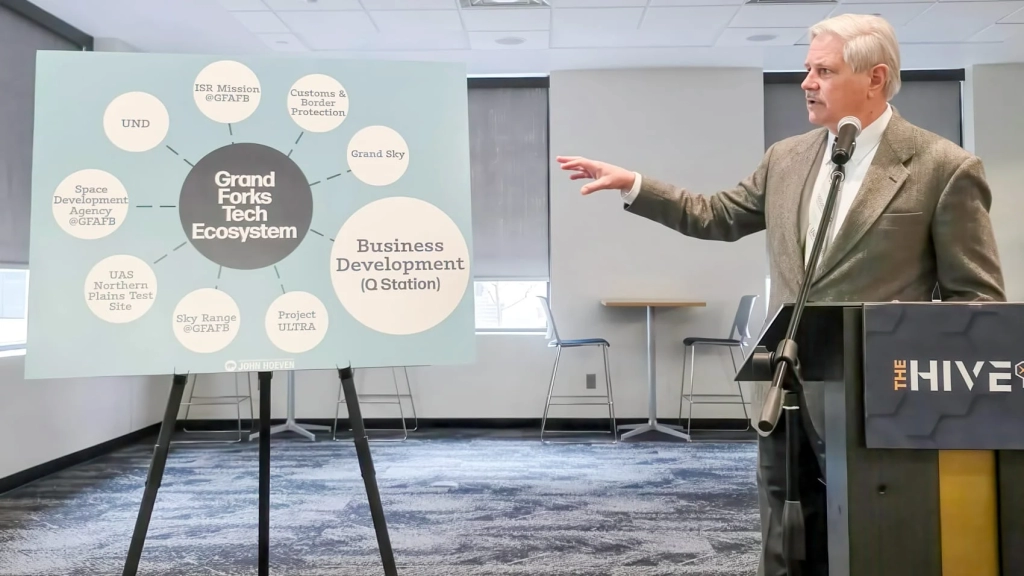 Photo credit: Q Station Facebook Page
Check out the Best Deals on Amazon for DJI Drones today!
More than $100 million in federal funding is headed to Grand Forks, North Dakota, reinforcing the region’s growing role as a national hub for unmanned aircraft systems (UAS), space, and defense technology, as the Grand Forks Herald reports.
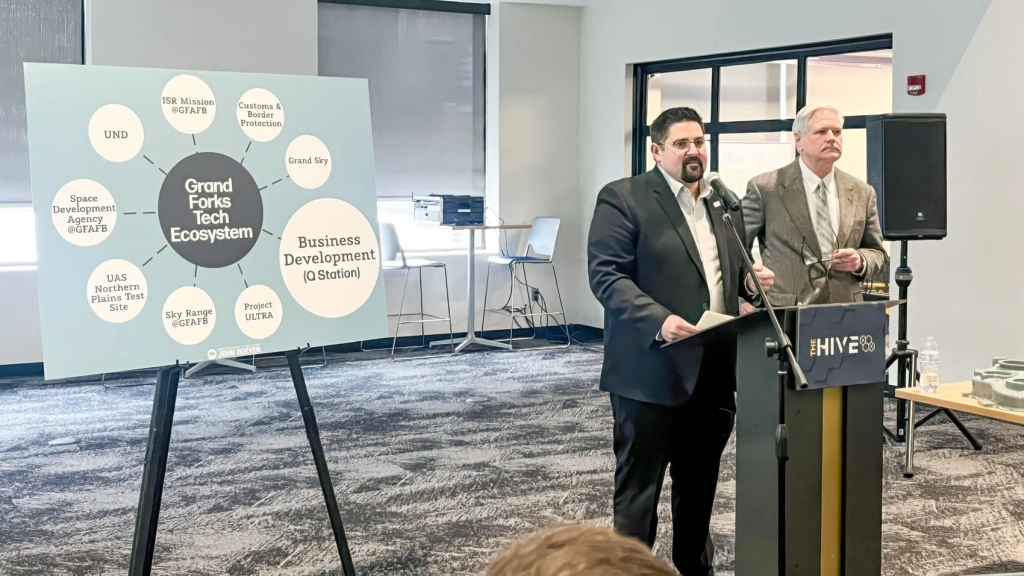 Photo credit: Q Station Facebook Page
Speaking at the HIVE innovation center, U.S. Sen. John Hoeven (R-ND) detailed a sweeping investment package that spans satellite communications, counter-UAS research, aerospace innovation, hypersonics, and startup acceleration.
$4 Million Partnership: The HIVE + Q Station
A key piece of the announcement is a $4 million partnership between the HIVE and Q Station, an Albuquerque-based aerospace and space-tech innovation hub.
Q Station, which serves as a partnership intermediary for the Air Force Research Laboratory, will expand into Grand Forks to help develop accelerator programming and support early-stage UAS companies.
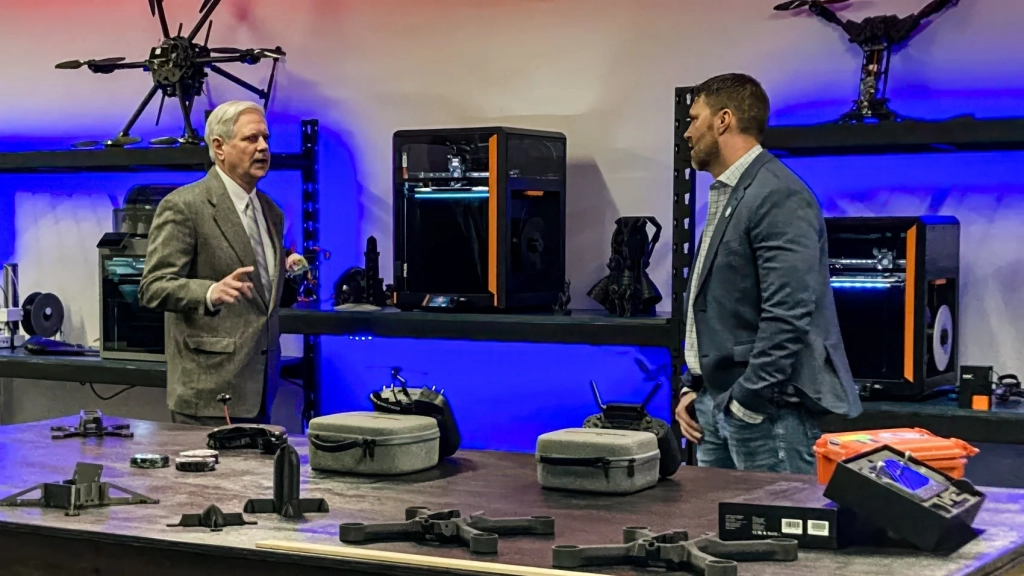 Photo credit: Jordan Rusche/Grand Forks Herald
According to Hoeven, the goal is clear: accelerate startup formation and attract new aerospace entrepreneurs to the region.
Thomas Swoyer, president of GrandSky, described the partnership as a strategic win for the HIVE ecosystem, allowing local leadership to focus on recruiting companies while Q Station brings accelerator expertise and national connections.
Randy Trask, CEO of Q Station, emphasized bridging UAS and space sectors — a convergence that is increasingly visible as satellite communications, ISR, and autonomous systems become tightly integrated.
Planned programming includes:
- Investor matchmaking events
- Business consulting for early-stage aerospace companies
- UAS innovation challenges (regional, national, and international)
- STEM outreach programs in public schools and at the University of North Dakota
Space Development Agency: $50 Million for LEO Mission
Half of the total funding — approximately $50 million — will support the Space Development Agency low-Earth orbit satellite mission in Grand Forks. The funding connects space-based assets to ground receivers at Grand Forks Air Force Base, increasing data throughput and operational capacity.
This further solidifies Grand Forks as a key node in the U.S. Department of Defense’s proliferated LEO satellite architecture.
$33 Million for UAS & Counter-UAS R&D
An additional $33 million will go toward UAS and counter-UAS research across North Dakota. Eligible recipients include regional players like:
- Ideal Aerosmith
- Space Dynamics Laboratory
- The University of North Dakota
Counter-drone capabilities and defense applications continue to attract strong federal backing, especially amid growing concerns over foreign-manufactured drone platforms.
Technology Applications Group & Defense Manufacturing
Technology Applications Group (TAG) will receive $10 million from a broader $20 million allocation to advance corrosion-resistant magnesium coatings for military equipment, including drone systems. That follows $6 million secured last year for a new production line.
Additional allocations include:
- $18.5 million for hypersonics R&D
- $37.5 million for broader defense research and operations in the Red River Valley
- $3 million for UND’s Vets2Wings program
- $1 million for helicopter training
- $2 million for military food safety resilience
Grand Forks: America’s Quiet UAS Powerhouse
Between GrandSky, the Northern Plains Test Site, UND, and multiple DoD-linked missions, Grand Forks has steadily evolved into one of the most strategically important UAS clusters in the United States.
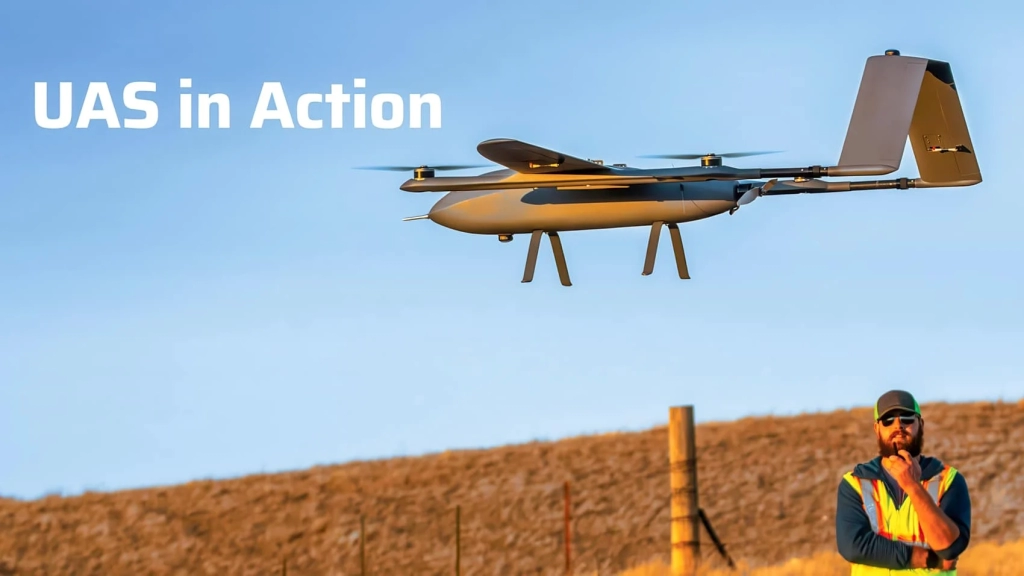 Photo credit: Northern Plains UAS Test Site
This latest funding surge accelerates that trajectory — blending defense, commercial drone development, satellite systems, and workforce development into a single regional ecosystem.
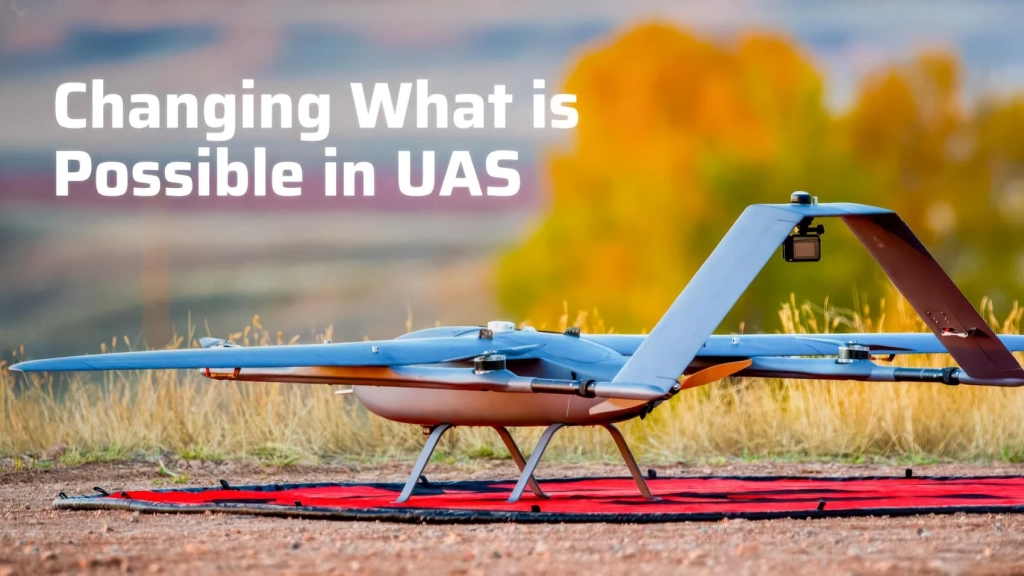 Photo credit: Northern Plains UAS Test Site
DroneXL’s Take
This announcement is not just about regional economic development — it’s about strategic positioning.
Grand Forks is increasingly becoming a centerpiece of the U.S. government’s effort to build a domestic drone and aerospace ecosystem that is less dependent on foreign manufacturers. The combination of LEO satellite integration, counter-UAS funding, startup acceleration, and defense manufacturing shows a coordinated federal approach.
At the same time, this funding wave reflects Washington’s broader push to strengthen American-made drone capabilities amid growing scrutiny of foreign platforms — particularly those from China.
Whether this investment results in globally competitive drone systems remains to be seen. Federal funding can spark ecosystems, but innovation leadership ultimately depends on product performance, cost competitiveness, and speed of execution.
What is clear: Grand Forks is no longer a regional experiment. It’s becoming a strategic node in America’s drone and space infrastructure.
Photo credit: Q Station Facebook Page, Northern Plains UAS Test Site and Jordan Rusche / Grand Forks Herald.