
Russia Unveils Kaplya EFP Warhead For FPV Drones
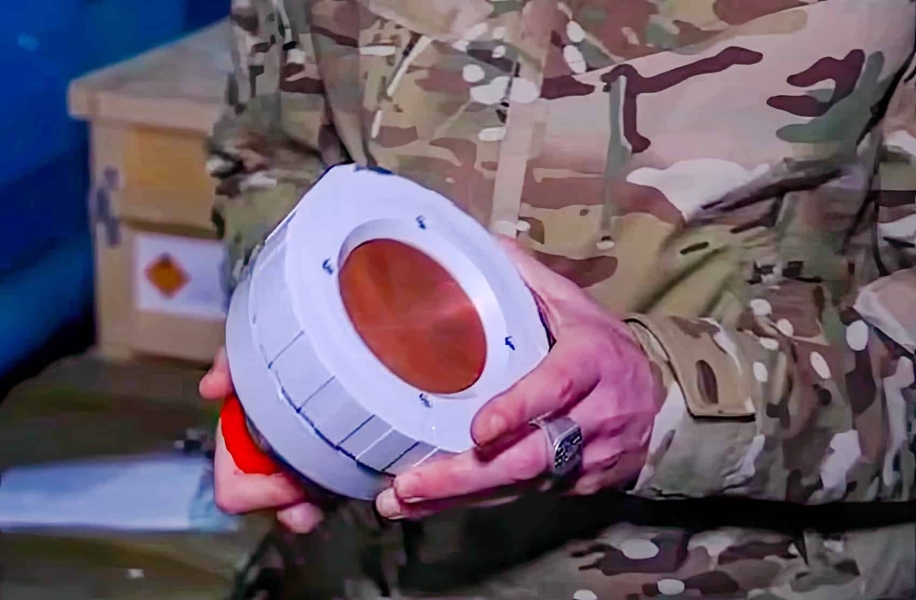 Photo credit: Dmitry Kulko
Check out the Best Deals on Amazon for DJI Drones today!
Russia has officially presented a new factory produced munition designed specifically for FPV drones, called Kaplya, a name that translates to “droplet.” Personally, I think they could choose something better, more explosive-sound. What about ACME Super Bomb?
The announcement came via footage shared by Russian military correspondent Dmitry Kulko of Channel One Russia, who showcased what appears to be a standardized, serially manufactured payload rather than a field assembled device, and also reported by Defence Blog.
The message is clear. This is not garage engineering. This is industrial scale adaptation.
Designed to Defeat Cage Armor
Kaplya uses an explosively formed penetrator, commonly known as an EFP. Unlike traditional shaped charge warheads that rely on a focused jet of molten metal, an EFP forms a compact, high velocity metal slug upon detonation.
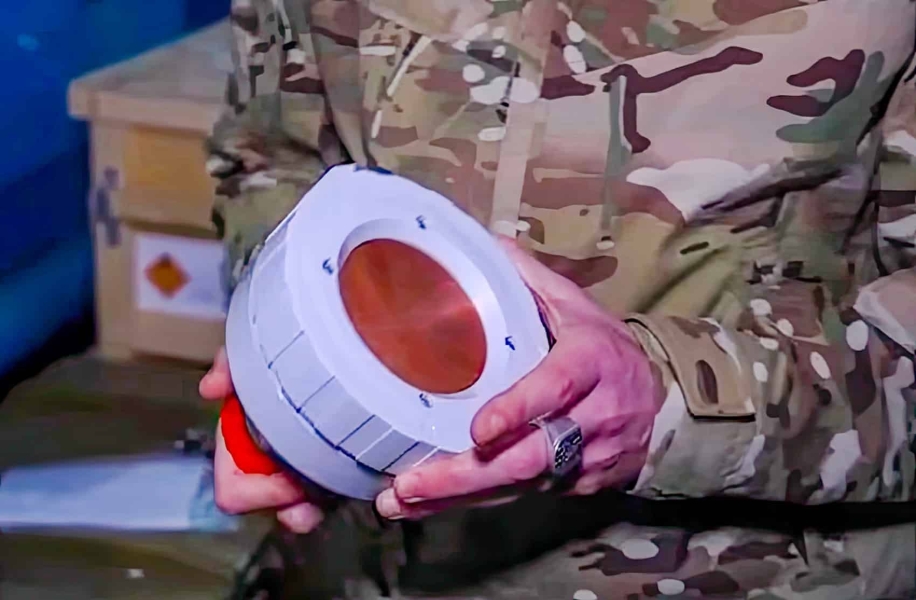 Photo credit: Dmitry Kulko
That projectile is designed to punch through protective structures before reaching the main armor underneath.
 Cope Cage Armor
Photo credit: Cuashub.com
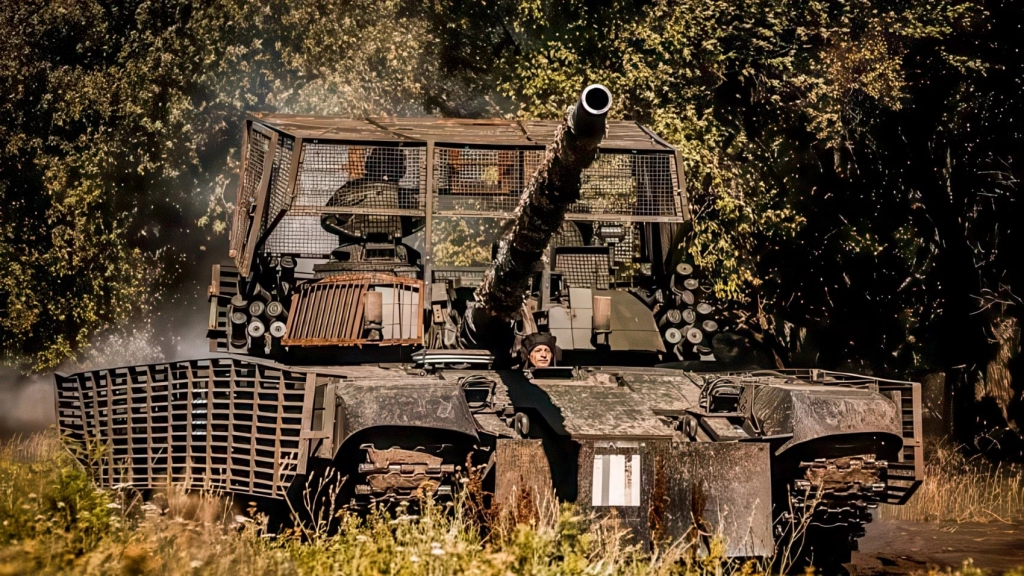
Russian sources say the warhead was developed specifically to counter cope cage armor and roof mounted anti drone canopies that have become common on armored vehicles in Ukraine.
These metal grids and overhead shields were originally meant to disrupt or prematurely detonate incoming munitions. Kaplya is designed to bypass them.
According to Ukrainian defense analyst Andriy Tarasenko, a factory produced EFP of roughly 150 millimeters in diameter could potentially exceed 100 millimeters of armor penetration, while also creating a strong behind armor effect. He also noted that EFP warheads do not typically trigger explosive reactive armor, allowing them to avoid one of the standard defensive layers found on modern armored platforms.
In simple terms, instead of splashing against the shield, this munition tries to spear through it.
More Than Just Anti Armor
Russian military sources also claim that Kaplya produces fragmentation during detonation, expanding its lethality beyond armored targets to nearby personnel. The footage shows the munition mounted on FPV attack drones configured for short range precision strikes, reinforcing how central FPVs have become to frontline operations.
Additional standardized munitions were also displayed. These reportedly include:
- Fragmentation warheads weighing about 1.7 kilograms, usable on FPV drones or released from quadcopters
- Thermobaric warheads weighing approximately four kilograms
The presentation suggested a broader logistical shift. Instead of decentralized workshop production, Russian media framed these payloads as part of a centralized supply chain effort. Completed drones and munitions were shown side by side, implying formal integration into regular military logistics.
The FPV Arms Race Accelerates
FPV drones have evolved from improvised battlefield hacks into a primary strike platform for both sides of the conflict. As cage armor and overhead protection became widespread, drone operators and engineers responded with new warhead designs optimized for top attack profiles.
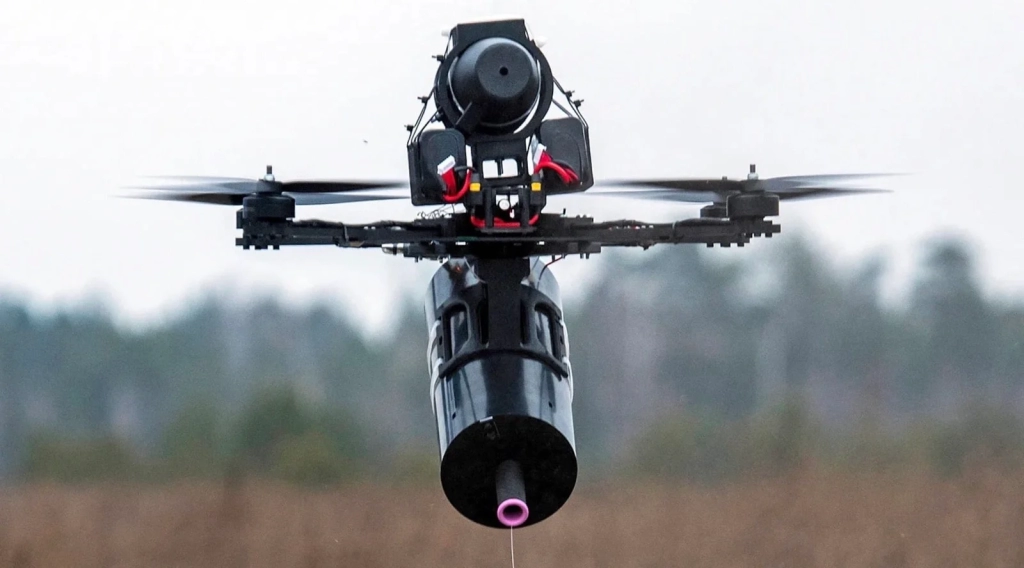 Photo credit: Tymofiy Mylovanov
Kaplya represents the next step in that cycle. Armor adapts. Drones adapt back. The battlefield becomes a rapid feedback loop of steel and software.
DroneXL’s Take
The reveal of Kaplya signals something important. FPV warfare is no longer defined by DIY ingenuity alone. It is moving toward standardized production, refined payload engineering, and deliberate countermeasure defeat.
When industrial manufacturing enters the FPV ecosystem, scale and consistency follow. That shift may prove as significant as any single warhead design.
Photo credit: Tymofiy Mylovanov, Cuashub.com, Dmitry Kulko.