
Police Test Autonomous DFR Drones In Grand Chute
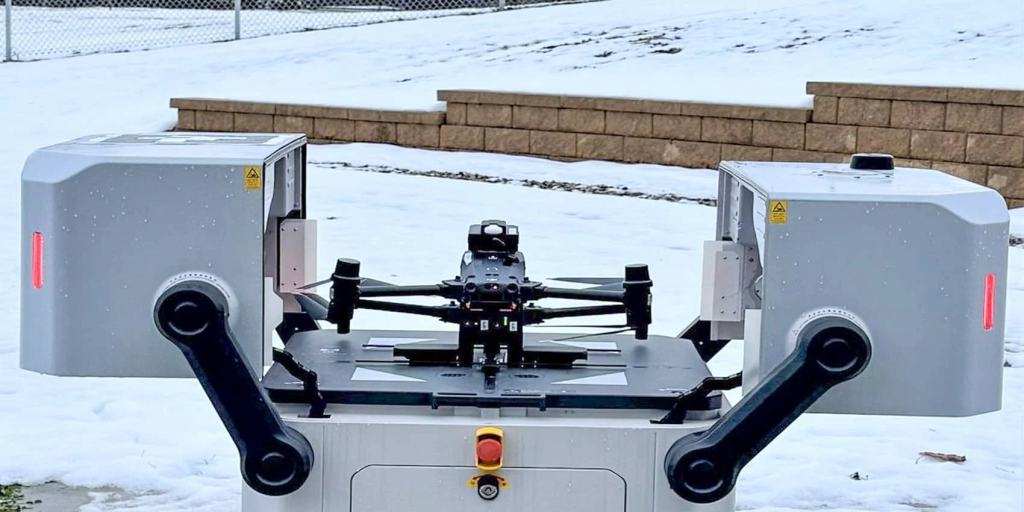 Photo credit: Grand Chute PD
Amazon Drone Deals: DJI Mini 5 Pro Fly More Combo with DJI RC2 now for $1,099!
Autonomous drones are no longer a future promise for law enforcement. In Grand Chute, Wisconsin, police are already letting software and sensors arrive before squad cars.
Since April 2025, the Grand Chute Police Department has been running a pilot drone as a first responder program, collecting real world data on how autonomous aircraft can support everyday policing. The objective is straightforward. Get eyes on a scene faster, reduce uncertainty, and give officers better information before they arrive.
The drone does not replace police officers. It replaces guesswork.
How Grand Chute’s DFR Program Works
Grand Chute’s system comes from Houston based Paladin Drones, a company specializing in dock based autonomy for public safety.
A single autonomous drone sits in a covered, climate controlled dock outside the police station, fully charged and ready. When a call comes in, a certified officer logs into a web based interface, enters the address, reviews the automated flight path, and launches the aircraft remotely.
At that point, the drone flies itself.
Paladin operates modified DJI aircraft, integrated with Paladin’s autonomy software, docking system, and remote operations tools. This detail matters, especially as DJI drones continue to power many active drone as a first responder programs across the United States.
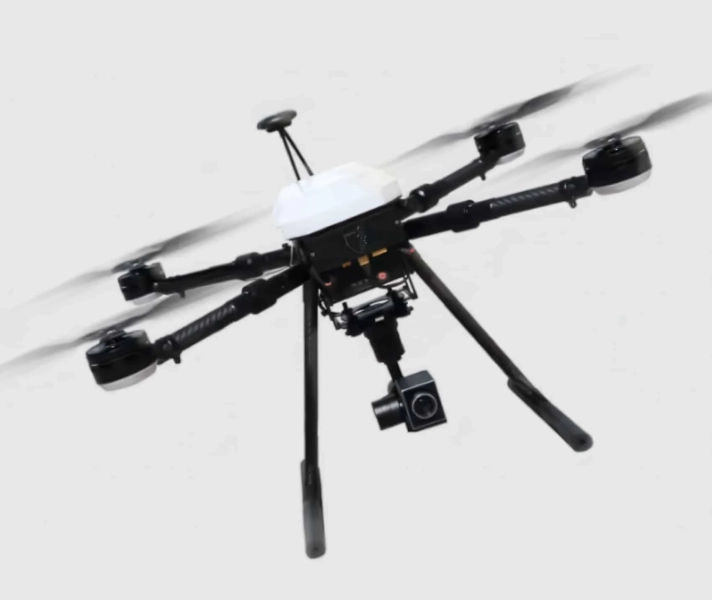 Photo credit: Paladin Drones
According to Police Chief Dave Maas, once launched, the drone lifts off, orients itself, and flies directly to the call location without manual input. It cruises at roughly 200 feet and stays within a geofenced corridor designed to avoid towers and other obstacles.
Because the drone flies in a straight line, it often arrives before officers dealing with traffic, distance, or competing calls. Live video streams back to operators and can be viewed by officers on phones or in squad cars while en route.
If the situation appears minor or already resolved, supervisors can cancel or downgrade the response. For a department with limited staffing, that capability alone delivers measurable value.
Real Calls That Show the Value of DFR
Over nine months, Grand Chute logged 211 drone as a first responder flights. None involved a headline grabbing rescue. That is the point.
In one welfare check, a caller reported a woman passed out under trees. No officers were immediately available. The drone launched instead and located the woman within minutes. Operators observed her wake up and walk away, providing live updates until officers were free to respond.
In another case, a suspicious vehicle reported in a ditch turned out to be intentionally parked. The drone showed someone planting flowers near a pond. The call was closed with no officers dispatched.
During a wrong way driver report on Interstate 41, the drone observed the vehicle turning around on its own, confirming the danger had ended before officers engaged.
At a small wooded fire behind a business, the drone located people near the flames and guided officers directly to the scene, eliminating the need for a ground search.
Chief Maas describes the benefit as cumulative. Each flight saves time, reduces risk, or prevents unnecessary response. Over hundreds of calls, those small efficiencies compound.
Cost, Privacy, and Operational Reality
Privacy concerns often surface first with police drones. Grand Chute addressed this through both policy and system design.
While traveling to a call, the drone’s camera remains fixed forward. It does not scan yards, windows, or backyards. Once overhead and cleared to observe, operators can tilt and zoom as needed. Manual control is always available.
The full hardware package normally costs around $30,000, with annual software fees of $37,000. Paladin offered a $28,000 hardware discount to expand into Wisconsin, bringing the town’s upfront cost to about $39,000.
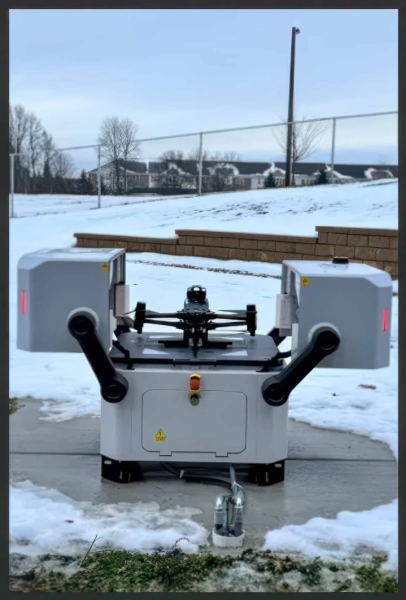 Grand Chute operates a drone-as-a-first-responder program.
The autonomous modified DJI drone is housed outside the police department. Photo credit: Grand Chute PD
Funding came from federal American Rescue Plan Act grants, not local tax increases. If the pilot continues, the department would only need to budget for the annual software cost.
Grand Chute plans to reevaluate the DFR program in late February or early March 2026.
DroneXL’s Take
This program matters because it is boring in the best possible way.
Grand Chute shows that drone as a first responder systems do not need cinematic rescues to prove their worth. Their real strength is compressing time, replacing uncertainty with clarity, and keeping officers out of situations that do not require immediate human presence.
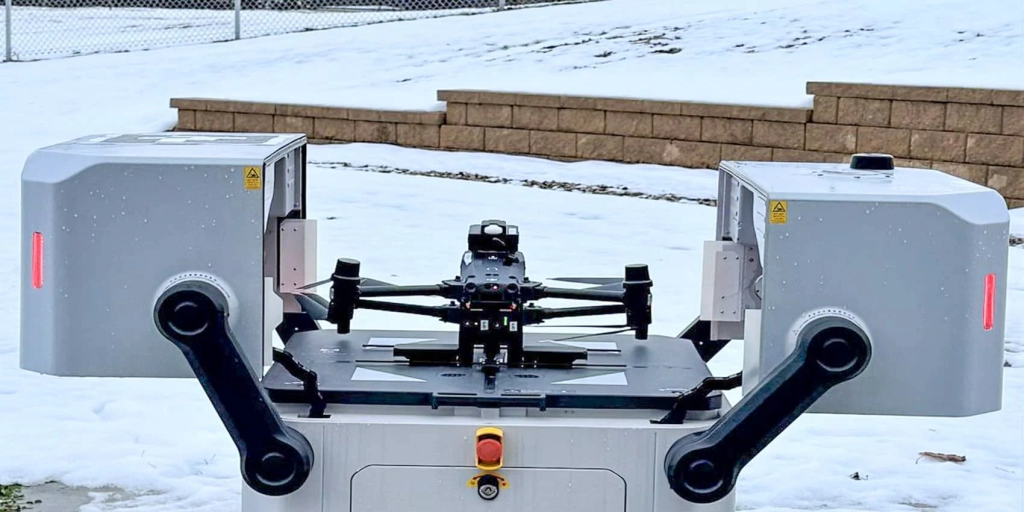 Photo credit: Grand Chute PD
It also reinforces a quieter industry reality. Despite procurement debates and political pressure, DJI drones remain deeply embedded in operational public safety programs, often paired with U.S. based autonomy platforms like Paladin.
Dock based DFR systems are no longer experimental. They are operational, measurable, and increasingly hard to ignore.
The first responder does not always need a siren. Sometimes it just needs altitude.
Photo credit: Grand Chute PD, Paladin Drones.