
Michigan Becomes National Drone War Lab
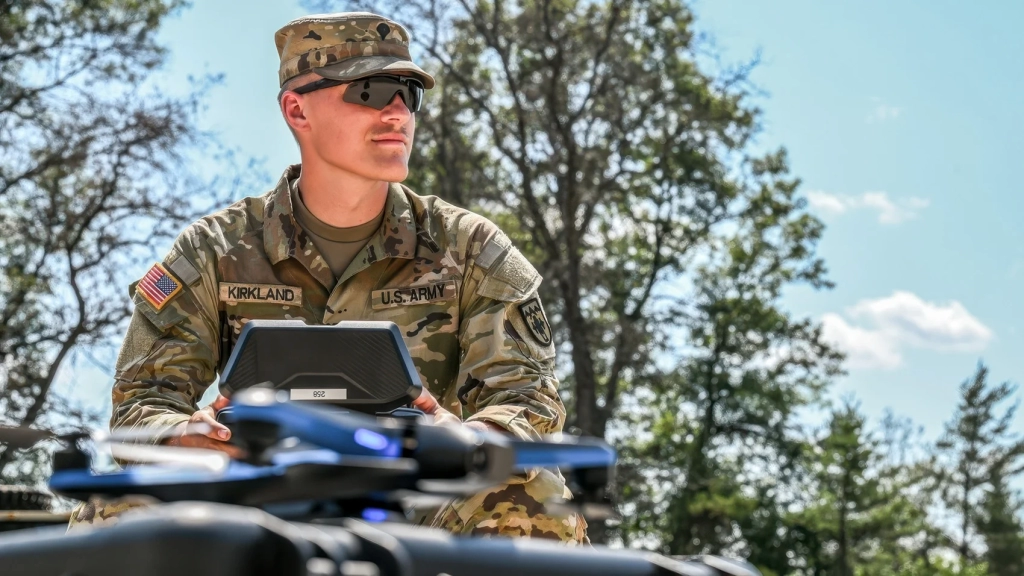 Photo credit: U.S. Air Force Airman 1st Class Connor Taggar
Check out the Best Deals on Amazon for DJI Drones today!
Michigan is no longer just talking about drones. It just secured the airspace to prove it.
The U.S. Department of Defense has officially designated Michigan’s National All Domain Warfighting Center as a National Range for Deep Uncrewed Aerial Systems training, as reported by FREEP.
That is a long title, but the meaning is simple. Michigan now hosts one of the most important drone training and testing environments in the country.
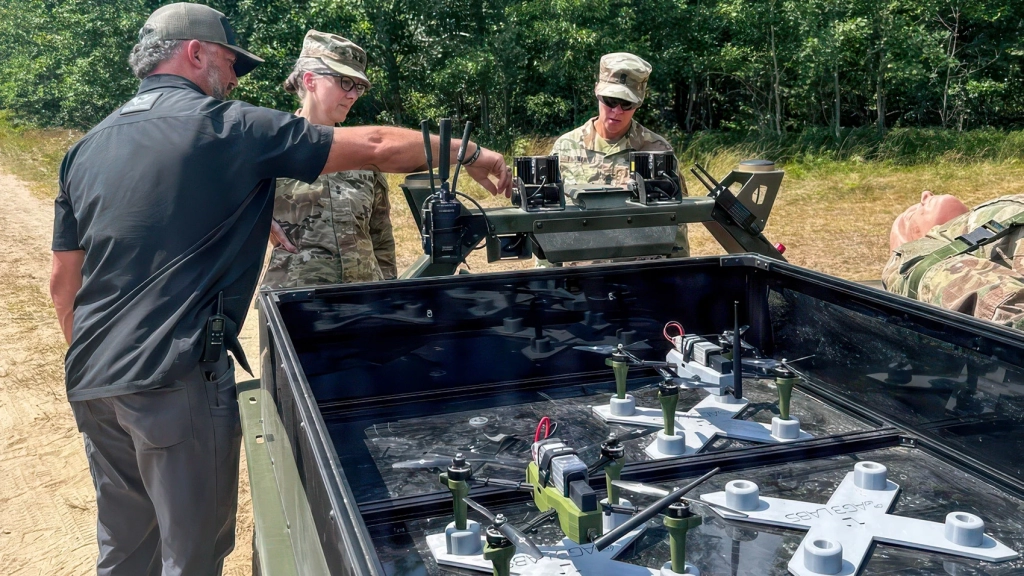 Photo credit: U.S. Air Force Airman 1st Class Connor Taggar
Governor Gretchen Whitmer framed it as a turning point, saying the designation shows Michigan can lead the future of aerospace while continuing its role in protecting national defense. Speaking recently at the Munich Security Conference, she tied the announcement to the state’s legacy as the Arsenal of Democracy and made it clear that this is about more than symbolism.
Over the past few years, Michigan has hosted autonomous drone competitions, launched a statewide Advanced Air Mobility Initiative, and secured a new fighter mission at Selfridge Air National Guard Base. Now the NADWC designation stacks on top of that momentum.
Her message was blunt. Michigan made products dominate roads around the world. Next stop, the sky.
The Largest Joint Range East of the Mississippi
The scale here is not theoretical.
The National All Domain Warfighting Center is anchored by nearly 200,000 acres at Camp Grayling Joint Maneuver Training Center and more than 17,000 square miles of special use military airspace at Alpena Combat Readiness Training Center.
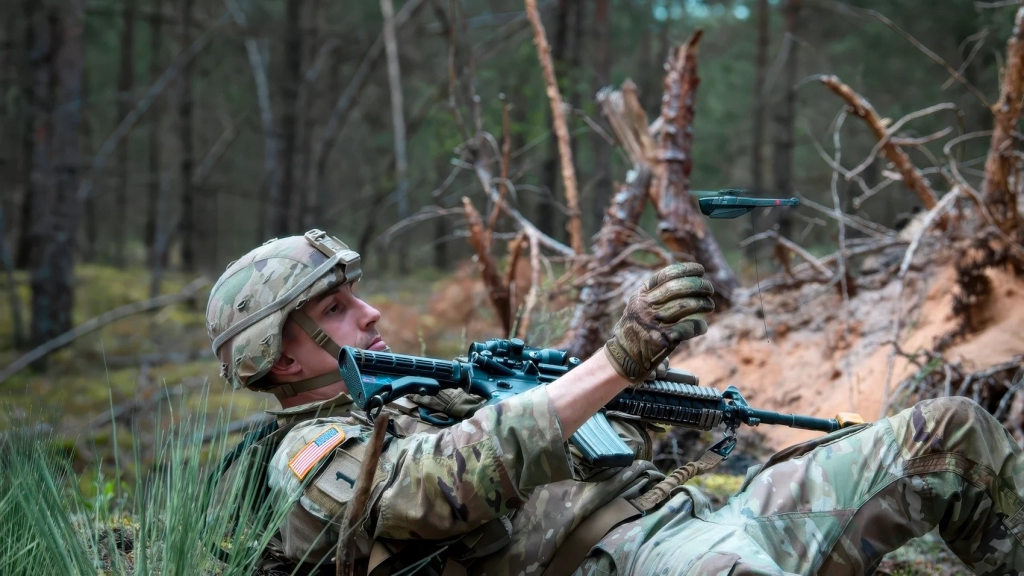 Photo credit: U.S. Air Force Airman 1st Class Connor Taggart
It is the largest joint training range east of the Mississippi River and home to the flagship Northern Strike exercise.
This is not a drone hobby park. It is a proving ground built for operational tempo.
The range is certified under the Joint National Training Capability program and offers diverse terrain, robust electromagnetic spectrum access and a true four season climate. Snow, rain, wind, heat. Systems get stressed. Tactics get tested. Operators get humbled. That is the point.
The Department of Defense selected the site specifically for advanced UAS and counter UAS development. In plain English, that means building better drones and getting better at stopping enemy drones.
Maj. Gen. Paul D. Rogers, adjutant general and director of the Michigan Department of Military and Veterans Affairs, emphasized that the focus remains on readiness. He said the center provides the scale, airspace and all domain environment needed to develop, test and employ uncrewed systems at realistic operational tempo. Soldiers, Airmen, joint partners and allied forces can integrate drones into live fire exercises, combined arms operations and advanced swarm scenarios.
Swarm operations. That is where dozens or even hundreds of drones operate together in coordinated formations. The future battlefield will not be defined by a single aircraft overhead. It will look more like a digital flock moving with purpose.
From Manufacturing Muscle to Drone Dominance
This designation lands at a time when the drone industry is exploding globally. The market is projected to surge from nearly $14 billion in 2024 to more than $65 billion by 2032. That is not incremental growth. That is a launch sequence.
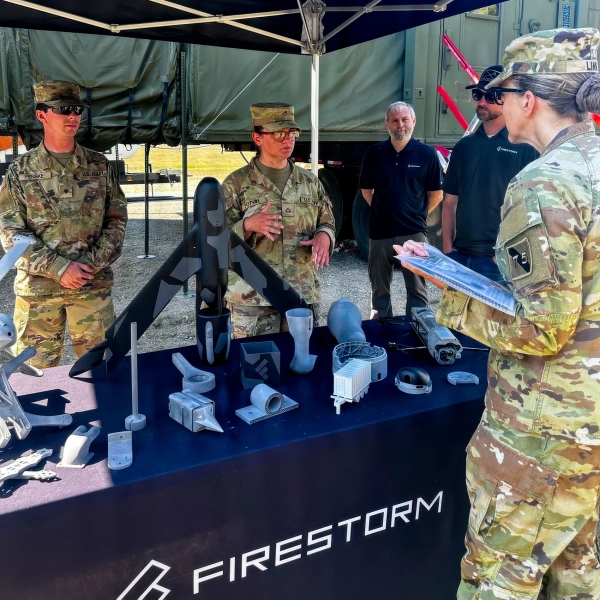 Photo credit: U.S. Air Force Airman 1st Class Connor Taggar
President Donald Trump previously signed executive actions aimed at strengthening domestic drone manufacturing, pushing for what was branded American drone dominance. Defense Secretary Pete Hegseth even staged a now viral moment where a drone delivered a memo to him before he signed it on the Pentagon lawn. Subtle theater, loud message.
The strategic goal is to close the gap with Russia and China, both of which have aggressively expanded drone production and battlefield integration.
Michigan’s advantage is not just airspace. It is industrial culture. The state has a deep manufacturing mindset, experienced supply chains and a workforce accustomed to building complex systems at scale. That ecosystem, when fused with permissive operating authorities and military infrastructure, creates a rare test and production pipeline in one geography.
And this is not confined to the military sphere. Police departments across the state are expanding drone programs. Utilities use drones to inspect infrastructure. Amazon is expanding Prime Air delivery in metro Detroit, dropping packages under five pounds within a 7.5 mile radius of its Hazel Park facility.
The airspace is getting crowded.
There are also legal tensions. An Ohio entrepreneur is challenging Michigan’s 2015 ban on using drones in deer hunting, arguing that certain drone uses fall under First Amendment protections. As drone adoption expands, policymakers will be forced to define where innovation ends and regulation begins.
DroneXL’s Take
Michigan just upgraded from participant to platform.
The NADWC designation cements the state as a serious node in America’s defense innovation network. It offers scale that few regions can match, an industrial backbone that understands production, and an all weather environment that forces systems to prove themselves.
The opportunity is enormous. So is the responsibility.
If Michigan can translate this military edge into commercial spinoffs, workforce development and domestic manufacturing strength, it will not just host drone training. It will help shape the next era of aerospace.
The Arsenal of Democracy built tanks and bombers, the next chapter might build swarms.
Photo credit: U.S. Air Force Airman 1st Class Connor Taggar