
Fortem Lands $18M Army Counter-Drone Deal
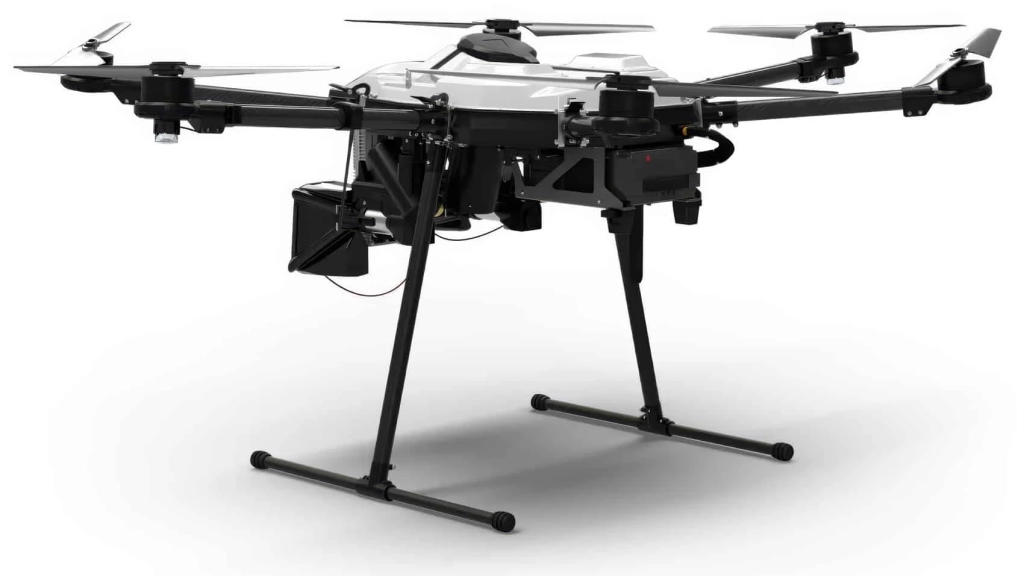 Photo credit: Fortem
Check out the Best Deals on Amazon for DJI Drones today!
The counter drone race just added fresh fuel. Fortem Technologies has secured a three year, $18 million contract with the U.S. Army to deploy its net based DroneHunter interceptors at Army sites worldwide, as TechBuzzNews reports.
The award signals something bigger than a procurement line item. It reflects a structural shift in how the Pentagon is thinking about small unmanned aerial threats.
And this shift is accelerating. At 56 miles per hour.
DroneHunter: Capture, Not Chaos
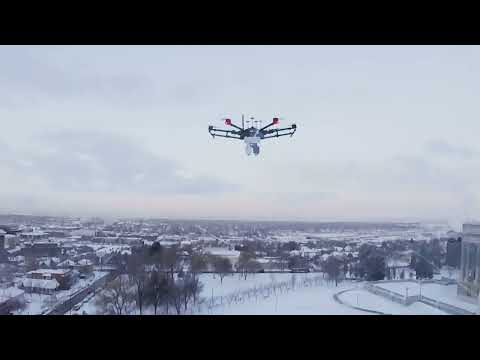
At the center of the contract is Fortem’s AI powered DroneHunter F700 interceptor. Instead of jamming signals or blasting targets out of the sky, the system captures hostile drones midair using a net and lowers them safely to the ground.
That distinction matters.
Traditional counter drone approaches often rely on electronic warfare or kinetic defeat. Jamming can interfere with nearby communications.
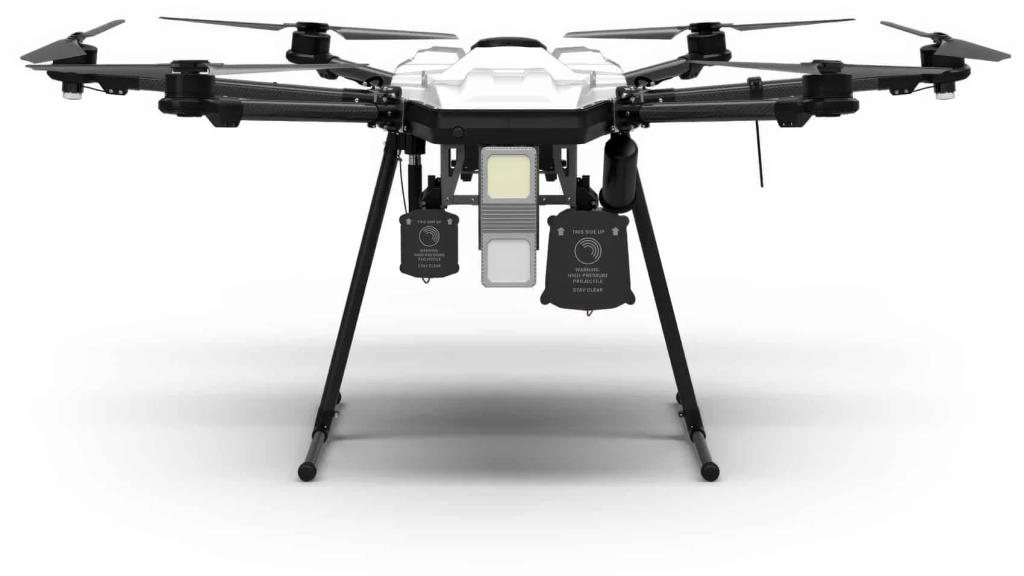 Photo credit: Fortem
Hard kill systems can scatter debris over populated areas. DroneHunter is designed to avoid both outcomes by physically capturing the aircraft intact.
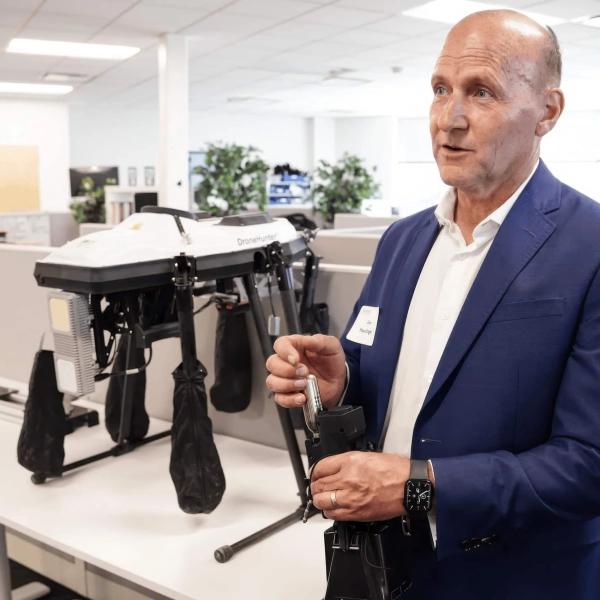 Jim Housinger, Fortem’s COO, demonstrating a component of its flagship $160K DroneHunter® intercepter during a tour of the facility.
Photo credit: Fortem
According to CEO Jon Gruen, the entire chain from detection to tracking to mitigation operates autonomously. Operators define rules of engagement. The system handles the rest. In a surprise drone attack scenario, response time is everything. Automation compresses that timeline to near instant.
Fortem positions itself as the Army’s low collateral effect interceptor provider. That language is deliberate. When defending bases, sensitive facilities, or public events, minimizing unintended damage is not a feature. It is a requirement.
The contract includes equipment and field support services, and Fortem has already received an initial task order worth nearly $4 million. Multi year funding also gives the company runway to continue development of the platform for both military and commercial use cases.
Federal Momentum Is Building
This award does not stand alone.
In January, the Pentagon selected DroneHunter as its first purchase under the Replicator 2 initiative, a fast track program designed to push deployable counter drone capabilities into operational use at speed. That is a strong endorsement of maturity and readiness.
 Photo credit: Fortem
Fortem also announced deliveries of DroneHunter 5.0 and what it describes as the industry’s first 5 on 5 autonomous drone swarm takedown. Detecting, tracking, and neutralizing multiple hostile drones simultaneously without collateral damage is the type of scenario planners worry about most. Swarms change the math. Systems that can scale response in parallel are becoming essential.
Then there is the civilian security side.
In February, the U.S. Department of Homeland Security selected Fortem as the only authorized kinetic counter drone provider for U.S. venues during the 2026 FIFA World Cup.
 Photo credit: FIFA
The company will deploy its net equipped interceptors, radar, and command systems to protect stadiums across 11 host cities.
This will likely be the largest World Cup in history. It is also a high visibility proving ground for counter UAS technology operating over dense urban crowds.
Fortem previously supported the 2022 World Cup in Qatar. Back to back tournament deployments suggest federal agencies are becoming comfortable with capture based solutions in complex environments.
Edge AI, Not Just Drones
Gruen is careful about how he defines Fortem’s identity. He says the company is not just a drone company, and not just a radar company. He frames it as an edge AI systems company.
That framing reveals the deeper play.
Fortem integrates compact radars capable of micro Doppler classification with autonomous interceptors that act on that data in real time. Detection and mitigation are fused into a single intelligent loop. The smaller, lighter, and more power efficient those sensors become, the more deployable the system becomes.
In modern conflicts, small drones are cheap, abundant, and adaptable. Defending against them with expensive missiles is economically unsustainable. Capture based interceptors offer a different cost curve and a different risk profile.
The Army contract is a financial milestone. But strategically, it signals institutional confidence in moving beyond detection toward active interdiction that is precise, automated, and scalable.
The counter drone era is no longer experimental. It is operational. And Fortem just locked in a front row seat.
DroneXL’s Take
For years, counter drone conversations revolved around detection. Radar. RF scanners. Alerts. Warnings. Men with binoculars. Even eagles.
Now the conversation is about action.
Fortem’s growing federal footprint, from the Army to Homeland Security to the World Cup stage, shows that agencies are prioritizing systems that can safely finish the job, not just spot the threat.
Capture based mitigation will not replace every other method. But in dense, sensitive, high stakes environments, it is emerging as the preferred option.
The bigger story here is momentum. Multi year contracts, Replicator alignment, and World Cup scale deployments suggest counter UAS is moving from pilot programs to permanent infrastructure.
That is not hype. That is policy turning into hardware.
Photo credit: Fortem