
FCC Banned Foreign Drone Batteries, But China Makes 99% Of Them
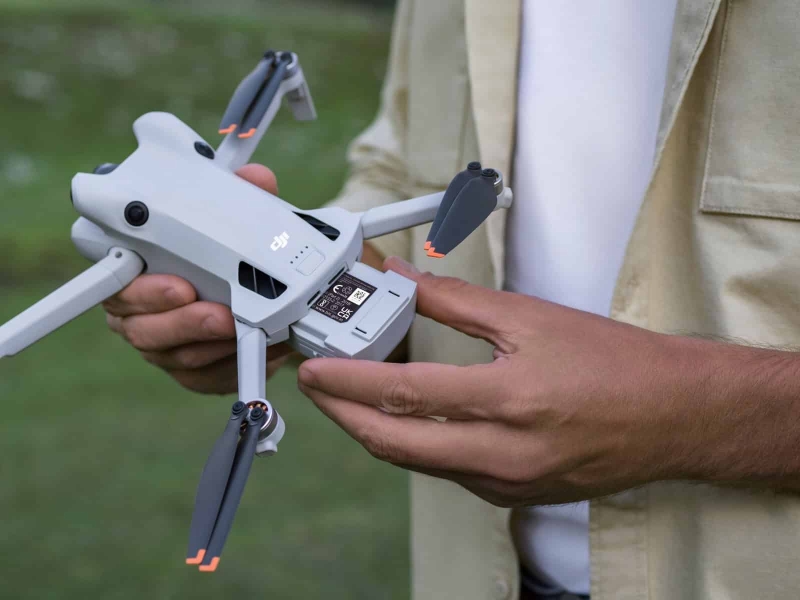 DJI Mini 4 Pro shown from the top with the battery partly ejected.
Yesterday, I wrote about the FCC’s sweeping ban on all foreign-made drones and critical components. Today, the New York Times published an article that exposes a fundamental problem with the administration’s “American drone dominance” strategy: the batteries don’t exist.
The FCC’s National Security Determination explicitly lists “batteries and battery management systems” as covered critical components that cannot be imported from foreign countries without DoD or DHS exemption. The administration says this will “unleash American drone dominance.“
Here’s the problem: China dominates global lithium battery production across all chemistries. While drone batteries use Li-ion and Lithium Polymer (LiPo) cells rather than the LFP cells discussed in the NYT article, China controls the underlying supply chain for all of them. The Pentagon currently relies on Chinese supply chains for 6,000 individual battery components across weapons programs.
So where exactly are the batteries for American drone dominance supposed to come from?
We Already Know This Is a Problem. Ask Skydio.
This isn’t theoretical. America’s largest drone manufacturer already learned this lesson the hard way.
In October 2024, Skydio faced a critical supply chain crisis after Beijing imposed sanctions blocking access to essential components. Their sole battery provider, Dongguan Poweramp (a TDK subsidiary), was directly ordered by Chinese authorities to sever all ties with Skydio. The company was forced to implement strict battery rationing and didn’t anticipate securing new suppliers until spring 2025.
“This is a clarifying moment for the drone industry,” Skydio CEO Adam Bry said at the time. “If there was ever any doubt, this action makes clear that the Chinese government will use supply chains as a weapon to advance their interests over ours.”
Think about what that means. Skydio is the flagship American drone company. They’re on the Pentagon’s Blue UAS approved list. They’re supposed to be the DJI alternative. And China was able to cripple their production with a single phone call to their battery supplier.
The FCC just banned foreign batteries. But the American alternative to DJI was already dependent on Chinese batteries. The ban doesn’t solve the supply chain problem. It just adds paperwork to it.
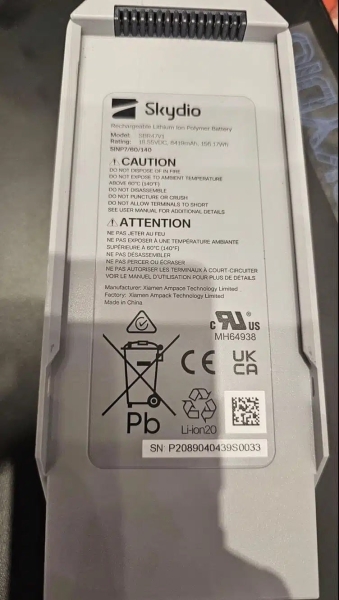 Skydio battery photo shown below is courtesy of Darrell Williams.
The Numbers Don’t Work
The New York Times reports that analysts estimate it would take at least half a decadefor U.S. manufacturers to produce enough battery cells to meet domestic demand. Building supply chains for underlying components like cathodes and anodes would take even longer.
“There are foreign parts in 100 percent of our weapon systems and military platforms,” Tara Murphy Dougherty, CEO of defense analytics firm Govini, told a gathering of top defense and industry officials.
China understands this leverage. On October 9, amid growing trade disputes, China threatened to limit exports of some of its most advanced lithium-ion technologies, including fundamental components like graphite anodes and cathodes. Every Chinese export restriction since 2022 has directly impacted Ukrainian drone production on the battlefield.
The same supply chain vulnerabilities now apply to American drone manufacturers trying to fill the gap left by DJI.
| Component | China’s Global Share | U.S. Domestic Capacity |
|---|---|---|
| Lithium battery cell manufacturing | Dominant | Minimal |
| Battery components (cathodes, anodes) | 90%+ | Years away from scale |
| Lithium refining | Dominant | Limited |
| Graphite processing | Dominant | Limited |
The Policy Incoherence
The administration’s approach contains a fundamental contradiction. They want to build American drone dominance while simultaneously:
- Banning the foreign batteries that would power those drones
- Undermining electric vehicle demand (the biggest market that would justify battery factory investment)
- Initially freezing Biden-era battery manufacturing grants
- Expecting results in months when analysts say it takes 5+ years
The NYT reports the administration is now saying “we don’t like electric vehicles, but we do need batteries for drones and data centers and A.I.” But you can’t build a battery industry while killing the biggest source of demand. President Trump has called EVs a “scam,” yet EVs are the market that would make domestic battery production economically viable.
“The policy is still incoherent,” said Noah Gordon, an expert on sustainability and geopolitics at the Carnegie Endowment for International Peace. “They’re trying to boost battery manufacturing while also undermining the biggest sources of demand.”
Blue UAS Manufacturers Face an Impossible Situation
For American drone manufacturers on the Pentagon’s Blue UAS approved list, yesterday’s FCC action creates a trap.
These companies are supposed to fill the gap left by DJI. They’re already struggling to compete on price and capability. Now they can’t legally source the batteries needed to power their drones unless DoD or DHS grants specific exemptions for foreign components.
But here’s the catch: granting those exemptions means admitting that “American drone dominance” depends on foreign supply chains. That undermines the entire rationale for banning DJI in the first place.
The administration has two choices:
- Grant battery exemptions and admit the ban is performative security theater that hurts consumers and first responders while doing nothing to reduce supply chain dependence
- Enforce the ban strictly and watch American drone production collapse because there are no domestic batteries to power it
Neither option delivers “American drone dominance.” Both options prove the policy wasn’t thought through.
The Defense Industry Knows This Is a Problem
Military strategists watching warfare evolve in Ukraine understand that batteries are now mission-critical. Lasers, hand-held radios, night vision goggles, satellites, and drones all require advanced batteries. The average soldier carries 25 pounds of batteries for a standard 72-hour patrol.
Jeffrey Nadaner, who was deputy assistant defense secretary for industrial policy during the first Trump administration, told the NYT that shoring up America’s battery industry merits an effort on par with “the Apollo space program.”
Instead, the administration banned foreign batteries while having no plan to replace them.
The 2025 National Defense Authorization Act did mandate a new battery strategy, and the Defense Logistics Agency has said the department should treat battery technology as mission-critical. But strategy documents don’t build factories. And factories take years, not months.
What This Means for Drone Operators
For Part 107 operators and first responders, the battery problem compounds the equipment problem we outlined yesterday.
Your existing DJI drones work fine today. But when you need replacement batteries, where will they come from? DJI batteries are manufactured in China. Third-party batteries use Chinese cells. Even American-branded replacement batteries likely contain Chinese components now covered by the FCC ban.
The FCC fact sheet says previously authorized devices can still be sold and used. But it’s unclear whether replacement batteries for those devices fall under the component ban. If they do, your existing drone becomes a paperweight once the batteries wear out.
DroneXL’s Take
Here’s what I expect: The administration will quietly grant broad exemptions for battery components because they have no choice. They’ll frame it as “strategic flexibility” rather than admitting the policy was unworkable from the start. Blue UAS manufacturers will get exemptions. First responders will get exemptions. Defense contractors will get exemptions.
And at the end of the process, we’ll have banned DJI drones that worked perfectly well, replaced them with more expensive alternatives that use the same Chinese batteries, and called it “American drone dominance.”
Skydio already proved this in October 2024. One phone call from Beijing to a battery supplier and America’s largest drone company was rationing parts. The FCC ban doesn’t fix that vulnerability. It just pretends it doesn’t exist.
The honest path would have been to conduct the security audit that Section 1709 mandated, prove whether DJI actually poses a threat, and simultaneously invest in domestic battery production so that American alternatives could actually compete. That would take years and wouldn’t generate headlines before the World Cup.
Instead, we got a ban that makes us look weak (because we couldn’t prove the threat), harms first responders (because they lose their equipment), kills the hobby (because consumers lose access to affordable drones), and doesn’t actually reduce supply chain dependence (because the batteries still come from China).
As Fatih Birol, the International Energy Agency’s executive director, told the NYT: “Reliance for a strategic commodity or a technology on one single country, one single trade route, is always risky.”
He’s right. But banning the finished products while remaining dependent on the components isn’t a solution. It’s theater.
Are you a drone manufacturer trying to source domestic batteries? A first responder wondering about replacement parts? Let us know how the component ban affects your operations in the comments.
Featured photo credit: DJI
Correction (December 24, 2025): An earlier version of this article referenced China’s 99% share of LFP (Lithium Iron Phosphate) battery production. LFP is a lower energy density chemistry used primarily for electric vehicles and grid storage, not drone batteries. Drones use Li-ion and Lithium Polymer (LiPo) cells, which require higher energy density and discharge rates for flight. China dominates the supply chain for all lithium battery chemistries, including those used in drones. The article has been updated to reflect this distinction.