
 Photo credit: Ekolot
Check out the Best Deals on Amazon for DJI Drones today!
Europe’s tactical UAV segment just got more serious.
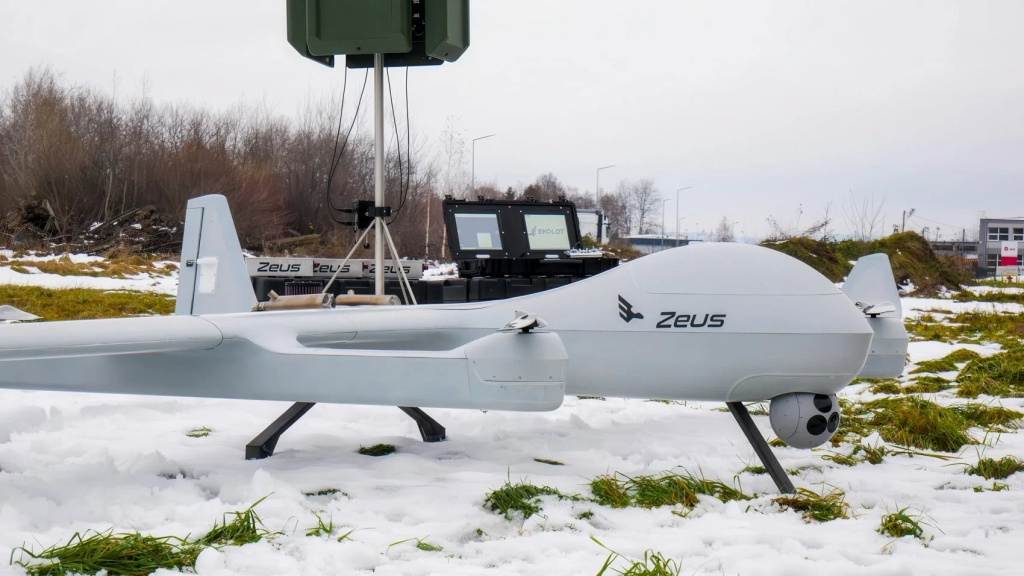
UAV Navigation-Grupo Oesía and Ekolot Aerospace & Defense have expanded their collaboration to integrate advanced flight control systems into the ZEUS VTOL platform, a modular fixed wing system designed for operations where GNSS signals cannot be trusted, as GPS World reports.
The move strengthens both companies’ position in Poland and signals future expansion into LATAM markets.
A modular platform built to scale
ZEUS is not a single drone. It is a family.
The platform fills the gap between small tactical UAVs and larger MALE systems. It uses a single base cell that can be converted between VTOL and CTOL configurations using dedicated kits.
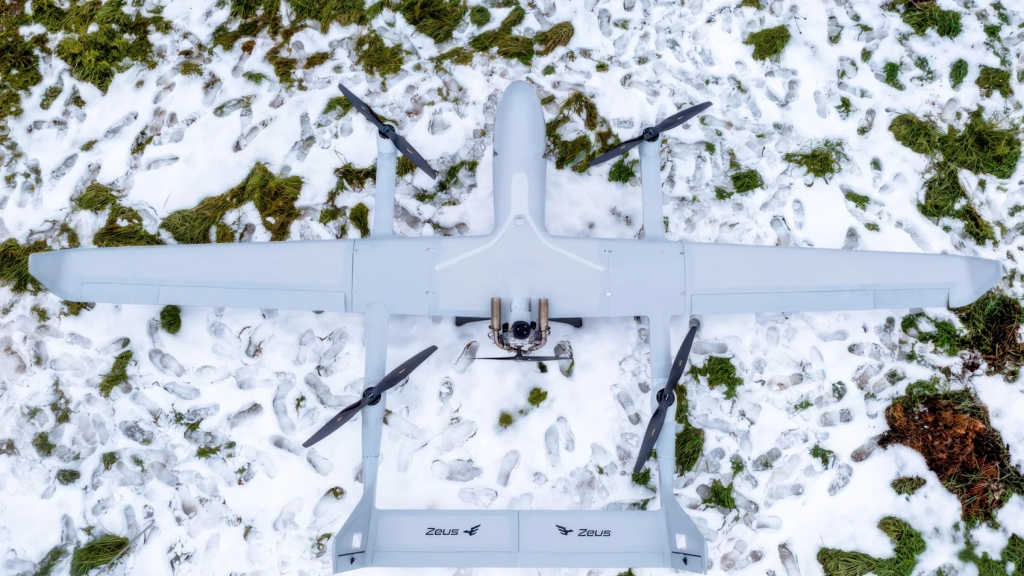 Photo credit: Ekolot
In VTOL form, maximum takeoff weight ranges from 150 kg to 250 kg, with payload capacity between 30 kg and 120 kg. In CTOL configuration, MTOW increases up to 350 kg, with payloads reaching 150 kg.
That flexibility matters. Operators can adjust the aircraft for ISR, border surveillance, defense, or civil missions without redesigning the entire system.
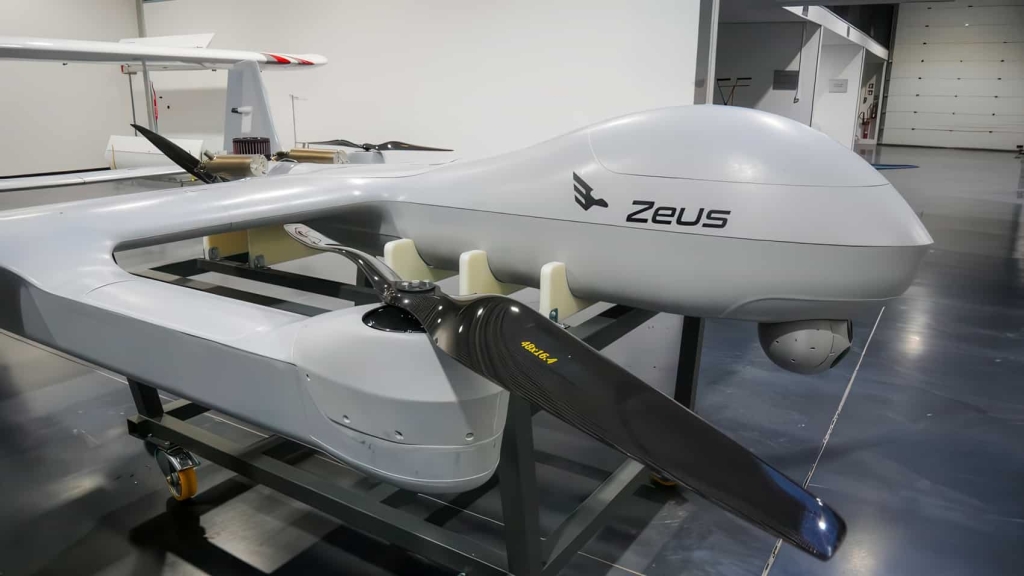 Photo credit: Ekolot
The ZEUS G variant pushes endurance further, targeting 12 to 24 hours of flight time. That places it firmly in long endurance ISR territory while keeping a modular payload architecture.
Navigation built for electronic warfare
The key differentiator is navigation resilience.
ZEUS integrates autopilot and GNSS denied capabilities from UAV Navigation-Grupo Oesía, including its GNSS Denied Navigation Kit, which combines the POLAR 300 AHRS with the VNS01 Visual Navigation System.
 GNSS Denied Navigation Kit
Photo credit: Grupo Oesia
In contested environments, GNSS signals can be jammed or spoofed. Jamming overwhelms satellite frequencies with interference. Spoofing is more dangerous, feeding false positioning data to redirect or crash an aircraft.
The GNSS Denied Navigation Kit addresses both threats.
The POLAR 300 provides low drift dead reckoning performance comparable to higher end inertial systems. The VNS01 uses visual odometry and template matching to estimate position and ground movement. When GNSS is available, the system builds its own visual maps. If the signal disappears, it switches to stored references.
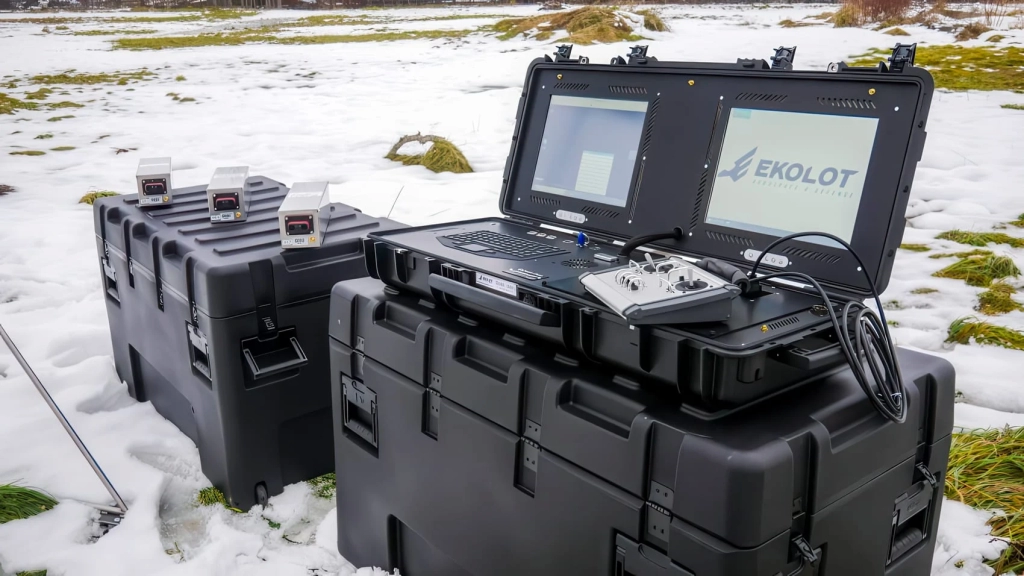 Photo credit: Ekolot
An integrated Air Data System supplies temperature, static, and dynamic pressure inputs to refine airspeed and altitude calculations, further stabilizing navigation during signal loss.
According to the company, the system can maintain position accuracy with error rates as low as 1 percent over the distance traveled.
In modern operational theaters, that difference can determine whether a mission completes or fails.
Strategic expansion into Poland and LATAM
For Ekolot Aerospace & Defense, integrating a proven flight control partner reduces risk in one of the most critical subsystems of the aircraft.
For UAV Navigation-Grupo Oesía, the collaboration strengthens its presence in Poland while opening new doors in Latin America.
Both companies confirm that this is only the beginning. Future work on ZEUS G and ZEUS CTOL variants is already under discussion, focusing on higher payloads and longer endurance profiles.
As GNSS interference becomes more common in both military and sensitive civil operations, platforms capable of navigating without satellite dependence will likely define the next generation of tactical UAV systems.
DroneXL’s Take
This partnership is not about airframes alone. It is about survivability in an electronic warfare environment.
The ZEUS platform enters a competitive segment that includes established European and Israeli systems. Its modular concept is strong. Its endurance targets are credible. But the real selling point is navigation resilience.
If the GNSS Denied Navigation Kit performs in real world contested environments the way it does in controlled testing, ZEUS could become particularly attractive for Eastern European operators facing daily jamming pressure.
The question is not whether GNSS disruption will increase. It will.
The real question is which platforms can keep flying when satellites go silent.
Photo credit: Grupo Oesia, Ekolot.