
Toledo PD Benefits From Ohio First Statewide DFR Pilot
 Photo credit: Flickr
Check out the Best Deals on Amazon for DJI Drones today!
Ohio just pushed the Drone as First Responder conversation to a new altitude.
The state has selected nine public safety agencies, including the Toledo Police Department, to participate in what officials describe as the first statewide Drone First Responder pilot program in the nation, as WTOL reports.
 Photo credit: Toledo PD
The initiative is being led by the Ohio Department of Transportation and DriveOhio, with program management support from SkyfireAI.
This is not a single city experimenting with drones. This is an entire state building a coordinated aerial response network.
A Statewide Drone Network Takes Shape
The nine selected agencies represent a cross section of Ohio, from urban centers to rural communities:
- City of Springfield Police Fire EMS
- Athens Police Department
- Lima Police Department
- Toledo Police Department
- Violet Township Fire EMS
- Austintown Fire Department
- City of Hamilton Police Fire EMS
- Amherst Police Department
- Kelleys Island Fire EMS
Under Ohio House Bill 96, these agencies are authorized to deploy state approved, NDAA compliant drone systems. The aircraft will feature rapid launch capability, real time video streaming to command staff, and integration into Ohio’s developing uncrewed aircraft traffic management framework led by CAL Analytics.
The technology at the heart of the program is drone in a box. A permanently installed docking station allows a drone to launch remotely within seconds of a qualifying emergency call. In some cases, the drones may also be capable of delivering medical supplies to a scene, including remote or hard to reach areas.
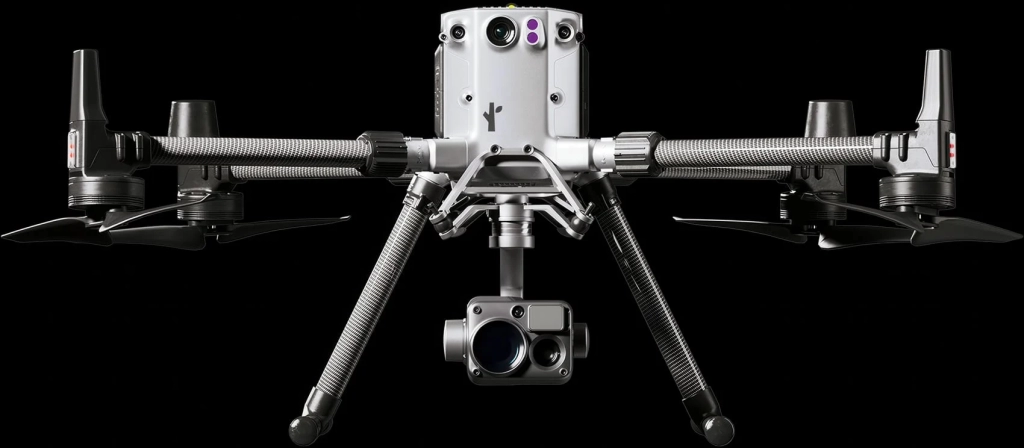 Photo credit: Flock
Governor Mike DeWine framed the program as a public safety modernization effort, emphasizing improved situational awareness, enhanced responder safety, and reduced response times.
Toledo’s Role and What Makes This Different
Toledo Police already implemented a Drone as First Responder program last year that responds to calls for service. This statewide pilot builds on that experience but adds something much bigger: integration.
Instead of isolated programs operating city by city, Ohio is coordinating procurement, training, regulatory compliance, and operational standards at the state level. Officials describe it as a scalable model that could serve as a blueprint for other states.
Many of the selected agencies have also committed to sharing drone resources with neighboring jurisdictions. That creates regional coverage, not just municipal coverage. In theory, a drone asset could support multiple communities, especially in areas where departments are understaffed.
SkyfireAI, which is supporting the initiative as program manager, says the goal is structured implementation rather than experimentation. The pilot will run for approximately one year beginning in Spring 2026, with performance metrics evaluating operational effectiveness, response outcomes, and expansion potential.
Why This Matters for Public Safety Drones
Drone as First Responder programs are no longer experimental pilots limited to major cities like Los Angeles. Ohio is attempting something far more ambitious: a coordinated statewide network that integrates hardware, software, traffic management, and governance from the start.
If successful, this model could accelerate adoption across other states looking for faster response times without adding more patrol cars or personnel. For departments facing staffing shortages, drones become force multipliers, arriving in under two minutes while officers navigate traffic.
The emphasis on NDAA compliant systems also aligns with the broader shift away from Chinese manufactured drones in public safety environments.Oh, they don’t know what
The big question will be results. Faster response times are one metric. Safer outcomes and measurable reductions in risk to officers will be another. Transparency and community trust will likely determine long term acceptance.
DroneXL’s Take
Ohio is not just adding drones. It is building infrastructure.
That distinction matters. A single DFR program is a tool. A coordinated statewide network is strategy. If Ohio can prove that centralized oversight plus local deployment improves response times and reduces risk without creating privacy backlash, other states will follow quickly.
The real test begins this spring, when theory meets dispatch tones and real world emergencies.
Photo credit: Toledo PD, Flock, Flickr.