
Poland Invisible Shield Can Fry Drones In Seconds
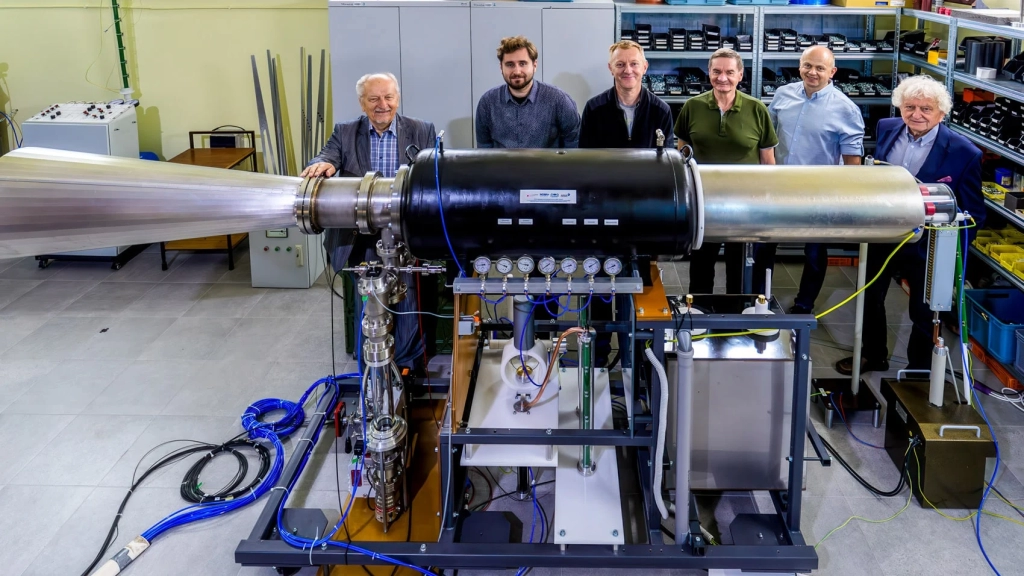 Photo credit: Dawid Linkowski / Gdańsk University of Technology
Amazon Drone Deals: DJI Mini 5 Pro Fly More Combo with DJI RC2 now for $1,099!
Polish scientists have quietly stepped into science fiction territory, and unlike most sci-fi, this one actually works in a lab and does not involve glowing force fields or dramatic countdowns.
Researchers at Gdańsk University of Technology have developed STRATUS, an electromagnetic counter drone system designed to disable hostile drones almost instantly by attacking what every drone depends on, its electronics, as TVP World reports.
Instead of bullets, nets, missiles, or expensive interceptor drones chasing other drones in an awkward aerial ballet, STRATUS fires short and extremely powerful electromagnetic pulses.
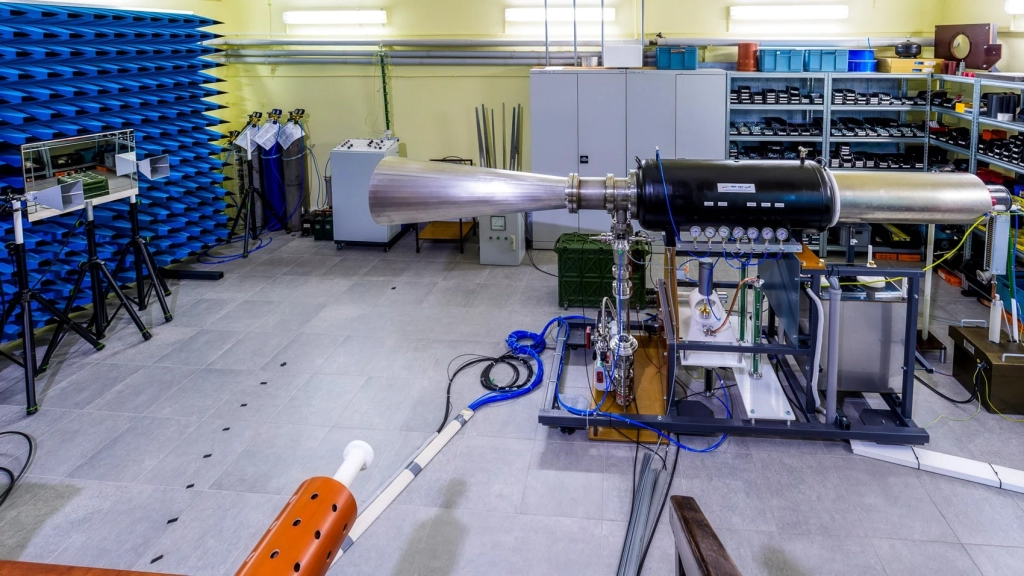 Photo credit: Dawid Linkowski / Gdańsk University of Technology
These pulses overwhelm the electronics inside a drone, scrambling or destroying critical components such as flight controllers, sensors, and communication modules. The drone does not explode, it does not fall dramatically in flames, it simply stops being a drone and becomes an object with regrets.
This approach matters because drones are increasingly showing up where they do not belong. Airports, ports, power plants, public events, and military sensitive zones are all dealing with small unmanned aircraft that are cheap, accessible, and hard to stop safely.
Shooting them down near critical infrastructure tends to create new problems while solving the original one, usually involving debris, lawsuits, and uncomfortable press conferences.
Why STRATUS is different from traditional counter drone systems
What makes STRATUS interesting is not just that it works, but how it works. The system relies on an advanced electromagnetic effector capable of generating extremely intense pulses that are also precisely controlled.
According to the researchers, generating the pulse itself was not the hardest part. The real challenge was managing extreme voltages and power densities in a way that does not turn the system into a danger for operators or nearby infrastructure.
In other words, anyone can build something that releases a massive electromagnetic burst if safety is optional. Building one that can be aimed, controlled, repeated, and operated without frying everything else nearby is the actual engineering achievement.
Because STRATUS disables drones electronically rather than physically, researchers have described it as an invisible shield. There is no projectile, no explosion, and no visible interception.
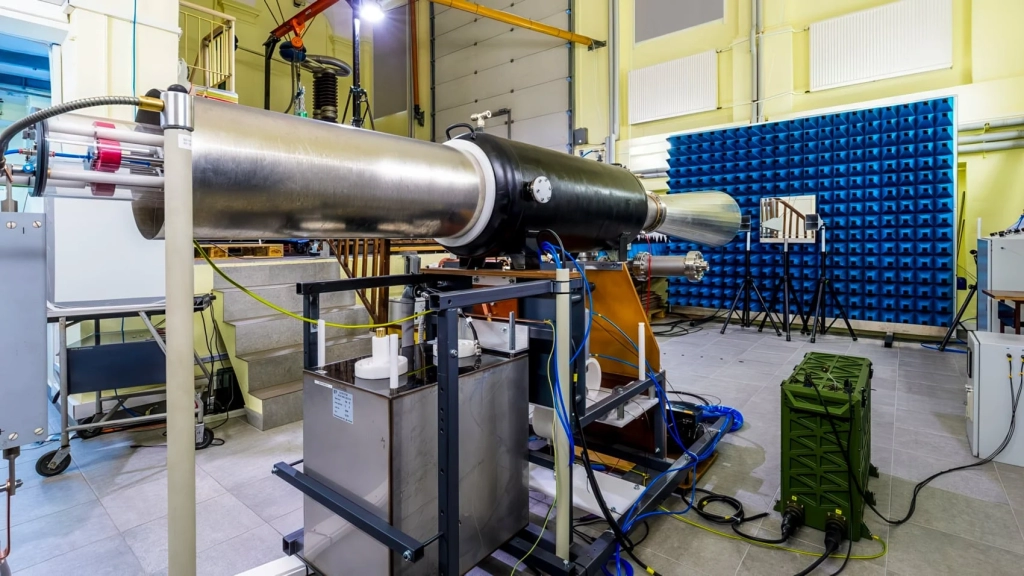 Photo credit: Dawid Linkowski / Gdańsk University of Technology
From the outside, a drone simply enters a protected zone and then the drone doesn’t drone anymore. He totally forgets his only one job. For locations where safety and collateral damage are critical concerns, this is a very attractive concept.
The system has so far been tested in laboratory and controlled environments, where it successfully demonstrated its ability to neutralize unmanned aerial vehicles. Operational deployment has not yet happened, but the direction is clear and the intent is serious.
Follow the money and the strategic timing
STRATUS is not a garage experiment. The project has received more than 21 million złotys, roughly 5 million euros, in funding from Poland’s National Centre for Research and Development. That level of investment signals that this is viewed as strategic technology, not just an academic curiosity.
 Photo credit: Dawid Linkowski / Gdańsk University of Technology
The timing is also not accidental. Poland sits on NATO’s eastern edge and has been watching drone warfare evolve in real time just across its borders. Small, cheap drones have proven capable of surveillance, sabotage, and direct attack, often slipping through traditional air defenses designed for much larger threats.
Electromagnetic counter drone systems offer a scalable answer to this new reality. They are fast, potentially reusable, and do not require an endless supply of interceptors. They also fit neatly into layered defense strategies, where detection, jamming, and physical interception all play different roles depending on the threat.
DroneXL’s Take
STRATUS represents a future where counter drone defense grows quieter, cleaner, and far more technical. Instead of dramatic shoot downs that look impressive on video but create real world problems on the ground, electromagnetic systems like this focus on denial and control, which is what infrastructure protection actually needs.
The idea of an invisible shield that simply switches drones off may sound unsettling, but compared to missiles over airports or falling debris at public events, it starts to look like the most adult solution in the room. STRATUS is not operational yet, and real world deployment will bring its own challenges, but the concept is solid and the funding suggests Poland is serious.
If this technology matures, the next generation of drone defenses may not look dramatic at all. Drones will just stop working, quietly, suddenly, and without applause. For security teams, that is not boring. That is success.
Photo credit: Dawid Linkowski / Gdańsk University of Technology