
Niagara College Launches Defence Drone Programs
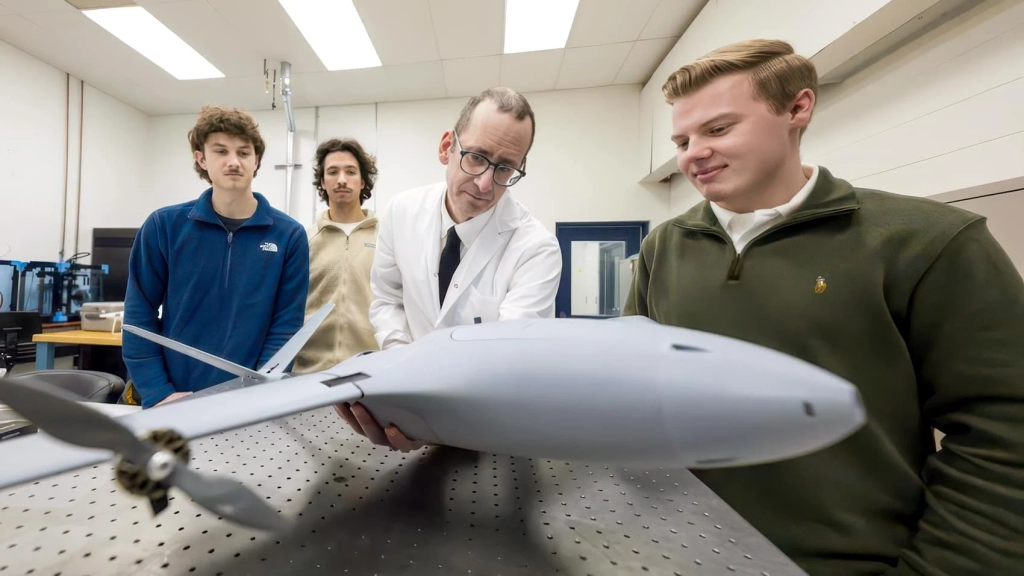 Photo credit: Niagara College
Check out the Best Deals on Amazon for DJI Drones today!
Canada is serious about defence, and not just in speeches or budget lines.
With the federal government’s 2025 Canada Strong budget putting fresh emphasis on domestic innovation, Niagara College has stepped forward with new hands-on engineering programs designed to train students to build the systems Canada increasingly depends on, as Notlocal reports.
Drones, autonomous vehicles, sensor payloads, and advanced manufacturing are no longer niche topics. They are becoming foundational infrastructure.
Niagara College’s newly announced Defence Systems Engineering Technology program, which runs three years, alongside a two year Defence Systems Engineering Technician option, is built around one clear idea.
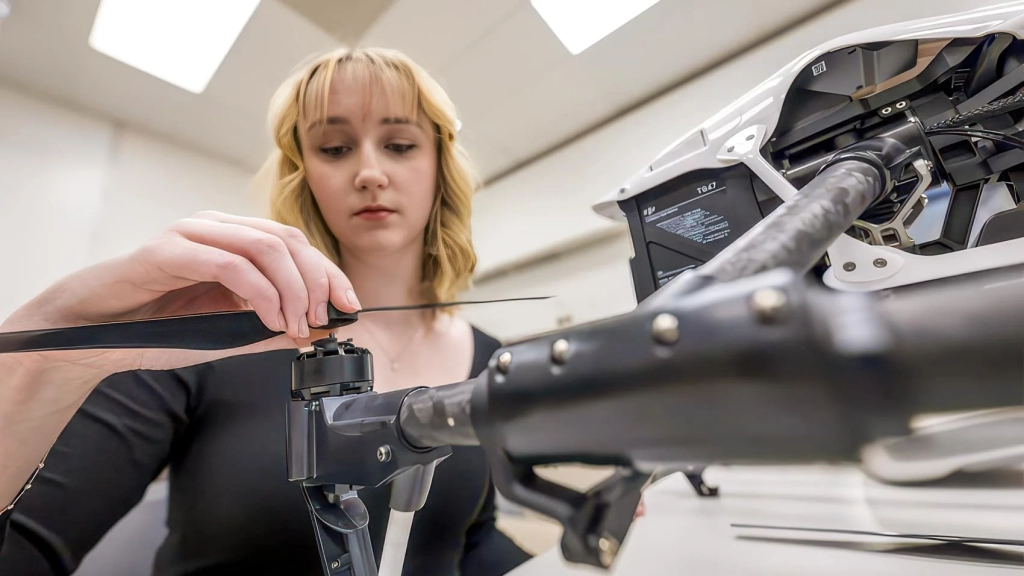 Photo credit: Niagara College
If Canada wants a stronger domestic defence sector, it needs people who can design, assemble, test, and improve the technology locally.
College leadership has been open about the motivation. Autonomous systems are spreading across defence, public safety, aerospace, environmental monitoring, and even healthcare. The demand for skilled workers is growing faster than traditional engineering pipelines can supply them.
Rather than focusing on abstract theory, Niagara College is positioning these programs as applied from day one, aimed at producing graduates who can step directly into industry roles.
Students start building in year one
One of the most striking aspects of the program is how quickly students move from classroom to workshop.
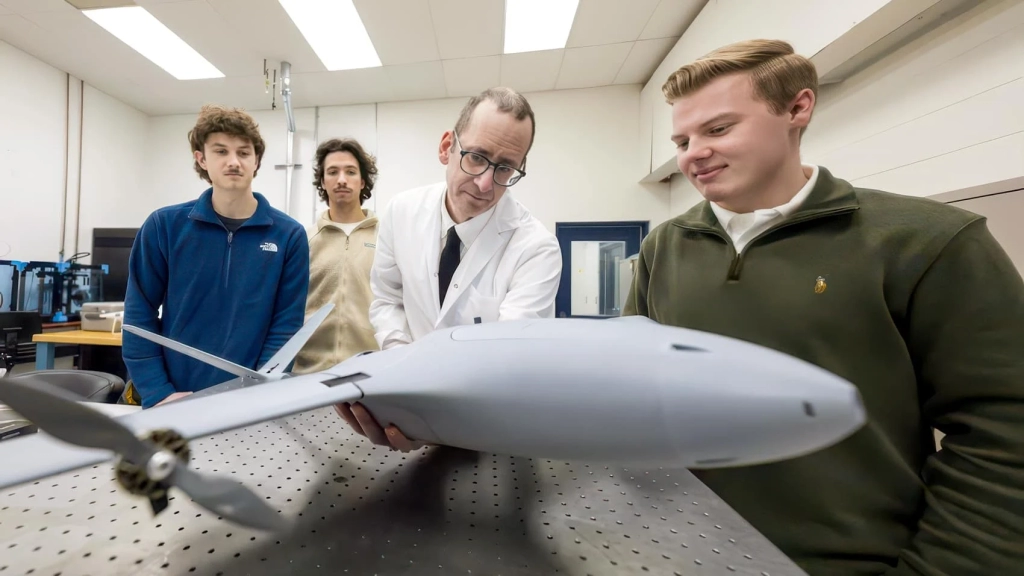 Photo credit: Niagara College
In the very first term, students begin building a ground rover and a quadcopter. By term two, they are already working on a submersible remotely operated vehicle. That means exposure to aerial, terrestrial, and marine platforms within months, not years.
From there, the curriculum expands into instrument payloads and flight systems. Students integrate GPS, cameras, sensors, and Lidar, learning how hardware, software, and data all intersect. They design parts using 3D modelling tools, fabricate components through 3D printing and laser cutting, and develop practical skills like soldering and system assembly.
Photonics plays a central role, drawing on Niagara College’s more than 25 years of experience in optics and laser education. This matters because modern defence systems rely heavily on optical sensors, targeting systems, imaging, and secure communications.
Later stages of the program introduce counter drone technologies, applied industrial research opportunities, and an industry-ready capstone project in the final year. By graduation, students are expected to have touched nearly every layer of a modern autonomous system.
Defence drones are driving real demand
The timing of the program lines up neatly with reality on the ground, and in the air.
Drones are now critical tools for search and rescue, disaster response, wildfire detection, environmental protection, and Arctic surveillance. In a country as geographically vast as Canada, unmanned systems provide reach that traditional infrastructure cannot.
There is also a growing push for Canadian made platforms. Security and cybersecurity concerns are easier to manage when systems are developed and maintained domestically.
That is driving interest from defence contractors, aerospace firms, and technology companies looking to build local ecosystems instead of relying entirely on foreign supply chains.
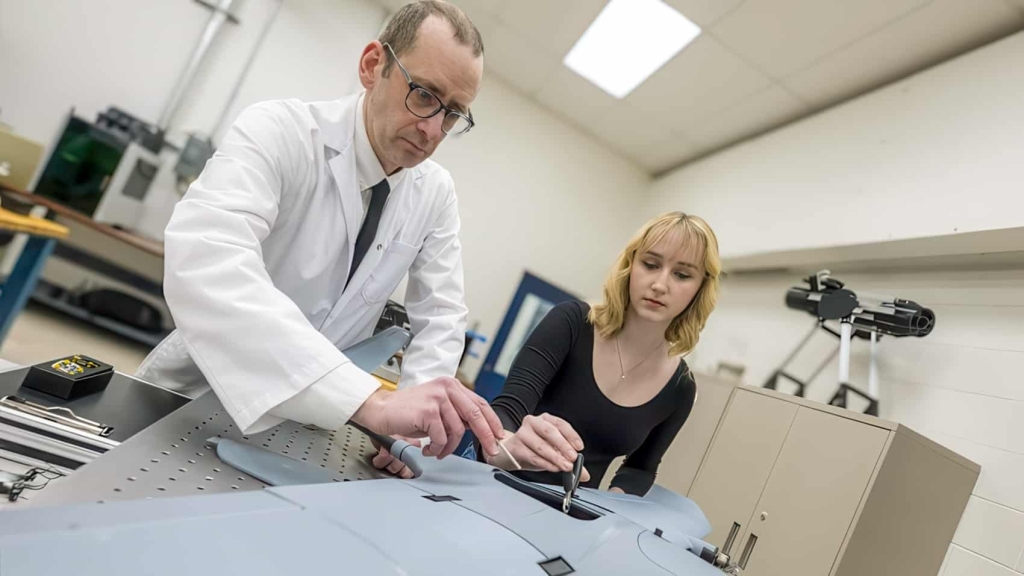 Photo credit: Niagara College
Industry leaders have been vocal in their support. Executives from Airbus Helicopters Canada, Shark Marine Technologies, and Bornea Dynamics have all pointed to workforce development as the missing link in Canada’s defence ambitions. Advanced manufacturing, rapid prototyping, and robotics are moving too fast for outdated training models.
Niagara College is also addressing the digital side of the equation with a new one year Cybersecurity Graduate Certificate. As drones become more connected, securing data links and control systems is just as important as airframes and motors.
A quiet question about who gets to build Canada’s drones
One detail sits quietly in the background of all this innovation.
Like most Canadian post secondary institutions, Niagara College charges significantly higher tuition fees to international students. Often, the cost can be three to four times what domestic students pay for the same education, the same labs, and the same hands-on experience.
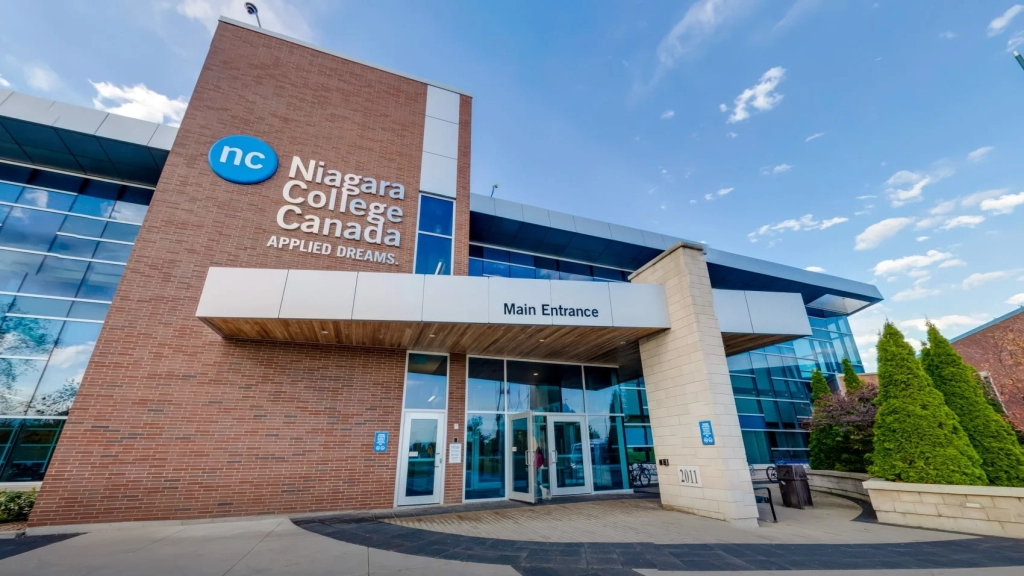 Photo credit: Niagara College
There is no accusation here, just curiosity.
International students are frequently among the most motivated, especially in technical fields like engineering, robotics, and aerospace. Many arrive specifically because Canada promotes itself as a hub for innovation and advanced manufacturing. They learn the same skills, build the same drones, and contribute to the same research projects.
Yet the price of entry is dramatically different.
In a moment when Canada is actively calling for talent, skills, and domestic capability, it is worth quietly wondering how many potential innovators are slowed down, or shut out entirely, by that cost gap.
If the goal is to build systems in Canada, perhaps the conversation about who gets to participate, and at what price, will evolve over time.
For now, the focus remains on training.
DroneXL’s Take
This program feels less like a college announcement and more like a small but meaningful piece of national infrastructure.
Niagara College is not waiting for the defence industry to define the future. It is putting students on the workshop floor early, letting them build, break, and rebuild drones in all environments.
If Canada truly wants to move from buying autonomous systems to creating them, this is what that shift looks like. The only lingering question is how wide the door stays open for the next generation of builders.
Photo credit: Niagara College